how can we even be anarchocapitalists under any sort of government. how is it possible to even try when it’s impossible in the state. why does anyone have hope for this ideology. i really thought i got it when i was like 15 but there’s no point, even libertarians are getting fucked. there’s not enough of us to fuck up the govenment so why try
also why do we all draw her with dollars and not bits, she’s a horse people
also also please post her more here, makeshift ancap pone thread
/mlpol/ - My Little Politics

7 replies and 4 files omitted.
>>389748
>why does anyone have hope for this ideology
Because it is a fallacy. It looks cool but it is not practical.
Ancap is suited for (((hustlers))) not for the common man. Also you have the issue of personal safety and having a gun might be not enough, then hiring a militia follows and it is 100% sure will end up in a war like the narco-cartels in Mexico.
>why does anyone have hope for this ideology
Because it is a fallacy. It looks cool but it is not practical.
Ancap is suited for (((hustlers))) not for the common man. Also you have the issue of personal safety and having a gun might be not enough, then hiring a militia follows and it is 100% sure will end up in a war like the narco-cartels in Mexico.

>>389752
why do we even care about extremist ideals if the government is so cucked by the moderates. i used to get off to ayn rand and still love objectivist ideas but why even try. we will never really see any of these in our goverment
why do we even care about extremist ideals if the government is so cucked by the moderates. i used to get off to ayn rand and still love objectivist ideas but why even try. we will never really see any of these in our goverment

>>389812
>the government is so cucked by the moderates
>moderates
This is over the top gaslighting and an inversion of reality.
You live in the 1984 novel, for real.
>the government is so cucked by the moderates
>moderates
This is over the top gaslighting and an inversion of reality.
You live in the 1984 novel, for real.
>>389748
If you reach for the stars, you may not get one, but you won't end up with a handful of shit either.
If you reach for the stars, you may not get one, but you won't end up with a handful of shit either.
>>389836
If there is anything a non-conformist hates more than a conformist, it is a non-conformist who refuses to conform to the prevailing standards of non-conformity.
If there is anything a non-conformist hates more than a conformist, it is a non-conformist who refuses to conform to the prevailing standards of non-conformity.
>>389748
>what's the point of terrorism
You're from tel aviv aren't you
You will never guess if I cheered on Brenton tarrant, you'll never fund out
>what's the point of terrorism
You're from tel aviv aren't you
You will never guess if I cheered on Brenton tarrant, you'll never fund out
>>389751
If you could breed a slave race, you could breed a population suitable for ancap. With the right genetics and technology, ancap could naturally evolve, and be sustained.
I recon ancap will be the ultimate direction human societies travel towards. But I expect (due to dysgenic cycle of civilization) it’ll take many thousands of years.
If you could breed a slave race, you could breed a population suitable for ancap. With the right genetics and technology, ancap could naturally evolve, and be sustained.
I recon ancap will be the ultimate direction human societies travel towards. But I expect (due to dysgenic cycle of civilization) it’ll take many thousands of years.

>>389841
>If you could breed a slave race, you could breed a population suitable for ancap.
It's the opposite, it's the most high-trust, intelligent, hierarchical, individualistic populations that are most suited to create and maintain a legal-social order based in property and personal rights and responsibilities. This is why Anglo-Saxons and their biological and geographical neighbors, such as in France, were so influential in developing the liberal ideals which would form the basis of ancap (see John Locke, Thomas Jefferson, Frederic Bastiat, Gustave de Molinari), and why they enjoyed so much of the success of liberal capitalism. Of course, these same liberal ideals, such as individualism and rule of law, were exploited when groups who didn't share them were let in. The Hoppean/paleolibertarian/national-libertarian trends within ancap are a reaction to this fact, coming to terms with the need to limit individualism and have a degree of tribalism and standards of behavior if you want to keep a society which aligns with libertarian ethics.
>If you could breed a slave race, you could breed a population suitable for ancap.
It's the opposite, it's the most high-trust, intelligent, hierarchical, individualistic populations that are most suited to create and maintain a legal-social order based in property and personal rights and responsibilities. This is why Anglo-Saxons and their biological and geographical neighbors, such as in France, were so influential in developing the liberal ideals which would form the basis of ancap (see John Locke, Thomas Jefferson, Frederic Bastiat, Gustave de Molinari), and why they enjoyed so much of the success of liberal capitalism. Of course, these same liberal ideals, such as individualism and rule of law, were exploited when groups who didn't share them were let in. The Hoppean/paleolibertarian/national-libertarian trends within ancap are a reaction to this fact, coming to terms with the need to limit individualism and have a degree of tribalism and standards of behavior if you want to keep a society which aligns with libertarian ethics.
>>389889
not that Anon, but the anglos and french where the only two global powers to exert individuality towards the inhabitants of their colonial progeny.
And it makes even more sense when you notice the only ones who adopted that way of life were predominantly of western European origin.
America, Canada with Quebec, Australia and New Zealand.
All of the francophone countries in Africa and South Asia are defacto dictatorships with very low societal trust.
not that Anon, but the anglos and french where the only two global powers to exert individuality towards the inhabitants of their colonial progeny.
And it makes even more sense when you notice the only ones who adopted that way of life were predominantly of western European origin.
America, Canada with Quebec, Australia and New Zealand.
All of the francophone countries in Africa and South Asia are defacto dictatorships with very low societal trust.
>>389889
>Of course, these same liberal ideals, such as individualism and rule of law, were exploited when groups who didn't share them were let in.
This would probably be why.
>Of course, these same liberal ideals, such as individualism and rule of law, were exploited when groups who didn't share them were let in.
This would probably be why.

>>390193
Sometimes it is, but sometimes it is just the result of purity spiralling to the point of retardation. Look at communists or flat earthers.
Sometimes it is, but sometimes it is just the result of purity spiralling to the point of retardation. Look at communists or flat earthers.


>>390198
>communists
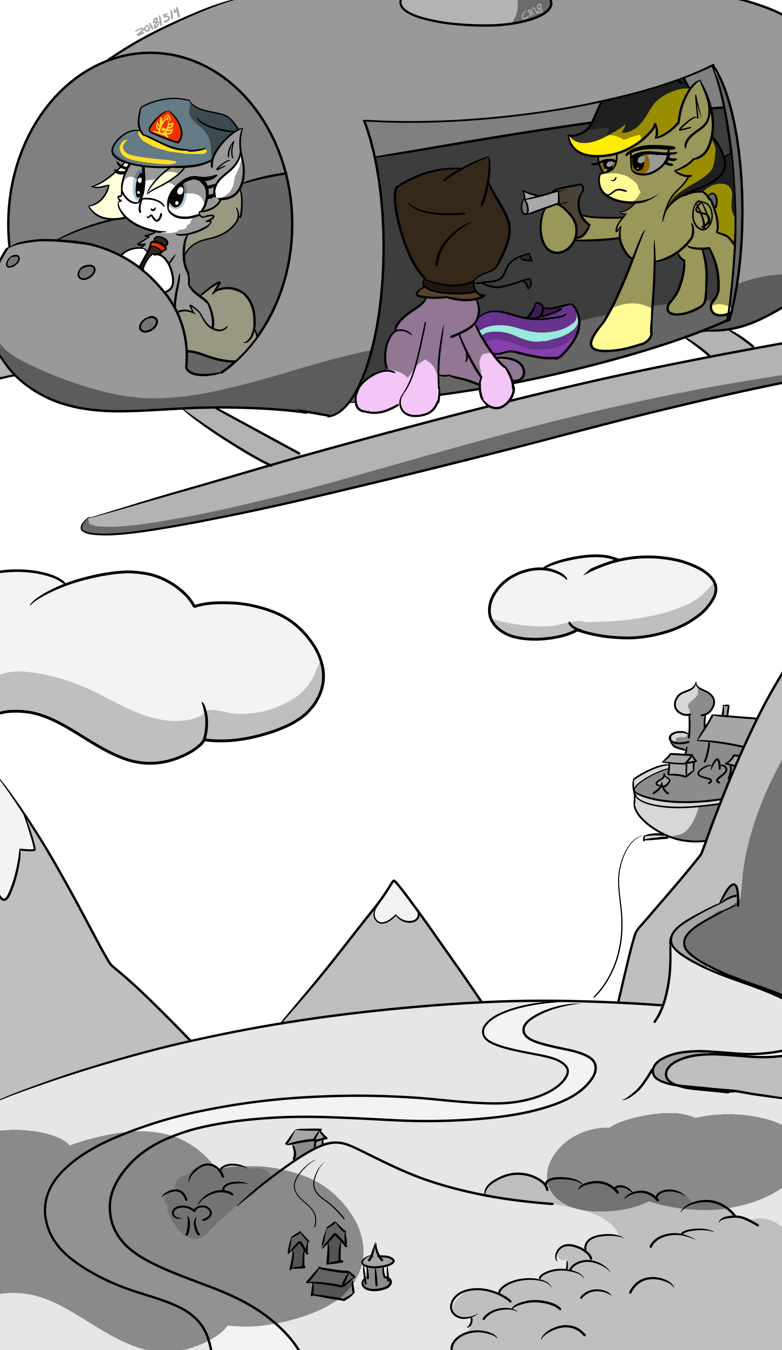
You can't deny that retarded convictions are still convictions, but I get your point. Having strong beliefs on something doesn't necessarily mean you're right, and I would definitely push a soft-skinned neocon and a temperature-IQ commie off the same helicopter.
>or flat earthers
I'd go out with these dudes for a pint tbh.
>>390218
Extremely based.
>communists
You can't deny that retarded convictions are still convictions, but I get your point. Having strong beliefs on something doesn't necessarily mean you're right, and I would definitely push a soft-skinned neocon and a temperature-IQ commie off the same helicopter.
>or flat earthers
I'd go out with these dudes for a pint tbh.
>>390218
Extremely based.
>>389751
I agree. It will result in war. Hatred, nepotism, cronyism...all the same. The government as it is now and how people suffer under it. Sates my antipathy.
Moreover
>then hiring a militia follows and it is 100% sure will end up in a war like the narco-cartels in Mexico.
Those beaners can die. Makes me wanna kill some random beaner on the street thinking about them. (Cuz 1/3 beaners have some kind of tie to them.
I agree. It will result in war. Hatred, nepotism, cronyism...all the same. The government as it is now and how people suffer under it. Sates my antipathy.
Moreover
>then hiring a militia follows and it is 100% sure will end up in a war like the narco-cartels in Mexico.
Those beaners can die. Makes me wanna kill some random beaner on the street thinking about them. (Cuz 1/3 beaners have some kind of tie to them.
>>390241
>You can't deny that retarded convictions are still convictions
True, but this doesn't touch on the purity spiralling element. Look at how often communities splinter and have sectarian fueds over who is the most ideologically pure. NatSocs also pull this shit and I expect it will only become more common on the rest of the far right as the overton window shifts and more normies turn. You can already see this with some of the schizo retards on the rest of the right. You can literally agree with them on 99% of their policy choices (White only immigration, remove kikes, end feminism, ect) but if you don't believe this or that conspiracy they view you as disloyal. At that point it isn't about convictions it's about proving to other how moral and just you are. Just like the marxists.
>You can't deny that retarded convictions are still convictions
True, but this doesn't touch on the purity spiralling element. Look at how often communities splinter and have sectarian fueds over who is the most ideologically pure. NatSocs also pull this shit and I expect it will only become more common on the rest of the far right as the overton window shifts and more normies turn. You can already see this with some of the schizo retards on the rest of the right. You can literally agree with them on 99% of their policy choices (White only immigration, remove kikes, end feminism, ect) but if you don't believe this or that conspiracy they view you as disloyal. At that point it isn't about convictions it's about proving to other how moral and just you are. Just like the marxists.
>>389859
>France
I don't think the culture in the UK in the 18th Century was as similar to the culture of France at that time than you think.
In the Americas, in the late 18th Century, Englishmen, with the enthusiastic assistance of almost-English Scots and Irish Protestants, created and carried out a successful separatist movement (no. not a revolution. there is a significant difference.) in order to gain independence and sovereignty, to establish a new social order, a government of laws, not a government of men. Right around the same time, in France, Frenchmen waged a war, outwardly similar, with the oft-stated goal of creating a government of laws, not a government of men.
You may have noticed that these two undertakings did not turn out the same. We got the Constitution and about a century and a half of mostly benevolent, mostly libertarian-ish, mostly open and transparent government. The French got a fifteen-year-long bloodbath, which lasted right up until Napoleon appeared on the scene, on horseback, and invented fascism.
If their culture and ours are that similar, I would have thought that a popular uprising in the name of reclaiming sovereignty and rights from a decayed, corrupt aristocracy would have turned out similarly. I have heard it blamed on personalities. We got Thomas Jefferson and Benjamin Franklin. They got Robespierre and Saint-Just. But how is it that the War for Independence in the North American colonies got so many brilliant, heroic, courageous, selfless men, the finest minds of their generation, to act as its leaders, but the French got a bunch of cackling homicidal maniacs? And the French aristocrats they guillotined were little better; more than one count and duke in southern France was found to have kept scrupulous records of the bribes he'd accepted from the Barbary Pirates to allow them to raid coastal towns for slaves, and indeed the Kings of France had formal treaties of alliance with the Sultan of Byzantium, to whom the Barbary Pirates owed at least nominal allegiance, for two hundred and fifty years. To say "well, that's just the way the dice rolled" is to beg the question.
I think the French, and by that I mean the indigenous wypipo of what is now France, a people of common birth, language, and culture, are very, very, VERY different from us in many of their attitudes and the way they view the world. I don't think it comes down to something as simpleminded as religion, either. I don't think Catholicism made them uniquely corrupt and wicked. And to say "it's genetic" is glib. I can pose the questions but I have no final answers.
>France
I don't think the culture in the UK in the 18th Century was as similar to the culture of France at that time than you think.
In the Americas, in the late 18th Century, Englishmen, with the enthusiastic assistance of almost-English Scots and Irish Protestants, created and carried out a successful separatist movement (no. not a revolution. there is a significant difference.) in order to gain independence and sovereignty, to establish a new social order, a government of laws, not a government of men. Right around the same time, in France, Frenchmen waged a war, outwardly similar, with the oft-stated goal of creating a government of laws, not a government of men.
You may have noticed that these two undertakings did not turn out the same. We got the Constitution and about a century and a half of mostly benevolent, mostly libertarian-ish, mostly open and transparent government. The French got a fifteen-year-long bloodbath, which lasted right up until Napoleon appeared on the scene, on horseback, and invented fascism.
If their culture and ours are that similar, I would have thought that a popular uprising in the name of reclaiming sovereignty and rights from a decayed, corrupt aristocracy would have turned out similarly. I have heard it blamed on personalities. We got Thomas Jefferson and Benjamin Franklin. They got Robespierre and Saint-Just. But how is it that the War for Independence in the North American colonies got so many brilliant, heroic, courageous, selfless men, the finest minds of their generation, to act as its leaders, but the French got a bunch of cackling homicidal maniacs? And the French aristocrats they guillotined were little better; more than one count and duke in southern France was found to have kept scrupulous records of the bribes he'd accepted from the Barbary Pirates to allow them to raid coastal towns for slaves, and indeed the Kings of France had formal treaties of alliance with the Sultan of Byzantium, to whom the Barbary Pirates owed at least nominal allegiance, for two hundred and fifty years. To say "well, that's just the way the dice rolled" is to beg the question.
I think the French, and by that I mean the indigenous wypipo of what is now France, a people of common birth, language, and culture, are very, very, VERY different from us in many of their attitudes and the way they view the world. I don't think it comes down to something as simpleminded as religion, either. I don't think Catholicism made them uniquely corrupt and wicked. And to say "it's genetic" is glib. I can pose the questions but I have no final answers.
All you lolberts have to do is have balls to enact some policy, ANY policy. As far as my normalfag ass is concerned, the best libertarian/ancap guy is Rand Paul, and he's been too busy doing fuck all for most of my pitiful existence. Do not correct me, you know that's the sentiment out there.

>>395680
Well, kinda you may have a point. I suppose that's the reason many moved from Ancap to Natsoc.
Well, kinda you may have a point. I suppose that's the reason many moved from Ancap to Natsoc.
>>389812
>why do we even care about extremist ideals if the government is so cucked by the moderates
Extremism means recognizing that the status quo is completely fucked, and wanting to replace it to change society for the better. It's more about recognition than realism.
>>389826
They're moderates because they are the status quo. The status quo just happens to want to kill you.
>why do we even care about extremist ideals if the government is so cucked by the moderates
Extremism means recognizing that the status quo is completely fucked, and wanting to replace it to change society for the better. It's more about recognition than realism.
>>389826
They're moderates because they are the status quo. The status quo just happens to want to kill you.
>>395680
>All you lolberts have to do is have balls to enact some policy, ANY policy.
see NH if you're interested in lolberts running the government
>All you lolberts have to do is have balls to enact some policy, ANY policy.
see NH if you're interested in lolberts running the government
1754621434.png (512.5 KB, 1350x1416, lolbertarianism is a midwit ideology.png)

>>395680
Lolbertarians are lolbertarians because they make a virtue of their cowardice. They have all these idealistic plans, and plan #1 is "let's not enforce any rules of any kind for anything anywhere. NO GODS NO MASTERS NO BORDERS, THE ONLY COLOR I CARE ABOUT IS GREEN!!!!1111oneoneeleven" We had that a hundred years ago. The path from there to Clown World is not difficult to trace. Like Marxism-Leninism it is a midwit ideology created and propagated by people who have the horrible combination of autism and strongly held opinions about things they don't understand and don't understand that they don't understand, starting with human nature. I like their utopia a lot more than I like the commies' utopia, because it isn't built on nearly as many mass graves. But, ultimately, both their visions for a better world require it to be inhabited by a very, very different species, one that does not exist.
Lolbertarians are lolbertarians because they make a virtue of their cowardice. They have all these idealistic plans, and plan #1 is "let's not enforce any rules of any kind for anything anywhere. NO GODS NO MASTERS NO BORDERS, THE ONLY COLOR I CARE ABOUT IS GREEN!!!!1111oneoneeleven" We had that a hundred years ago. The path from there to Clown World is not difficult to trace. Like Marxism-Leninism it is a midwit ideology created and propagated by people who have the horrible combination of autism and strongly held opinions about things they don't understand and don't understand that they don't understand, starting with human nature. I like their utopia a lot more than I like the commies' utopia, because it isn't built on nearly as many mass graves. But, ultimately, both their visions for a better world require it to be inhabited by a very, very different species, one that does not exist.
>>395685
>"let's not enforce any rules of any kind for anything anywhere.
you enforce "rules" by physically removing the violators (dissociation for "victimless crimes" of degeneracy and justified violence for violation of natural rights)
>NO GODS NO MASTERS
Hierarchy is natural
Use of violence to establish one is evil
>NO BORDERS,
Private property requires borders (e.g. lock on your door)
>THE ONLY COLOR I CARE ABOUT IS GREEN!!!!1111oneoneeleven"
We care about colors of gold and black
>"let's not enforce any rules of any kind for anything anywhere.
you enforce "rules" by physically removing the violators (dissociation for "victimless crimes" of degeneracy and justified violence for violation of natural rights)
>NO GODS NO MASTERS
Hierarchy is natural
Use of violence to establish one is evil
>NO BORDERS,
Private property requires borders (e.g. lock on your door)
>THE ONLY COLOR I CARE ABOUT IS GREEN!!!!1111oneoneeleven"
We care about colors of gold and black
>>395686
In theory libertarianism is great, but, it won't work as it will degenerate into who can pay a stronger militia; in other words, it will degenerate into warlords' rule.
In theory libertarianism is great, but, it won't work as it will degenerate into who can pay a stronger militia; in other words, it will degenerate into warlords' rule.
>>395686
All authority and all hierarchy are based on force. No exceptions.
>>395689
This. It was observed before anyone here was born that without government regulation, the "free market" always peddles human flesh, literally, figuratively, or both. Lolbertarians don't want to think about slave raids, or cannibal banksters buying infants to carve up. "Gotta get muh adenochrome! Gotta get muh stem cell therapy to make muh dick bigger! Doncha like muh CAPITALISMS, boy? Is you some kinda RED?"
All authority and all hierarchy are based on force. No exceptions.
>>395689
This. It was observed before anyone here was born that without government regulation, the "free market" always peddles human flesh, literally, figuratively, or both. Lolbertarians don't want to think about slave raids, or cannibal banksters buying infants to carve up. "Gotta get muh adenochrome! Gotta get muh stem cell therapy to make muh dick bigger! Doncha like muh CAPITALISMS, boy? Is you some kinda RED?"
>>395689
Your statement is true for a society that is degenerate when it enters anarchy.
High-trust society with low time preference values will not fight itself in AnCap, because doing so is counterproductive: any private defense agency that dares to attack others will not only lose its trust and customers (as no sane man would want to buy their protection service), but will also be attacked by other private defense agencies (as other militias would obviously want to gain additional trust by fighting an objectively evil group).
Low-trust society with degenerate high time preference values doesn't care about reputation, so aggression isn't a death sentence for anyone who performs it.
AnCap is possible but not with members of Romani people.
>>395691
>All authority and all hierarchy are based on force
I said "violence", not force
Anyone can participate in volunteer hierarchy by finding a job, obeying its management and receiving rewards for labor they give to the employer. No violence is necessary for this to work
>It was observed before anyone here was born that without government regulation, the "free market" always peddles human flesh, literally, figuratively, or both
[citation needed]
Every time one argues that "free market results in inhuman evil" they always bring up situations where state interference is still prevalent. Institution of slavery, for example, could only exist because the state forced its citizens into involuntary servitude of cooperating with search and return of fugitive slaves.
Your statement is true for a society that is degenerate when it enters anarchy.
High-trust society with low time preference values will not fight itself in AnCap, because doing so is counterproductive: any private defense agency that dares to attack others will not only lose its trust and customers (as no sane man would want to buy their protection service), but will also be attacked by other private defense agencies (as other militias would obviously want to gain additional trust by fighting an objectively evil group).
Low-trust society with degenerate high time preference values doesn't care about reputation, so aggression isn't a death sentence for anyone who performs it.
AnCap is possible but not with members of Romani people.
>>395691
>All authority and all hierarchy are based on force
I said "violence", not force
Anyone can participate in volunteer hierarchy by finding a job, obeying its management and receiving rewards for labor they give to the employer. No violence is necessary for this to work
>It was observed before anyone here was born that without government regulation, the "free market" always peddles human flesh, literally, figuratively, or both
[citation needed]
Every time one argues that "free market results in inhuman evil" they always bring up situations where state interference is still prevalent. Institution of slavery, for example, could only exist because the state forced its citizens into involuntary servitude of cooperating with search and return of fugitive slaves.
>>395698
>High-trust society with low time preference values will not fight itself in AnCap
Ahem, human nature says otherwise. People behave better when kind words are backed with the barrel of a gun.
>High-trust society with low time preference values will not fight itself in AnCap
Ahem, human nature says otherwise. People behave better when kind words are backed with the barrel of a gun.
>>395698
>AnCap is possible but not with members of Romani people.
Let's kill all the Jews and niggers and troons first, and then we can talk about this "high trust society".
>Anyone can participate in volunteer hierarchy by finding a job, obeying its management and receiving rewards for labor they give to the employer. No violence is necessary for this to work
That requires property. Property rights are enforced with violence. This is how it had always been.
>where state interference is still prevalent
This is the libertarian equivalent to "but it wasn't real communism!"
>could only exist because the state forced its citizens into involuntary servitude of cooperating with search and return of fugitive slaves
No. We had slaves since before the fugitive slave act. We've had slavery for at least 12k years since agriculture turned human labor into a scarce commodity.
Anyone with sufficient violence could imprison and enslave you if nobody stops them.
>AnCap is possible but not with members of Romani people.
Let's kill all the Jews and niggers and troons first, and then we can talk about this "high trust society".
>Anyone can participate in volunteer hierarchy by finding a job, obeying its management and receiving rewards for labor they give to the employer. No violence is necessary for this to work
That requires property. Property rights are enforced with violence. This is how it had always been.
>where state interference is still prevalent
This is the libertarian equivalent to "but it wasn't real communism!"
>could only exist because the state forced its citizens into involuntary servitude of cooperating with search and return of fugitive slaves
No. We had slaves since before the fugitive slave act. We've had slavery for at least 12k years since agriculture turned human labor into a scarce commodity.
Anyone with sufficient violence could imprison and enslave you if nobody stops them.
>>395698
>Institution of slavery
An institution as old as humanity that you portrait as oppressive but many dispute that because slaves were take of and were given a purpose in life, to serve their masters through their work.
>involuntary servitude
Well, here is the case of private property as slaves where indeed property and as well women. You see, it is all about if the time line has been contaminated with the "equality" trope.
>Institution of slavery
An institution as old as humanity that you portrait as oppressive but many dispute that because slaves were take of and were given a purpose in life, to serve their masters through their work.
>involuntary servitude
Well, here is the case of private property as slaves where indeed property and as well women. You see, it is all about if the time line has been contaminated with the "equality" trope.
>>395701
>involuntary servitude
Also, slavery is a choice. There is no way to keep alive an individual who will fight for his freedom.
>involuntary servitude
Also, slavery is a choice. There is no way to keep alive an individual who will fight for his freedom.
>>395703
All you have to do is abuse them until they no longer fight back or have hope to escape. It's not hard.
All you have to do is abuse them until they no longer fight back or have hope to escape. It's not hard.
>>395704
>until they no longer fight back or have hope to escape
It is what I said. Stress and a broken soul is not app for freedom. Anyway, millions of Whites were taken slaves by the Muslims in the middle ages, and to put it bluntly, it was their choice.
>until they no longer fight back or have hope to escape
It is what I said. Stress and a broken soul is not app for freedom. Anyway, millions of Whites were taken slaves by the Muslims in the middle ages, and to put it bluntly, it was their choice.
>>395706
Gotta an modern example? I know the muslim rap sheet in Europe and how the Crusades were launched to stop that.
Gotta an modern example? I know the muslim rap sheet in Europe and how the Crusades were launched to stop that.
>>395700
>Let's kill all the Jews and niggers and troons first, and then we can talk about this "high trust society".
Well yeah you do need homogeneous society to achieve high social trust
Genocide is not necessary though, physical removal is fine.
>That requires property. Property rights are enforced with violence. This is how it had always been.
I was wondering if I should've included
>(unless, of course, you believe that property is violence)
and it appears that I've made a mistake by omitting this statement.
You own yourself. You own labor of your body. You own goods produced by your labor.
Things you own require force to protect them, but force becomes violent when and only when it is used for aggression, not when one defends himself and/or his belongings.
Believing otherwise results in you "violently" rejecting working in kolkhoz during another Soviet famine or "violently" controlling "public" kidney that some bum needs to survive.
>>395703
>Also, slavery is a choice
At this point I'm just leaving this meaningless conversation
>Let's kill all the Jews and niggers and troons first, and then we can talk about this "high trust society".
Well yeah you do need homogeneous society to achieve high social trust
Genocide is not necessary though, physical removal is fine.
>That requires property. Property rights are enforced with violence. This is how it had always been.
I was wondering if I should've included
>(unless, of course, you believe that property is violence)
and it appears that I've made a mistake by omitting this statement.
You own yourself. You own labor of your body. You own goods produced by your labor.
Things you own require force to protect them, but force becomes violent when and only when it is used for aggression, not when one defends himself and/or his belongings.
Believing otherwise results in you "violently" rejecting working in kolkhoz during another Soviet famine or "violently" controlling "public" kidney that some bum needs to survive.
>>395703
>Also, slavery is a choice
At this point I'm just leaving this meaningless conversation
>>395710
>At this point I'm just leaving this meaningless conversation
I understand. There is not possible rebuttal to that.
>At this point I'm just leaving this meaningless conversation
I understand. There is not possible rebuttal to that.

Muh slavery.
There is a reason why this mutt historical point is hammered over and over again.
There is a reason why this mutt historical point is hammered over and over again.

>>395709
NTA, but if you're for example from some ghetto and your parents suck, it may not be up to you if they decide to whore their daughter out in the streets for meth
then, looking at some shithole countries like India, marriage is also decided by parents when their kids hit adolescence
yes, you can fight back, you always can. but how can you fight when you were raised in such way that you don't know how to?
NTA, but if you're for example from some ghetto and your parents suck, it may not be up to you if they decide to whore their daughter out in the streets for meth
then, looking at some shithole countries like India, marriage is also decided by parents when their kids hit adolescence
yes, you can fight back, you always can. but how can you fight when you were raised in such way that you don't know how to?
>>395713
Dude, this is White Land. Gotta any significant example on White People? Epstein's mini operation doesn't count as is negligible.
Dude, this is White Land. Gotta any significant example on White People? Epstein's mini operation doesn't count as is negligible.

>>395713
Arranged marriage is extremely, extremely, extremely based. In the West it was the norm until very recently, historically speaking. Foids are mental and emotional children all their lives. In the West we spoiled them by giving them all the autonomy they said they wanted. Now they're bitter fat miserable cat ladies with tiny apartments and grotesque tattoos. Spoiling children results in spoiled children behaving like spoiled children, in other words, and what we have done has consequences on a civilizational scale. The birthrate has completely cratered.
Arranged marriage is extremely, extremely, extremely based. In the West it was the norm until very recently, historically speaking. Foids are mental and emotional children all their lives. In the West we spoiled them by giving them all the autonomy they said they wanted. Now they're bitter fat miserable cat ladies with tiny apartments and grotesque tattoos. Spoiling children results in spoiled children behaving like spoiled children, in other words, and what we have done has consequences on a civilizational scale. The birthrate has completely cratered.
>>395710
>Well yeah you do need homogeneous society to achieve high social trust
Sure, but you do need to remove subversives, savages and parasites.
>Genocide is not necessary though, physical removal is fine.
Perhaps in the short term, but in the long term they become someone else's problem, and eventually your problem again. They've been doing this for 4000 years.
>You own yourself. You own labor of your body. You own goods produced by your labor.
All of those things can be stolen from you by a person who decides that they own you and the violence to enforce that.
>force becomes violent when and only when it is used for aggression, not when one defends himself and/or his belongings
Maybe we just disagree on the definition of "violence". I do not consider violence to be synonymous with aggression, nor do I consider violence to be inherently bad.
>>395711
The rebuttal is that people can be deprived of autonomy and liberty through abuse, brainwashing, grooming, threats, hostage-taking and violence.
>>395712
>mutt historical point
Slavery didn't only happen in America. It has effected every race on every continent, and continues to this day.
>>395713
This.
>>395714
>Epstein's mini operation doesn't count as is negligible.
How does a cabal of powerful people enslaving children for sex negligible?
>Gotta any significant example on White People?
Bro, I live in Florida, one of biggest hubs in the country for victims of human trafficking. There's some 500,000 reported victims of labor trafficking, and 200,000 reported victims of sex trafficking (most of which are children). Of those, at least 27% are reported to be white, which is more than a quarter of them. Slavery affects white people too.
And that's just the state I live in.
>>395722
>Arranged marriage is extremely, extremely, extremely based.
Not when the bride is a nine year old girl who was kidnapped from her home to be the sex pet of a disgusting 47 year old pervert.
>In the West it was the norm until very recently, historically speaking.
So was literally kidnapping them from their families to take them as brides. That doesn't make it good.
>Well yeah you do need homogeneous society to achieve high social trust
Sure, but you do need to remove subversives, savages and parasites.
>Genocide is not necessary though, physical removal is fine.
Perhaps in the short term, but in the long term they become someone else's problem, and eventually your problem again. They've been doing this for 4000 years.
>You own yourself. You own labor of your body. You own goods produced by your labor.
All of those things can be stolen from you by a person who decides that they own you and the violence to enforce that.
>force becomes violent when and only when it is used for aggression, not when one defends himself and/or his belongings
Maybe we just disagree on the definition of "violence". I do not consider violence to be synonymous with aggression, nor do I consider violence to be inherently bad.
>>395711
The rebuttal is that people can be deprived of autonomy and liberty through abuse, brainwashing, grooming, threats, hostage-taking and violence.
>>395712
>mutt historical point
Slavery didn't only happen in America. It has effected every race on every continent, and continues to this day.
>>395713
This.
>>395714
>Epstein's mini operation doesn't count as is negligible.
How does a cabal of powerful people enslaving children for sex negligible?
>Gotta any significant example on White People?
Bro, I live in Florida, one of biggest hubs in the country for victims of human trafficking. There's some 500,000 reported victims of labor trafficking, and 200,000 reported victims of sex trafficking (most of which are children). Of those, at least 27% are reported to be white, which is more than a quarter of them. Slavery affects white people too.
And that's just the state I live in.
>>395722
>Arranged marriage is extremely, extremely, extremely based.
Not when the bride is a nine year old girl who was kidnapped from her home to be the sex pet of a disgusting 47 year old pervert.
>In the West it was the norm until very recently, historically speaking.
So was literally kidnapping them from their families to take them as brides. That doesn't make it good.
>>395701
>An institution as old as humanity that you portrait as oppressive but many dispute that because slaves were take of and were given a purpose in life, to serve their masters through their work.
I disagree with the premise that serving someone else through work is a fulfilling purpose in life, especially when it's involuntary.
>Well, here is the case of private property as slaves where indeed property and as well women. You see, it is all about if the time line has been contaminated with the "equality" trope.
Are you arguing for AnCap, or against it?
You denounced libertarianism in the other post, but you also seem to be pro-slavery. What is your point?
>An institution as old as humanity that you portrait as oppressive but many dispute that because slaves were take of and were given a purpose in life, to serve their masters through their work.
I disagree with the premise that serving someone else through work is a fulfilling purpose in life, especially when it's involuntary.
>Well, here is the case of private property as slaves where indeed property and as well women. You see, it is all about if the time line has been contaminated with the "equality" trope.
Are you arguing for AnCap, or against it?
You denounced libertarianism in the other post, but you also seem to be pro-slavery. What is your point?

1754671114.jpg (5.6 MB, 4452x6768, Rape_of_Prosepina_September_2015-3a.jpg)

>>395727
https://en.m.wikipedia.org/wiki/Bride_kidnapping
See the embedded sources.
Answer the other questions, faggot.
https://en.m.wikipedia.org/wiki/Bride_kidnapping
See the embedded sources.
Answer the other questions, faggot.
>>395729
>article lists historical allegations against the Vikings, the truth of which is difficult to verify at a remove of a thousand years or more
>"oh, also Gypsies did it hundreds of years ago! And maybe a remote tribe in Uzbekistan!"
>plus stories, equally poorly attested, of cannibal tribesmen of the Americas, and the H'mong
>and Etruscans during the Bronze Age
>ooh! ooh! someone accused the Mormons of it!
>"however, accurate information is difficult to obtain from these closed communities"
I stopped reading there. It was a really nice red herring, though. I'm still trying to figure out what any of this has to do with arranged marriages, in which no one is kidnapped by Jivaro cannibals in the dark of the night.
>article lists historical allegations against the Vikings, the truth of which is difficult to verify at a remove of a thousand years or more
>"oh, also Gypsies did it hundreds of years ago! And maybe a remote tribe in Uzbekistan!"
>plus stories, equally poorly attested, of cannibal tribesmen of the Americas, and the H'mong
>and Etruscans during the Bronze Age
>ooh! ooh! someone accused the Mormons of it!
>"however, accurate information is difficult to obtain from these closed communities"
I stopped reading there. It was a really nice red herring, though. I'm still trying to figure out what any of this has to do with arranged marriages, in which no one is kidnapped by Jivaro cannibals in the dark of the night.
>>389748
Extreme problems require extreme solutions. That said whatever your position is you shouldn't alienate potential allies with your positions.
Extreme problems require extreme solutions. That said whatever your position is you shouldn't alienate potential allies with your positions.
>>395751
>defends kikes, gypsies, and offshoot judeo-shitstains
>forgets to mention cathocucks, (((puritans))), scientologists
Show your real flag.
>defends kikes, gypsies, and offshoot judeo-shitstains
>forgets to mention cathocucks, (((puritans))), scientologists
Show your real flag.
>>395755
Just put the fries in the bag, bro.
>>395760
Who's defending? I read the article and copied and pasted a few snippets from it, which don't support his claims. And his claims are irrelevant, anyway, because they were an attempt to change the subject. Arranged marriage != bride kidnapping. Bride kidnapping != arranged marriage. They are two different things. They don't have anything to do with one another. This is called the "red herring" approach to debate. It's something midwit Plebbit trash do, and calling them on it whenever they crawl out of their hugbox to try to pull that bullshit in a place like this is a moral obligation. It's also fun.
Just put the fries in the bag, bro.
>>395760
Who's defending? I read the article and copied and pasted a few snippets from it, which don't support his claims. And his claims are irrelevant, anyway, because they were an attempt to change the subject. Arranged marriage != bride kidnapping. Bride kidnapping != arranged marriage. They are two different things. They don't have anything to do with one another. This is called the "red herring" approach to debate. It's something midwit Plebbit trash do, and calling them on it whenever they crawl out of their hugbox to try to pull that bullshit in a place like this is a moral obligation. It's also fun.
>>395921
>Just put the fries in the bag, bro.
What is that supposed to mean?
>Arranged marriage != bride kidnapping. Bride kidnapping != arranged marriage.
Nobody said that.
The point is that both go back a long time in history, countering the point that just because something has been done history makes it inherently good. Appeal to tradition is in itself a logical fallacy.
>This is called the "red herring" approach to debate.
If you think it's a red herring, you clearly didn't understand the argument. It was an example to contradict your logic.
>It's something midwit Plebbit trash do, and calling them on it whenever they crawl out of their hugbox to try to pull that bullshit in a place like this is a moral obligation.
And now you're just resorting to ad hominem.
>>395760
You are not using sage correctly.
>Just put the fries in the bag, bro.
What is that supposed to mean?
>Arranged marriage != bride kidnapping. Bride kidnapping != arranged marriage.
Nobody said that.
The point is that both go back a long time in history, countering the point that just because something has been done history makes it inherently good. Appeal to tradition is in itself a logical fallacy.
>This is called the "red herring" approach to debate.
If you think it's a red herring, you clearly didn't understand the argument. It was an example to contradict your logic.
>It's something midwit Plebbit trash do, and calling them on it whenever they crawl out of their hugbox to try to pull that bullshit in a place like this is a moral obligation.
And now you're just resorting to ad hominem.
>>395760
You are not using sage correctly.
>>389748
anarcho-capitalism is a contradiction in terms, capitalism requires the enforcement of private property to keep the means of production out of the hands of the workers who will be subjugated by wage slavery, and for the benefit of the capitalist class who passively extracts the surplus value of labor from work they didn't do. capitalism is not just "the market", there are markets in socialism, and were markets even before money itself. profit is theft from the worker, capitalism is slavery. you can't "anarcho" capitalism any more than you can "anarcho" monarchy, they're fundamentally about unjust hierarchies.
anarcho-capitalism is a contradiction in terms, capitalism requires the enforcement of private property to keep the means of production out of the hands of the workers who will be subjugated by wage slavery, and for the benefit of the capitalist class who passively extracts the surplus value of labor from work they didn't do. capitalism is not just "the market", there are markets in socialism, and were markets even before money itself. profit is theft from the worker, capitalism is slavery. you can't "anarcho" capitalism any more than you can "anarcho" monarchy, they're fundamentally about unjust hierarchies.
>>397378
That's why distributism is best. The problem with capitalism is that there aren't enough capitalists.
That's why distributism is best. The problem with capitalism is that there aren't enough capitalists.
>>397378
cool cia propaganda bro. obviously the workers owning the means of production instead of some ignorant capitalist who didn't do any of the work is just utopian fantasy starvation simulator don't think about it bro, trust me bro
cool cia propaganda bro. obviously the workers owning the means of production instead of some ignorant capitalist who didn't do any of the work is just utopian fantasy starvation simulator don't think about it bro, trust me bro
>>397439
Nice false dichotomy, commie.
I, personally, prefer the fascist approach, where private industry flourishes, but the industrial sector is kept in check through trade unions led by nationalist party leaders, with union workers who are educated to be nationally and racially conscious. That way kikes aren't allowed to amass economic power, and the private sector works in the interests of the nation.
Parallel but separate parts all facing the same way, stronger together.
Nice false dichotomy, commie.
I, personally, prefer the fascist approach, where private industry flourishes, but the industrial sector is kept in check through trade unions led by nationalist party leaders, with union workers who are educated to be nationally and racially conscious. That way kikes aren't allowed to amass economic power, and the private sector works in the interests of the nation.
Parallel but separate parts all facing the same way, stronger together.

>>397439
Unironically yeah. You fucking seen those commie countries? It was so bad that the only prospering commie country (China) made it by scrapping all the commie parts and only kept the control parts.
Unironically yeah. You fucking seen those commie countries? It was so bad that the only prospering commie country (China) made it by scrapping all the commie parts and only kept the control parts.
>>397441
fascist "unions" don't protect the worker at all, they protect the capitalist class from the worker by acting as a faux entity that prevents collective bargaining. there's zero difference between fascist economics and capitalism, because fascism is capitalism without the pretense of a bourgeois democracy that doesn't actually answer to the will of the people anyway. that's why the answer is a dictatorship of the proletariat, the people, not the capitalist class that just buys up every institution and politician. fascism isn't opposition to capitalism, it's the final form of capitalism, colonialism turned inward, full ownership of all people as property of the state run by the capitalist class.
fascist "unions" don't protect the worker at all, they protect the capitalist class from the worker by acting as a faux entity that prevents collective bargaining. there's zero difference between fascist economics and capitalism, because fascism is capitalism without the pretense of a bourgeois democracy that doesn't actually answer to the will of the people anyway. that's why the answer is a dictatorship of the proletariat, the people, not the capitalist class that just buys up every institution and politician. fascism isn't opposition to capitalism, it's the final form of capitalism, colonialism turned inward, full ownership of all people as property of the state run by the capitalist class.
>>397451
>fascist "unions" don't protect the worker at all, they protect the capitalist class from the worker by acting as a faux entity that prevents collective bargaining
A union of any kind is a tool for collective bargaining. What makes fascism work is that the collective action of the workers is reinforced by the powers of the state, so we can just shoot any kikes who mistreat their workers.
You argue that fascist unions aren't effective for collective bargaining, but there's no evidence to suggest that they were any less effective than those in socialist countries. Socialist countries in history had unions led by party members too, and were often just sockpuppets for the state.
>there's zero difference between fascist economics and capitalism, because fascism is capitalism
No, it really isn't. The point of fascism is to present a third option between socialism and capitalism. Fascism preserves the principles of competition and private enterprise, but also reigns in and restricts the powers of the bourgeois class for the benefit of the nation. Fascism creates unilateral solidarity so that freedom can be preserved without the state overstepping its bounds. The key aspect to fascism is corporatism, and fascism attains that through the incorporation of class-conscious, nationalist workers unions who are there for the purpose of making sure private businesses use their businesses for everyone's benefit, instead of letting them consolidate power and wealth at the nation's detriment.
You might have noticed that a lot of the fascist politicians in the 20th century were formerly members of socialist parties. They abandoned socialism for fascism because socialism doesn't work.
>without the pretense of a bourgeois democracy
Fascism and democracy are not mutually exclusive. The point of fascism is to have unilateral solidarity across state, industry, and culture, and for that popular support is necessary. You just think it's anti-democratic because you buy into the Hollywood's depiction of fascism.
> full ownership of all people as property of the state run by the capitalist class
Literally the opposite.
>fascist "unions" don't protect the worker at all, they protect the capitalist class from the worker by acting as a faux entity that prevents collective bargaining
A union of any kind is a tool for collective bargaining. What makes fascism work is that the collective action of the workers is reinforced by the powers of the state, so we can just shoot any kikes who mistreat their workers.
You argue that fascist unions aren't effective for collective bargaining, but there's no evidence to suggest that they were any less effective than those in socialist countries. Socialist countries in history had unions led by party members too, and were often just sockpuppets for the state.
>there's zero difference between fascist economics and capitalism, because fascism is capitalism
No, it really isn't. The point of fascism is to present a third option between socialism and capitalism. Fascism preserves the principles of competition and private enterprise, but also reigns in and restricts the powers of the bourgeois class for the benefit of the nation. Fascism creates unilateral solidarity so that freedom can be preserved without the state overstepping its bounds. The key aspect to fascism is corporatism, and fascism attains that through the incorporation of class-conscious, nationalist workers unions who are there for the purpose of making sure private businesses use their businesses for everyone's benefit, instead of letting them consolidate power and wealth at the nation's detriment.
You might have noticed that a lot of the fascist politicians in the 20th century were formerly members of socialist parties. They abandoned socialism for fascism because socialism doesn't work.
>without the pretense of a bourgeois democracy
Fascism and democracy are not mutually exclusive. The point of fascism is to have unilateral solidarity across state, industry, and culture, and for that popular support is necessary. You just think it's anti-democratic because you buy into the Hollywood's depiction of fascism.
> full ownership of all people as property of the state run by the capitalist class
Literally the opposite.
>>397456
>"it's not capitalism because my overlords who own me like cattle can shoot jews advocating for workers rights for all so i don't have to be a slave"
the rest of your post is rambling nonsense, fascism isn't third to anything - it's just the the final monopoly of capitalism over all institutions of state.
>"it's not capitalism because my overlords who own me like cattle can shoot jews advocating for workers rights for all so i don't have to be a slave"
the rest of your post is rambling nonsense, fascism isn't third to anything - it's just the the final monopoly of capitalism over all institutions of state.
>>397459
I don't really care what you call it. Fascism, socialism and capitalism aren't even mutually exclusive. You can have a fascist country with capitalist and socialist policies. I, for example, think that there should be at least a few social programs for healthcare, like they had in the Third Reich, although I may be biased in that because I have some chronic health problems.
>final monopoly
You have completely missed the point. Fascism is supposed to prevent monopolies. Maybe if you listened to actual fascists describe the definition of fascism, instead of whatever cartoonist supervillainy your commie propaganda tells you it is, you would understand why it was so popular in the first half of the 20th century, and how it might soon see a resurgence in the 21st century, as people like the idea of organized labor without the failures of socialism.
I don't really care what you call it. Fascism, socialism and capitalism aren't even mutually exclusive. You can have a fascist country with capitalist and socialist policies. I, for example, think that there should be at least a few social programs for healthcare, like they had in the Third Reich, although I may be biased in that because I have some chronic health problems.
>final monopoly
You have completely missed the point. Fascism is supposed to prevent monopolies. Maybe if you listened to actual fascists describe the definition of fascism, instead of whatever cartoonist supervillainy your commie propaganda tells you it is, you would understand why it was so popular in the first half of the 20th century, and how it might soon see a resurgence in the 21st century, as people like the idea of organized labor without the failures of socialism.
>>397465
you have chronic health problems and you advocate for eugenicist politics, are you mentally disabled too?
you have chronic health problems and you advocate for eugenicist politics, are you mentally disabled too?
>>397439
Name one real-world example of workers owning "the means of production" that hasn't ended in a complete clusterfuck where nothing of value is being produced and nobody owns anything. I'll wait.
Name one real-world example of workers owning "the means of production" that hasn't ended in a complete clusterfuck where nothing of value is being produced and nobody owns anything. I'll wait.
>>397467
>you advocate for eugenicist politics
I never mentioned anything about eugenics. Eugenics was more a product of the American positivist movement.
Fascism has nothing to do with eugenics. Fascism is primarily economic policy.
It's mostly leftists carrying the torch of the eugenics movement, with their antinatalism.
Also, my chronic health conditions are mostly due to a severe chemical lung injury when I was young, not genetic.
>you advocate for eugenicist politics
I never mentioned anything about eugenics. Eugenics was more a product of the American positivist movement.
Fascism has nothing to do with eugenics. Fascism is primarily economic policy.
It's mostly leftists carrying the torch of the eugenics movement, with their antinatalism.
Also, my chronic health conditions are mostly due to a severe chemical lung injury when I was young, not genetic.
>>397467
>you advocate for eugenicist politics
Eugenics is tribal and even racial prophylaxis. Its practice deserve praise and encouragement.
>you advocate for eugenicist politics
Eugenics is tribal and even racial prophylaxis. Its practice deserve praise and encouragement.

>>397518
That is a very unique method. I'm impressed by that company. Instead of wealth cap, there's a wage cap, such that an exec's pay is a strict ratio to the lower workers. That is actually a very agreeable idea, much better than the fucker in the dedicated distributist thread putting wealth caps on the table.
That is a very unique method. I'm impressed by that company. Instead of wealth cap, there's a wage cap, such that an exec's pay is a strict ratio to the lower workers. That is actually a very agreeable idea, much better than the fucker in the dedicated distributist thread putting wealth caps on the table.
>>397521
No. Eugenics is a product of the 1920s progressive movement when they thought that they could breed human beings like dogs with the "science-led" state to enforce their whims. It's not tribal at all.
No. Eugenics is a product of the 1920s progressive movement when they thought that they could breed human beings like dogs with the "science-led" state to enforce their whims. It's not tribal at all.
>>397526
>Eugenics is a product of the 1920s progressive movement
I disagree, I read about records from ancient times, Rome and Greece in this case, where defective and bastards in some family lineages were put to death.
>Eugenics is a product of the 1920s progressive movement
I disagree, I read about records from ancient times, Rome and Greece in this case, where defective and bastards in some family lineages were put to death.
>>397465
>prevent monopoly
it is monopoly, you just can't parse the propaganda marketing of fascism from the reality of fascism. it's like a monkey's paw, solving a headache by eating a grenade, technically the headache is gone.
>prevent monopoly
it is monopoly, you just can't parse the propaganda marketing of fascism from the reality of fascism. it's like a monkey's paw, solving a headache by eating a grenade, technically the headache is gone.
>>397528
The eugenics movement was a lot more than culling deformed infants.
>>397540
>propaganda marketing of fascism from the reality of fascism
Okay then, fag, then I guess you can say that I believe in the "marketing" of fascism, whatever you want to call it. I will continue to call myself a fascist and I will continue advocate for organized labor as a vehicle of nationalism to incorporate the private sector towards national goals.
The eugenics movement was a lot more than culling deformed infants.
>>397540
>propaganda marketing of fascism from the reality of fascism
Okay then, fag, then I guess you can say that I believe in the "marketing" of fascism, whatever you want to call it. I will continue to call myself a fascist and I will continue advocate for organized labor as a vehicle of nationalism to incorporate the private sector towards national goals.
>>397544
>The eugenics movement was a lot more than culling deformed infants.
Sure, its goals are noteworthy. The improvement of species having the ubersmensch as the ideal. Nothing wrong with it.
>The eugenics movement was a lot more than culling deformed infants.
Sure, its goals are noteworthy. The improvement of species having the ubersmensch as the ideal. Nothing wrong with it.
>>397546
Nah, the eugenics movement was a failure overall. It just resulted in inbred rich kikes posturing that they're generically superior because they have the most money.
Nazis were in part inspired by the eugenics movement though, and they had a lot of interesting ideas on the matter.
>>397545
I am already familiar with that material. I reject communism entirely. Fascism is the way because it creates the conditions for unilateral social causes and proper balance of power between the state and private sector, while also preserving the principles of competition and private enterprise.
Nah, the eugenics movement was a failure overall. It just resulted in inbred rich kikes posturing that they're generically superior because they have the most money.
Nazis were in part inspired by the eugenics movement though, and they had a lot of interesting ideas on the matter.
>>397545
I am already familiar with that material. I reject communism entirely. Fascism is the way because it creates the conditions for unilateral social causes and proper balance of power between the state and private sector, while also preserving the principles of competition and private enterprise.
>>397549
It's telling that you don't say you read it, you just say you're familiar with it. Then continue spouting off a bunch of nonsense that shows you don't understand fascism, much less socialism.
It's telling that you don't say you read it, you just say you're familiar with it. Then continue spouting off a bunch of nonsense that shows you don't understand fascism, much less socialism.
>>397549
>posturing that they're generically superior
This always baffled me. If the idea is so bizarre and ridiculous, then why oppose it with such a hatred?
>posturing that they're generically superior
This always baffled me. If the idea is so bizarre and ridiculous, then why oppose it with such a hatred?
>>397551
>It's telling that you don't say you read it
I only read part of them, mostly The State, which I got about halfway through. I believe I don't need to read every single socialist book in history to decide I don't like communism.
>Then continue spouting off a bunch of nonsense that shows you don't understand fascism
No, I do understand fascism. I understand the policies that I am a proponent of. I am a firm advocate of organized labor as a vehicle of nationalist incorporation, and I am grounded in these beliefs. I really don't care for whatever labels you give me, but I call myself a fascist, and I know what policies I support.
Besides, just because I support the general structure of fascism doesn't mean I support every failed policy of the 20th century.
>It's telling that you don't say you read it
I only read part of them, mostly The State, which I got about halfway through. I believe I don't need to read every single socialist book in history to decide I don't like communism.
>Then continue spouting off a bunch of nonsense that shows you don't understand fascism
No, I do understand fascism. I understand the policies that I am a proponent of. I am a firm advocate of organized labor as a vehicle of nationalist incorporation, and I am grounded in these beliefs. I really don't care for whatever labels you give me, but I call myself a fascist, and I know what policies I support.
Besides, just because I support the general structure of fascism doesn't mean I support every failed policy of the 20th century.
>>397555
Are you trolling, they're not different books you idiot, that's the title of one book. Fascists are actually illiterate, holy shit.
https://en.wikipedia.org/wiki/The_State_and_Revolution
Are you trolling, they're not different books you idiot, that's the title of one book. Fascists are actually illiterate, holy shit.
https://en.wikipedia.org/wiki/The_State_and_Revolution
>>397556
Idk, m8. It was like 15 years ago, when I was still in highschool. I never claimed to be an expert on socialist literature. I just recall reading a book with a familiar title.
Maybe I'll give it a read. How about you also read some fascist literature and we can talk about it some other time on this site.
Idk, m8. It was like 15 years ago, when I was still in highschool. I never claimed to be an expert on socialist literature. I just recall reading a book with a familiar title.
Maybe I'll give it a read. How about you also read some fascist literature and we can talk about it some other time on this site.
>>397556
Anyways, since you claim that the definition of fascism is different from what I described, what do you call the policies that I advocated for? With organized labor acting as a vehicle for nationalist incorporation? From my perspective, that's a fascist policy.
Anyways, since you claim that the definition of fascism is different from what I described, what do you call the policies that I advocated for? With organized labor acting as a vehicle for nationalist incorporation? From my perspective, that's a fascist policy.
>>397583
Call it what you want then. I don't consider myself to be a hardcore fascist. I mostly envision fascism as more of a means to an end. I want nationalism, and I want to use organized labor to bring about nationalism, and to reign in usurious corporate entities who try to subvert and undermine the sovereignty of my people.
Functionally, I vote libertarian, just because I consider the current regime to be the enemy of my people, so I don't want to give the state any power at all, much less give it my money.
Call it what you want then. I don't consider myself to be a hardcore fascist. I mostly envision fascism as more of a means to an end. I want nationalism, and I want to use organized labor to bring about nationalism, and to reign in usurious corporate entities who try to subvert and undermine the sovereignty of my people.
Functionally, I vote libertarian, just because I consider the current regime to be the enemy of my people, so I don't want to give the state any power at all, much less give it my money.
>>397583
People have been calling me a "fascist" and a "Nazi" for as long as I can remember. Even you called me a fascist. Am I not supposed to believe all of the people who tell me that the policies I advocate for are fascism?
People have been calling me a "fascist" and a "Nazi" for as long as I can remember. Even you called me a fascist. Am I not supposed to believe all of the people who tell me that the policies I advocate for are fascism?
>>397523
I am the fucker putting wealth caps on the table. I don't want any more bill gates or Jeff bezos types running around. Humanity should not have to suffer anything like them ever again.
I am the fucker putting wealth caps on the table. I don't want any more bill gates or Jeff bezos types running around. Humanity should not have to suffer anything like them ever again.
>>397585
>>397588
You'll have a lot more to think about after you finish this, and I suspect you'll be a lot more prepared to define yourself on this matter.
https://www.youtube.com/watch?v=FrfLQsyUYig
>>397588
You'll have a lot more to think about after you finish this, and I suspect you'll be a lot more prepared to define yourself on this matter.
https://www.youtube.com/watch?v=FrfLQsyUYig
>>397590
It wouldn't be so bad if their companies were led by fascist party union members so that they could hang them if they tried to do any of their deranged, misanthropic billionaire bullshit.
It wouldn't be so bad if their companies were led by fascist party union members so that they could hang them if they tried to do any of their deranged, misanthropic billionaire bullshit.
>>397591
>to define yourself
You defined me a a fascist. You called me a fascist in the other thread for saying that Kirk didn't deserve to be shot.
Why are you telling me that I'm not actually a fascist after repeatedly saying that I am one?
>to define yourself
You defined me a a fascist. You called me a fascist in the other thread for saying that Kirk didn't deserve to be shot.
Why are you telling me that I'm not actually a fascist after repeatedly saying that I am one?
"Anti-fascists" do this bullshit all the time. They call everyone "fascists" for any reason, but then when you accept the label and call yourself a fascist they insist you must be something else. It's like they think "fascist" is just a buzzword they can use to intimidate people, instead of an actual political opinion a person might have.
>>397591
>Links a 4 hour video
>doesn't summarize it at all
You know, maybe you socialists would be a lot more effective in appealing to the working class if you learned to put your arguments in your own words, instead of insisting that people read 20+ books from a hundred years ago before they earn the right to debate you. Some of us have work tomorrow.
>Links a 4 hour video
>doesn't summarize it at all
You know, maybe you socialists would be a lot more effective in appealing to the working class if you learned to put your arguments in your own words, instead of insisting that people read 20+ books from a hundred years ago before they earn the right to debate you. Some of us have work tomorrow.
>>397597
Why should people like that be allowed to exist? How is someone with that much power any different from a king or a lord?
Why should people like that be allowed to exist? How is someone with that much power any different from a king or a lord?
>>397596
Someone reading a book to you in a shorter time-frame than how long you've been arguing for fascism on this thread? Nothing is stopping you from reading The Communist Manifesto that's pamphlet length if you actually wanted to learn, you're just making excuses about why nobody is spoon-feeding you well enough.
Someone reading a book to you in a shorter time-frame than how long you've been arguing for fascism on this thread? Nothing is stopping you from reading The Communist Manifesto that's pamphlet length if you actually wanted to learn, you're just making excuses about why nobody is spoon-feeding you well enough.
>>397598
>Why should people like that be allowed to exist?
Two reasons:
1. Just cuz you rich dun make you evil.
2. Stop people from making money, and they WILL start getting evil with money.
Who the fuck cares how rich a man is. All people demand out of him is not fuck with them, especially in politics with that money. Hell, just strictly ban lobbying and prosecute bribery, that kinda instantly solves the Rich Problem.
>Why should people like that be allowed to exist?
Two reasons:
1. Just cuz you rich dun make you evil.
2. Stop people from making money, and they WILL start getting evil with money.
Who the fuck cares how rich a man is. All people demand out of him is not fuck with them, especially in politics with that money. Hell, just strictly ban lobbying and prosecute bribery, that kinda instantly solves the Rich Problem.
>>397601
I've read the communist manifesto, and I have concluded that communism is not for me.
Anyway, I will continue to believe what I will. Organized labor in service of nationalism is the way to go. I have already convinced three quarters of my workplace that H1B jeets deserve to be eradicated.
I've read the communist manifesto, and I have concluded that communism is not for me.
Anyway, I will continue to believe what I will. Organized labor in service of nationalism is the way to go. I have already convinced three quarters of my workplace that H1B jeets deserve to be eradicated.
>>397604
I don't even believe you've read any Fascist books, much less Marxist. You just sound like the typical parasocial eceleb fan with a bunch of incoherent ideas based on memes instead of actual theory.
I don't even believe you've read any Fascist books, much less Marxist. You just sound like the typical parasocial eceleb fan with a bunch of incoherent ideas based on memes instead of actual theory.
>>397610
>I don't even believe you've read any Fascist books, much less Marxist
I was a PoliSci major before I switched to engineering. I read the Manifesto. I read the Doctrine.
>eceleb fan
Ew, no.
Eceleb threads used to be banned on this site for a reason.
>with a bunch of incoherent ideas based on memes instead of actual theory
Well, on principle of staying humble, I won't deny that.
I believe what I believe. People like you call me a fascist and a Nazi, so I call myself a fascist and a Nazi. I don't really care about labels.
>I don't even believe you've read any Fascist books, much less Marxist
I was a PoliSci major before I switched to engineering. I read the Manifesto. I read the Doctrine.
>eceleb fan
Ew, no.
Eceleb threads used to be banned on this site for a reason.
>with a bunch of incoherent ideas based on memes instead of actual theory
Well, on principle of staying humble, I won't deny that.
I believe what I believe. People like you call me a fascist and a Nazi, so I call myself a fascist and a Nazi. I don't really care about labels.
>>397613
>People like you call me a fascist and a Nazi
Let us call them for what they really are: anti-Whites.
>People like you call me a fascist and a Nazi
Let us call them for what they really are: anti-Whites.
>>397613
So there's nothing to discussion here, your ideas are not internally coherent or integrated into any comprehensive worldview, it's just ad hoc personal grievance with extremist reactions. And if you're advocating for Holocaust politics then it's irrelevant that you also want to be vegetarian and save puppies and become an Austrian painter. Nobody cares if you ideologically understand the fascism you support at that point.
So there's nothing to discussion here, your ideas are not internally coherent or integrated into any comprehensive worldview, it's just ad hoc personal grievance with extremist reactions. And if you're advocating for Holocaust politics then it's irrelevant that you also want to be vegetarian and save puppies and become an Austrian painter. Nobody cares if you ideologically understand the fascism you support at that point.
1757653467_1.jpg (568.8 KB, 2000x2000, theartgun_gold_ship_kawaii_uma_mare_pony_kick.jpg)

1757653467_2.jpg (956.3 KB, 1200x2000, theartgun_gold_ship_kawaii_uma_mare_pony_shy_horse.jpg)

1757653467_3.jpg (960.8 KB, 2000x1696, theartgun_gold_ship_kawaii_uma_mare_pony_proud_horse.jpg)

1757653467_4.jpg (655.2 KB, 2000x1000, theartgun_gold_ship_kawaii_uma_mare_pony_grazing_and_lazing_kek.jpg)

1757653467_5.jpg (757.9 KB, 2000x2000, theartgun_gold_ship_kawaii_uma_mare_pony_crazy_face_kek.jpg)

>>397617
That goes without saying.
>>397619
>So there's nothing to discussion here
This is kind of a garbage thread anyway, so I don't care.
>your ideas are not internally coherent or integrated into any comprehensive worldview
No, I know that I am an ethnonationalist. My nationalism supercedes all other political opinions. My ethnonationalism informs the rest of my political beliefs.
I am open to the idea of fascist organizational tactics, particularly with organized labor.
>it's just ad hoc personal grievance with extremist reactions
That's just a bunch of buzzwords strung together.
>And if you're advocating for Holocaust politics then it's irrelevant that you also want to be vegetarian and save puppies and become an Austrian painter.
I don't really want any of those things. I could be persuaded to consider the first one though.
>Nobody cares if you ideologically understand the fascism you support at that point.
This is a chansite, bro. Did you think that I believed for even a second that anybody values my opinion here? Lmao.
Have some umas
That goes without saying.
>>397619
>So there's nothing to discussion here
This is kind of a garbage thread anyway, so I don't care.
>your ideas are not internally coherent or integrated into any comprehensive worldview
No, I know that I am an ethnonationalist. My nationalism supercedes all other political opinions. My ethnonationalism informs the rest of my political beliefs.
I am open to the idea of fascist organizational tactics, particularly with organized labor.
>it's just ad hoc personal grievance with extremist reactions
That's just a bunch of buzzwords strung together.
>And if you're advocating for Holocaust politics then it's irrelevant that you also want to be vegetarian and save puppies and become an Austrian painter.
I don't really want any of those things. I could be persuaded to consider the first one though.
>Nobody cares if you ideologically understand the fascism you support at that point.
This is a chansite, bro. Did you think that I believed for even a second that anybody values my opinion here? Lmao.
Have some umas
>>397617
Do you actually wanna get into the discussion on Whiteness, what exactly is white because it's definitely not a stable and consistent definition and is a very recent social construct related more to proximity to power than anything about biology - a muslim converted son of two white parents is no longer considered white so it can't be purely genetics. Or how about the time they decided Syrians were white because they were so afraid of the consequences of saying Jesus could have been non-white. It's all fake cross-class solidarity politics to make you think you're on the same side as Jeff Bezos. White being considered default means it is the not-thing, the lack of being ethnic, a void of extra identity, which is why people say it doesn't exist.
People considered White exist.
Whiteness as a social construct is a non-existence, or put another way Whiteness does not positively exist, or to put it short: Whiteness does not exist.
Do you actually wanna get into the discussion on Whiteness, what exactly is white because it's definitely not a stable and consistent definition and is a very recent social construct related more to proximity to power than anything about biology - a muslim converted son of two white parents is no longer considered white so it can't be purely genetics. Or how about the time they decided Syrians were white because they were so afraid of the consequences of saying Jesus could have been non-white. It's all fake cross-class solidarity politics to make you think you're on the same side as Jeff Bezos. White being considered default means it is the not-thing, the lack of being ethnic, a void of extra identity, which is why people say it doesn't exist.
People considered White exist.
Whiteness as a social construct is a non-existence, or put another way Whiteness does not positively exist, or to put it short: Whiteness does not exist.
>>397623
>what exactly is white because it's definitely not a stable and consistent definition
Ah, do not worry about it, we Whites perfectly know our folk.
>what exactly is white because it's definitely not a stable and consistent definition
Ah, do not worry about it, we Whites perfectly know our folk.

>>397621
>>397619
Oh wait, the puppies, yes I am in fact pro puppy.
Been trying a lot of vegetarian food lately too, since I've been taking care of my sick aunt who became vegan for health reasons (anti inflammation diet).
I be haven't painted in years. I should really get back into it.
>>397623
I can usually tell a white person when I see one.
Jews are a bit slippery on that matter, but the nose knows.
>>397619
Oh wait, the puppies, yes I am in fact pro puppy.
Been trying a lot of vegetarian food lately too, since I've been taking care of my sick aunt who became vegan for health reasons (anti inflammation diet).
I be haven't painted in years. I should really get back into it.
>>397623
I can usually tell a white person when I see one.
Jews are a bit slippery on that matter, but the nose knows.
>>397624
You mean like the mexican white nationalists at the forefront of advocating white supremacy right now? Of course you don't want to define it, it's essential to the tactic NOT to define it because then it would reveal the whole game.
You mean like the mexican white nationalists at the forefront of advocating white supremacy right now? Of course you don't want to define it, it's essential to the tactic NOT to define it because then it would reveal the whole game.
>>397626
>white supremacy
KYS.
Whites have an inherent right to self determination and their own homeland.
>white supremacy
KYS.
Whites have an inherent right to self determination and their own homeland.
>>397628
1. Not being mestizo like Fuentes
2. Not being directly descended from any other nonwhite groups (niggers, jeets, Arabs, mongoloids, island cannibals, etc).
You can argue the technicalities in fringe cases, but most people have a clear picture of what whiteness is.
Whiteness is a red herring anyway. White people deserve to not only live in white countries, but be surrounded by people of their own particular tribe and ethnicity, such a Prussians, Celts, Basque, Saxons, etc.
1. Not being mestizo like Fuentes
2. Not being directly descended from any other nonwhite groups (niggers, jeets, Arabs, mongoloids, island cannibals, etc).
You can argue the technicalities in fringe cases, but most people have a clear picture of what whiteness is.
Whiteness is a red herring anyway. White people deserve to not only live in white countries, but be surrounded by people of their own particular tribe and ethnicity, such a Prussians, Celts, Basque, Saxons, etc.
>>397630
>(admits whiteness is arbitrary to exclude whoever you don't like, and has to negatively define it by what it isn't instead of positively define it by what it IS)
>Whiteness is a red herring anyway
>Here's why we need Whiteness
This is so stupid. I hope you realize how stupid any of this white supremacy conversation is from root to branch. It's just a fake cross-class solidarity to dupe you into thinking you're on the same side as the capitalist oppressing you just because they can point to people in society they oppress more than you - that you should be grateful for the PRIVILEGE of being considered white by the elites until you become inconvenient and they need to restrict who is white even more to always keep a second-class.
>(admits whiteness is arbitrary to exclude whoever you don't like, and has to negatively define it by what it isn't instead of positively define it by what it IS)
>Whiteness is a red herring anyway
>Here's why we need Whiteness
This is so stupid. I hope you realize how stupid any of this white supremacy conversation is from root to branch. It's just a fake cross-class solidarity to dupe you into thinking you're on the same side as the capitalist oppressing you just because they can point to people in society they oppress more than you - that you should be grateful for the PRIVILEGE of being considered white by the elites until you become inconvenient and they need to restrict who is white even more to always keep a second-class.
>>397635
>admits whiteness is arbitrary to exclude whoever you don't like, and has to negatively define it by what it isn't instead of positively define it by what it IS
Okay, and?
>white supremacy
*White nationalism.
White supremacy implies the presence of nonwhite people.
>bla bla bla
Interesting take. I'll bring it up it to the bros at work. They'll have a laugh.
>admits whiteness is arbitrary to exclude whoever you don't like, and has to negatively define it by what it isn't instead of positively define it by what it IS
Okay, and?
>white supremacy
*White nationalism.
White supremacy implies the presence of nonwhite people.
>bla bla bla
Interesting take. I'll bring it up it to the bros at work. They'll have a laugh.
>>397637
If you're just going to "Okay, and?" forfeit your entire position, there's nothing left to say. Bold move admitting it's just invalid bullshit and not even attempting to recover from that, I guess.
If you're just going to "Okay, and?" forfeit your entire position, there's nothing left to say. Bold move admitting it's just invalid bullshit and not even attempting to recover from that, I guess.
>>397629
-People- have a right to self determination. "Whiteness" has no positive definition of what it includes, only a grab-bag of things it conditionally and arbitrarily excludes as it's convenient for the capitalist class. And your ancestral homeland isn't in the Western Hemisphere, dumbass.
-People- have a right to self determination. "Whiteness" has no positive definition of what it includes, only a grab-bag of things it conditionally and arbitrarily excludes as it's convenient for the capitalist class. And your ancestral homeland isn't in the Western Hemisphere, dumbass.
>>397639
>it's just invalid bullshit
You may deny reality but the experiment of a multi-racial society as failed, then the question how to proceed with minimal violence comes forward. Will be peaceful segregation and then secession, or will be ethnic massacres as a repetition of history around the world when different nations share a plot of land?
>it's just invalid bullshit
You may deny reality but the experiment of a multi-racial society as failed, then the question how to proceed with minimal violence comes forward. Will be peaceful segregation and then secession, or will be ethnic massacres as a repetition of history around the world when different nations share a plot of land?
>>397644
What you're saying is unreality, it's not just not true, it's the opposite of true. The phrase you've been programmed like Pavlov's Dog to react negatively to - "Diversity is our strength" - is true by every objective metric. Crime is down year over year, every year. The problem is economic, not demographic. And if you had standards that ensured all workers had rights, they wouldn't be keeping an illegal slave class and visa workers in perpetual limbo on purpose at dirt wages to extract the maximum amount of profit.
What you're saying is unreality, it's not just not true, it's the opposite of true. The phrase you've been programmed like Pavlov's Dog to react negatively to - "Diversity is our strength" - is true by every objective metric. Crime is down year over year, every year. The problem is economic, not demographic. And if you had standards that ensured all workers had rights, they wouldn't be keeping an illegal slave class and visa workers in perpetual limbo on purpose at dirt wages to extract the maximum amount of profit.
>>397650
>crime
>economics
>workers
>slave class
>profit
Your framework of reference is of a merchant, marxist one. And it doesn't apply at all to race.
>crime
>economics
>workers
>slave class
>profit
Your framework of reference is of a merchant, marxist one. And it doesn't apply at all to race.
>>397652
the fuck you think you're going to deal with in a homogeneous mayo state, dumbass. you think executing enough minorities makes bezos any less rich?
the fuck you think you're going to deal with in a homogeneous mayo state, dumbass. you think executing enough minorities makes bezos any less rich?
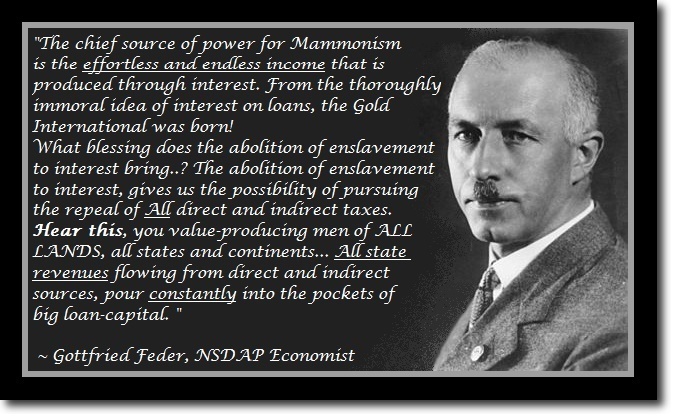

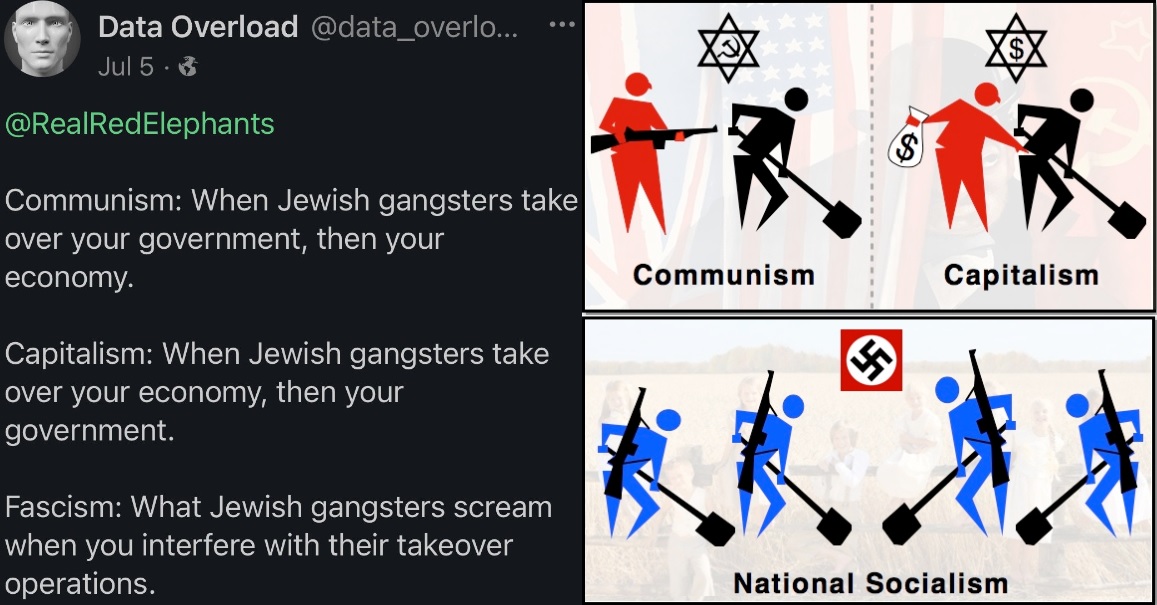
>>397653
>the fuck you think you're going to deal with in a homogeneous mayo state, dumbass
The National Socialist economic plan as designed by NSDAP. You really think you are facing an ignoramus pleb like yourself and other serfs?
>the fuck you think you're going to deal with in a homogeneous mayo state, dumbass
The National Socialist economic plan as designed by NSDAP. You really think you are facing an ignoramus pleb like yourself and other serfs?
>>397656
Usury has no meaning when you're property of the State, like I said this is the grenade for a headache slight-of-hand that fascism promises.
Usury has no meaning when you're property of the State, like I said this is the grenade for a headache slight-of-hand that fascism promises.
What's going on in America is not a leader'd set of events, all the leaders oppose and disavow because they're on the chopping block regardless of their side. What's going on is vigilante violence directed at decapitating leadership, people taking matters into their own hands regardless of what any figureheads say because the ratio is a million to one. That's radically more dangerous and unstoppable so long as it has momentum, and since they're targeting the leaders instead of the rank-and-file there's a lot greater impact on influence than the standard street-brawl protest where no-names get run over or whatever.
>>397657
>property of the State
Your cartoonish Disney supervillain depiction of fascism is not the fascism people believe here.
The state is property of the people, not the other way around. That's why nationalist syndicalism begins with organized labor movements.
>>397659
You won't say that when it's right wing vigilantes gunning you down in the streets. You will cry fascism, when it's just a taste of your own medicine.
>property of the State
Your cartoonish Disney supervillain depiction of fascism is not the fascism people believe here.
The state is property of the people, not the other way around. That's why nationalist syndicalism begins with organized labor movements.
>>397659
You won't say that when it's right wing vigilantes gunning you down in the streets. You will cry fascism, when it's just a taste of your own medicine.
>>397602
I care how rich a man is because money is power and I don't trust humans with too much power. Look how bezos uses his power fuck over his workers or how bill gates used his power to force compliance during covid. Money is a form of power. When you understand that you understand ancap is a shit meme.
I care how rich a man is because money is power and I don't trust humans with too much power. Look how bezos uses his power fuck over his workers or how bill gates used his power to force compliance during covid. Money is a form of power. When you understand that you understand ancap is a shit meme.
>>397602
>ban lobbying and bribes
In what world do you live where politicians wouldn't take a large bribe? I would like to live in that world. Unfortunately I live in the real world. You are ignoring human nature.
>ban lobbying and bribes
In what world do you live where politicians wouldn't take a large bribe? I would like to live in that world. Unfortunately I live in the real world. You are ignoring human nature.
>>397686
>I care how rich a man is because money is power and I don't trust humans with too much power.
This is why fascists use unions to prevent businesses from having too much power.
>bezos
Hang him.
>>397687
Through fascist syndicalism, the working can can purge corrupt politicians. The point of fascism is that everyone keeps everyone else in check for the benefit of fellow countrymen, including the politicians.
>I care how rich a man is because money is power and I don't trust humans with too much power.
This is why fascists use unions to prevent businesses from having too much power.
>bezos
Hang him.
>>397687
Through fascist syndicalism, the working can can purge corrupt politicians. The point of fascism is that everyone keeps everyone else in check for the benefit of fellow countrymen, including the politicians.
>>397688
>hang him
Based
>Through fascist syndicalism, the working can can purge corrupt politicians. The point of fascism is that everyone keeps everyone else in check for the benefit of fellow countrymen, including the politicians.
I believe the same thing could be achieved through distributism and a neoguild system while keeping more human rights in tact.
>hang him
Based
>Through fascist syndicalism, the working can can purge corrupt politicians. The point of fascism is that everyone keeps everyone else in check for the benefit of fellow countrymen, including the politicians.
I believe the same thing could be achieved through distributism and a neoguild system while keeping more human rights in tact.
>>397689
I used to believe that distributism was socialist garbage, but I have been increasingly open to the idea of it since watching Blackrock buy up all of the land. It's in everyone's interest for farmland and housing to not be consolidated.
>neoguild system
That's what fascism is, bro. A trade union led by nationalist party members occupies the same niche as a guild.
I used to believe that distributism was socialist garbage, but I have been increasingly open to the idea of it since watching Blackrock buy up all of the land. It's in everyone's interest for farmland and housing to not be consolidated.
>neoguild system
That's what fascism is, bro. A trade union led by nationalist party members occupies the same niche as a guild.
>>397690
Distributism is the older, less successful brother of fascism. But I believe in separation of powers so I am a distributist. I also believe the wage system to be an affront to human dignity and I want to bring more cottage style industries back into the hands of families.
(Sorry for flag change on a VPN and the other board I post on is weird with my VPN)
Distributism is the older, less successful brother of fascism. But I believe in separation of powers so I am a distributist. I also believe the wage system to be an affront to human dignity and I want to bring more cottage style industries back into the hands of families.
(Sorry for flag change on a VPN and the other board I post on is weird with my VPN)
>>397650
Here's a genuine question:
In the absence of ethnonationalism, how to Socialists content with the capitalist bourgeoisie class undermining organized labor movements by replacing the local working class with low-wage foreign migrant laborers? Globalist capitalists replace local farm labor with migrants from Latin America on work visas, or illegal immigrants paid under the table. They replace tech laborers with H1B migrants from India. This undermines organized labor movements because in the absence of nationalism, capitalists can just replace any organized laborers with more desperate migrant workers who would not dare unionize. This suppresses wages for local workers and disempowere unions because entire populations of working class people become fungible with third world labor.
What is the non-nationalist socialist response to this? Genuinely curious. One of my biggest issue with socialist labor movements is that they do nothing to address the migrant labor problem, which is arguably why they keep losing in a global economy.
>if you had standards that ensured all workers had rights, they wouldn't be keeping an illegal slave class and visa workers in perpetual limbo on purpose at dirt wages to extract the maximum amount of profit
Except what enforces those standards? Labor movements are enforced by the threat of strikes on behalf of class conscious workers, not legislation. Even if you had laws enforcing fair wages and safe working conditions, that would not stop capitalist business owners from hiring illegal immigrants; if anything, that would encourage them to use more illegal labor, since that would let them evade workplace standards: illegal immigrants never go on strike.
Legislation is slow and often impotent when it comes to workers rights, which is why unions are important in the first place. The law passing labor standards would do nothing without workers enforcing those standards themselves.
As far as I can see it, it's much easier, simpler and more effective to solve the problem but stemming the flow of immigration, so that I'm the absence of third world competition local workers would be empowered to form their own local labor movements and raise workplace standards.
>>397653
We could execute Bezos too after we purge his illegal/jeet workers. That would make his net worth $0. Capitalists like Bezos are responsible for bringing the brown hordes here, so they go on the chopping block too.
>>397657
>Usury has no meaning when you're property of the State
Pretty sure usury is bad in any context. There is no problem in society that cannot be drastically exacerbated by usury getting involved.
>>397659
I agree partly, but not to the conclusion you're thinking of.
Here's a genuine question:
In the absence of ethnonationalism, how to Socialists content with the capitalist bourgeoisie class undermining organized labor movements by replacing the local working class with low-wage foreign migrant laborers? Globalist capitalists replace local farm labor with migrants from Latin America on work visas, or illegal immigrants paid under the table. They replace tech laborers with H1B migrants from India. This undermines organized labor movements because in the absence of nationalism, capitalists can just replace any organized laborers with more desperate migrant workers who would not dare unionize. This suppresses wages for local workers and disempowere unions because entire populations of working class people become fungible with third world labor.
What is the non-nationalist socialist response to this? Genuinely curious. One of my biggest issue with socialist labor movements is that they do nothing to address the migrant labor problem, which is arguably why they keep losing in a global economy.
>if you had standards that ensured all workers had rights, they wouldn't be keeping an illegal slave class and visa workers in perpetual limbo on purpose at dirt wages to extract the maximum amount of profit
Except what enforces those standards? Labor movements are enforced by the threat of strikes on behalf of class conscious workers, not legislation. Even if you had laws enforcing fair wages and safe working conditions, that would not stop capitalist business owners from hiring illegal immigrants; if anything, that would encourage them to use more illegal labor, since that would let them evade workplace standards: illegal immigrants never go on strike.
Legislation is slow and often impotent when it comes to workers rights, which is why unions are important in the first place. The law passing labor standards would do nothing without workers enforcing those standards themselves.
As far as I can see it, it's much easier, simpler and more effective to solve the problem but stemming the flow of immigration, so that I'm the absence of third world competition local workers would be empowered to form their own local labor movements and raise workplace standards.
>>397653
We could execute Bezos too after we purge his illegal/jeet workers. That would make his net worth $0. Capitalists like Bezos are responsible for bringing the brown hordes here, so they go on the chopping block too.
>>397657
>Usury has no meaning when you're property of the State
Pretty sure usury is bad in any context. There is no problem in society that cannot be drastically exacerbated by usury getting involved.
>>397659
I agree partly, but not to the conclusion you're thinking of.
>>397706
Christian nationalism and an understanding that the family unit is the most fundamental unit of society could be an alternative to ethnonationalism. Check out some of the philosophy threads on alogs.space/robowaifu. Techno distributism is the dominant ideology there. Some of them are national distributists
Christian nationalism and an understanding that the family unit is the most fundamental unit of society could be an alternative to ethnonationalism. Check out some of the philosophy threads on alogs.space/robowaifu. Techno distributism is the dominant ideology there. Some of them are national distributists
>>397707
>Christian nationalism and an understanding that the family unit is the most fundamental unit of society could be an alternative to ethnonationalism
Family is important, but a single family is not powerful enough to maintain an entire nation's territorial integrity. Humans will always value their families first, but human society is tribal: families must work together.
>national distributists
I will look into this.
>Christian nationalism and an understanding that the family unit is the most fundamental unit of society could be an alternative to ethnonationalism
Family is important, but a single family is not powerful enough to maintain an entire nation's territorial integrity. Humans will always value their families first, but human society is tribal: families must work together.
>national distributists
I will look into this.
>>397706
Profit is considered theft from the worker in Marxist theory because it comes from surplus value, which is the difference between what a worker is paid and the value they produce. Capitalists pay workers only a portion of the value their labor creates, keeping the rest as profit. Since the worker did all the productive labor, this unpaid portion is viewed as exploitation.
>how to Socialists content with the capitalist bourgeoisie class undermining organized labor movements
The answer to Bourgeois Democracy is the Dictatorship of the Proletariat.
Bourgeois Democracy
Definition: A political system that appears democratic but ultimately serves the interests of the capitalist class.
Key Idea: While it includes elections and civil rights, real power is held by those who control economic resources, protecting private property and capitalist interests over the working class.
Dictatorship of the Proletariat
Definition: A transitional state between capitalism and communism where the working class holds political power.
Key Idea: Not a dictatorship over the proletariat, but by it—suppressing the bourgeoisie and reorganizing society along socialist lines.
>They replace tech laborers with H1B migrants from India
Under socialism, cheap foreign H1B workers would not be an issue because the economy would not be driven by profit or competition. All workers would be covered by the same labor laws, wages, and protections. This removes any incentive to hire foreign workers for lower pay or to outsource jobs.
Class Struggle
Definition: The ongoing conflict between social classes, primarily between the bourgeoisie (capitalist class) and the proletariat (working class).
Key Idea: History progresses through class conflict, and socialism emerges from the victory of the working class.
Proletariat
Definition: The working class that does not own the means of production and must sell their labor to survive.
Role in Socialism: The revolutionary class destined to overthrow capitalism and build socialism.
Bourgeoisie
Definition: The capitalist class that owns the means of production and exploits labor.
Marxist View: Their domination is ended in socialism through expropriation and collectivization.
Means of Production
Definition: The physical and institutional infrastructure used to produce goods (e.g., factories, land, tools).
In Socialism: Taken from private ownership and made collective or state-owned.
Relations of Production
Definition: The social relationships people enter into as they acquire and use the means of production.
Under Socialism: Shift from exploitative (capitalist) to cooperative (socialist) relations.
Surplus Value
Definition: The value produced by labor beyond what is paid in wages—appropriated by capitalists as profit.
Marxist Critique: This is the core of capitalist exploitation, which socialism seeks to abolish.
Alienation
Definition: The estrangement of workers from the product of their labor, their own humanity, and others under capitalism.
In Socialism: Workers regain control over their labor and its products, overcoming alienation.
Base and Superstructure
Definition: The "base" (economic system) shapes the "superstructure" (politics, culture, ideology).
Marxist View: Socialism changes the base, leading to a transformation of society’s entire superstructure.
Historical Materialism
Definition: Marx's theory that history progresses through material economic forces and class struggle.
In Context: Socialism is a historically necessary stage after capitalism.
Withering Away of the State
Definition: In full communism, the state becomes unnecessary and disappears as class antagonisms vanish.
Socialist Phase: The state exists but is a workers’ state—not permanent.
Communism
Definition: The classless, stateless, moneyless society that follows socialism.
"From each according to his ability, to each according to his needs."
Expropriation of the Expropriators
Definition: The process of taking the means of production from capitalists and placing them under public or collective control.
Vanguard Party
Leninist Term: A revolutionary party of professional revolutionaries leading the working class to socialism.
Controversial in broader Marxism: Not present in Marx’s early writings but central in Leninism.
False Consciousness
Definition: When workers adopt the ideology of the ruling class, obscuring their real interests.
Socialism's Goal: Raise class consciousness to break false beliefs and organize the working class.
Commodity Fetishism
Definition: Viewing social relationships through the lens of market exchange, where commodities seem to have intrinsic value.
Labor Theory of Value
Definition: The idea that labor is the source of all value.
Revolutionary Praxis
Definition: The combination of theory and action in revolutionary struggle.
Profit is considered theft from the worker in Marxist theory because it comes from surplus value, which is the difference between what a worker is paid and the value they produce. Capitalists pay workers only a portion of the value their labor creates, keeping the rest as profit. Since the worker did all the productive labor, this unpaid portion is viewed as exploitation.
>how to Socialists content with the capitalist bourgeoisie class undermining organized labor movements
The answer to Bourgeois Democracy is the Dictatorship of the Proletariat.
Bourgeois Democracy
Definition: A political system that appears democratic but ultimately serves the interests of the capitalist class.
Key Idea: While it includes elections and civil rights, real power is held by those who control economic resources, protecting private property and capitalist interests over the working class.
Dictatorship of the Proletariat
Definition: A transitional state between capitalism and communism where the working class holds political power.
Key Idea: Not a dictatorship over the proletariat, but by it—suppressing the bourgeoisie and reorganizing society along socialist lines.
>They replace tech laborers with H1B migrants from India
Under socialism, cheap foreign H1B workers would not be an issue because the economy would not be driven by profit or competition. All workers would be covered by the same labor laws, wages, and protections. This removes any incentive to hire foreign workers for lower pay or to outsource jobs.
Class Struggle
Definition: The ongoing conflict between social classes, primarily between the bourgeoisie (capitalist class) and the proletariat (working class).
Key Idea: History progresses through class conflict, and socialism emerges from the victory of the working class.
Proletariat
Definition: The working class that does not own the means of production and must sell their labor to survive.
Role in Socialism: The revolutionary class destined to overthrow capitalism and build socialism.
Bourgeoisie
Definition: The capitalist class that owns the means of production and exploits labor.
Marxist View: Their domination is ended in socialism through expropriation and collectivization.
Means of Production
Definition: The physical and institutional infrastructure used to produce goods (e.g., factories, land, tools).
In Socialism: Taken from private ownership and made collective or state-owned.
Relations of Production
Definition: The social relationships people enter into as they acquire and use the means of production.
Under Socialism: Shift from exploitative (capitalist) to cooperative (socialist) relations.
Surplus Value
Definition: The value produced by labor beyond what is paid in wages—appropriated by capitalists as profit.
Marxist Critique: This is the core of capitalist exploitation, which socialism seeks to abolish.
Alienation
Definition: The estrangement of workers from the product of their labor, their own humanity, and others under capitalism.
In Socialism: Workers regain control over their labor and its products, overcoming alienation.
Base and Superstructure
Definition: The "base" (economic system) shapes the "superstructure" (politics, culture, ideology).
Marxist View: Socialism changes the base, leading to a transformation of society’s entire superstructure.
Historical Materialism
Definition: Marx's theory that history progresses through material economic forces and class struggle.
In Context: Socialism is a historically necessary stage after capitalism.
Withering Away of the State
Definition: In full communism, the state becomes unnecessary and disappears as class antagonisms vanish.
Socialist Phase: The state exists but is a workers’ state—not permanent.
Communism
Definition: The classless, stateless, moneyless society that follows socialism.
"From each according to his ability, to each according to his needs."
Expropriation of the Expropriators
Definition: The process of taking the means of production from capitalists and placing them under public or collective control.
Vanguard Party
Leninist Term: A revolutionary party of professional revolutionaries leading the working class to socialism.
Controversial in broader Marxism: Not present in Marx’s early writings but central in Leninism.
False Consciousness
Definition: When workers adopt the ideology of the ruling class, obscuring their real interests.
Socialism's Goal: Raise class consciousness to break false beliefs and organize the working class.
Commodity Fetishism
Definition: Viewing social relationships through the lens of market exchange, where commodities seem to have intrinsic value.
Labor Theory of Value
Definition: The idea that labor is the source of all value.
Revolutionary Praxis
Definition: The combination of theory and action in revolutionary struggle.
>>397718
>The answer to Bourgeois Democracy is the Dictatorship of the Proletariat.
But how do you establish that it the Bourgeois can just replace the proletariat with foreign labor? If working class people can just be replaced with foreigners?
>because the economy would not be driven by profit or competition
But it is now. How do you start a worker's revolution if the workers are easily replaced?
>All workers would be covered by the same labor laws, wages, and protections.
How can you enforce this if the company has the opportunity to subvert unions by replacing workers?
The power of unions comes from their ability to refuse work through strikes. The competition from foreign labor eliminates the power of unions because it causes an international race to the bottom for labor standards.
>A bunch of definitions
All of this is barely relevant to the questions.
>The answer to Bourgeois Democracy is the Dictatorship of the Proletariat.
But how do you establish that it the Bourgeois can just replace the proletariat with foreign labor? If working class people can just be replaced with foreigners?
>because the economy would not be driven by profit or competition
But it is now. How do you start a worker's revolution if the workers are easily replaced?
>All workers would be covered by the same labor laws, wages, and protections.
How can you enforce this if the company has the opportunity to subvert unions by replacing workers?
The power of unions comes from their ability to refuse work through strikes. The competition from foreign labor eliminates the power of unions because it causes an international race to the bottom for labor standards.
>A bunch of definitions
All of this is barely relevant to the questions.
>>397720
you're asking walls of text worth of stupid questions based on misunderstandings and then skip over the explanations that require definitions of the terms being used
then you ask the same fucking questions again after you've skipped over the answers, fuck off
you're asking walls of text worth of stupid questions based on misunderstandings and then skip over the explanations that require definitions of the terms being used
then you ask the same fucking questions again after you've skipped over the answers, fuck off
>>397708
>families must work together.
This is why distributism proposes a return to the guild system.
>families must work together.
This is why distributism proposes a return to the guild system.

>>397718
>Bourgeois Democracy
>Definition: A political system that appears democratic but ultimately serves the interests of the capitalist class.
>Key Idea: While it includes elections and civil rights, real power is held by those who control economic resources, protecting private property and capitalist interests over the working class.
This is one of the major criticisms that Fascists have of democracy, because elections can be swayed by (((interest groups))) who own the media and/or buy the most ads on TV.
>Vanguard Party
>Leninist Term: A revolutionary party of professional revolutionaries leading the working class to socialism.
>Controversial in broader Marxism: Not present in Marx’s early writings but central in Leninism.
Interesting, Fascists employ similar concepts. Unions led by vanguard party members can keep the business in check.
>Expropriation of the Expropriators
>Definition: The process of taking the means of production from capitalists and placing them under public or collective control.
Another place where fascists agree. Companies who abuse their workers and/or subvert the goals of the people can have their businesses confiscated. The threat of imminent expropriation is part of what keeps the private sector controlled under fascism.
>>397724
You didn't really answer the question though.
I asked how you are able to lead a union led w,orkers revolution if the capitalists can just replace union workers with foreigners. Would that not prevent the worker's revolution from occurring? You need strong unions to have a workers revolution, but you can't have strong labor movements if the capitalists can just replace laborers with third worlders.
What is the common Socialist response to this dilemma? I'm sure at least some of you have considered it. Even my liberal friends have been increasingly vocal about how increases in migrant labor run contrary to the goals of labor movements.
>Bourgeois Democracy
>Definition: A political system that appears democratic but ultimately serves the interests of the capitalist class.
>Key Idea: While it includes elections and civil rights, real power is held by those who control economic resources, protecting private property and capitalist interests over the working class.
This is one of the major criticisms that Fascists have of democracy, because elections can be swayed by (((interest groups))) who own the media and/or buy the most ads on TV.
>Vanguard Party
>Leninist Term: A revolutionary party of professional revolutionaries leading the working class to socialism.
>Controversial in broader Marxism: Not present in Marx’s early writings but central in Leninism.
Interesting, Fascists employ similar concepts. Unions led by vanguard party members can keep the business in check.
>Expropriation of the Expropriators
>Definition: The process of taking the means of production from capitalists and placing them under public or collective control.
Another place where fascists agree. Companies who abuse their workers and/or subvert the goals of the people can have their businesses confiscated. The threat of imminent expropriation is part of what keeps the private sector controlled under fascism.
>>397724
You didn't really answer the question though.
I asked how you are able to lead a union led w,orkers revolution if the capitalists can just replace union workers with foreigners. Would that not prevent the worker's revolution from occurring? You need strong unions to have a workers revolution, but you can't have strong labor movements if the capitalists can just replace laborers with third worlders.
What is the common Socialist response to this dilemma? I'm sure at least some of you have considered it. Even my liberal friends have been increasingly vocal about how increases in migrant labor run contrary to the goals of labor movements.
>>397725
Cool. This would make it compatible with fascism. Guilds and party-led unions aren't that different from one another.
Cool. This would make it compatible with fascism. Guilds and party-led unions aren't that different from one another.
>>397732
The primary difference between fascism and distributism would be that fascism places more emphasis on the state or race and distributism places more emphasis on the family and clan.
The primary difference between fascism and distributism would be that fascism places more emphasis on the state or race and distributism places more emphasis on the family and clan.
>>397730
You're still just repeating questions based in the misunderstandings I've already explained. When you stop asking me to theorize about stupid things in situations that presume your backwards fascist idea of what socialism should be, or just blatantly skipping over the answers to the questions you've already asked, let me know.
You're still just repeating questions based in the misunderstandings I've already explained. When you stop asking me to theorize about stupid things in situations that presume your backwards fascist idea of what socialism should be, or just blatantly skipping over the answers to the questions you've already asked, let me know.
>>397718
Thr dictatorship of the proletariat is where Marxism fails. Suppressing the people who ran society so you can re-engineer it to utopia while giving a hand full of people absolute control is the most retarded idea in the history of humanity.
Thr dictatorship of the proletariat is where Marxism fails. Suppressing the people who ran society so you can re-engineer it to utopia while giving a hand full of people absolute control is the most retarded idea in the history of humanity.
>>397734
What was your answer to the question?
The closest you came to answering it was the vague suggestion of raising labor standards here:
>Under socialism, cheap foreign H1B workers would not be an issue because the economy would not be driven by profit or competition. All workers would be covered by the same labor laws, wages, and protections. This removes any incentive to hire foreign workers for lower pay or to outsource jobs.
- but how do you get better labor standards when foreign labor undermines your labor movement by replacing the proletariat?
You you expect the same Bourgeois Democracy to just have you better labor standards, without a union led national labor movement?
What was your answer to the question?
The closest you came to answering it was the vague suggestion of raising labor standards here:
>Under socialism, cheap foreign H1B workers would not be an issue because the economy would not be driven by profit or competition. All workers would be covered by the same labor laws, wages, and protections. This removes any incentive to hire foreign workers for lower pay or to outsource jobs.
- but how do you get better labor standards when foreign labor undermines your labor movement by replacing the proletariat?
You you expect the same Bourgeois Democracy to just have you better labor standards, without a union led national labor movement?
>>397735
Capitalist is a class, it's not a demographic of individuals, the capitalist just have to give up their position as exploiters at the top of an unjust hierarchy of wage theft. There's nothing utopian about workers getting the value of the labor they themselves produced, and there's nothing normal about submitting yourself to slavery to a class of people who produce not value and only monopolized the necessary instruments of production. "The People" are already fully represented in the Dictatorship of the Proletariat, the only thing that's not represented is the permission to enact injustice of wage slavery.
Capitalist is a class, it's not a demographic of individuals, the capitalist just have to give up their position as exploiters at the top of an unjust hierarchy of wage theft. There's nothing utopian about workers getting the value of the labor they themselves produced, and there's nothing normal about submitting yourself to slavery to a class of people who produce not value and only monopolized the necessary instruments of production. "The People" are already fully represented in the Dictatorship of the Proletariat, the only thing that's not represented is the permission to enact injustice of wage slavery.
>>397736
>but what if (ignores answer to the question and the relevant definitions to misuse the terms and and ask the same god damn question again)
>but what if (ignores answer to the question and the relevant definitions to misuse the terms and and ask the same god damn question again)
>>397738
I literally greentexted your half-answer. I asked you for specifics on the matter, because the answer you gave is vague. I was genuinely curious if Socialists have an actual solution to this problem, because it is an issue that I care about and would be open to hearing the Socialist position on the topic. Is that really all you have to say about the problem of foreign labor undermining labor movements? Even my liberal friends have been increasingly vocal about how exploitative migrant labor is threat to domestic labor movements.
Even the distributist guy is making a better case for his fringe economic system than you are. Learn to debate in good faith.
>>397735
No, the most retarded idea is the withering of that state. It's nonsensical idealism to imagine an institution that commands all the world's resources would just voluntarily dismantle itself, instead of the shitheads running the show jealously clinging to power like they always have in human history. The fact that communism doesn't provide for any political mechanism to force the withering of the state is a major flaw in the plan.
>>397737
>there's nothing normal about
You say it's not normal, but it's been the status quo for the past 12k years of human civilization. That's the definition of normal.
That doesn't mean it's not bad, but it is normal.
I literally greentexted your half-answer. I asked you for specifics on the matter, because the answer you gave is vague. I was genuinely curious if Socialists have an actual solution to this problem, because it is an issue that I care about and would be open to hearing the Socialist position on the topic. Is that really all you have to say about the problem of foreign labor undermining labor movements? Even my liberal friends have been increasingly vocal about how exploitative migrant labor is threat to domestic labor movements.
Even the distributist guy is making a better case for his fringe economic system than you are. Learn to debate in good faith.
>>397735
No, the most retarded idea is the withering of that state. It's nonsensical idealism to imagine an institution that commands all the world's resources would just voluntarily dismantle itself, instead of the shitheads running the show jealously clinging to power like they always have in human history. The fact that communism doesn't provide for any political mechanism to force the withering of the state is a major flaw in the plan.
>>397737
>there's nothing normal about
You say it's not normal, but it's been the status quo for the past 12k years of human civilization. That's the definition of normal.
That doesn't mean it's not bad, but it is normal.
>>397739
You're continuing to misuse the terms I've already provided definitions for and you're owed no response. Now everyone else can see why the list of relevant definitions was necessary, because all you've done so far is deliberately misrepresent what each of those terms means.
You're continuing to misuse the terms I've already provided definitions for and you're owed no response. Now everyone else can see why the list of relevant definitions was necessary, because all you've done so far is deliberately misrepresent what each of those terms means.
>>397737
You could get the value of your labor and more if you produce goods with your family and clan and also not get fucked by the intelligencia
You could get the value of your labor and more if you produce goods with your family and clan and also not get fucked by the intelligencia
>>397739
>The fact that communism doesn't provide for any political mechanism to force the withering of the state is a major flaw in the plan.
Well said
>The fact that communism doesn't provide for any political mechanism to force the withering of the state is a major flaw in the plan.
Well said
>>397591
>>397556
>>397743
>>397739
You're fundamentally not understanding what "The State" is, or how it functions. You could read The State and Revolution by Lenin if you actually wanted to criticize the concept but you'd rather snark at a shallow misunderstanding of terms you intentionally refuse to understand - even as they're spoon-fed to you.
>>397556
>>397743
>>397739
You're fundamentally not understanding what "The State" is, or how it functions. You could read The State and Revolution by Lenin if you actually wanted to criticize the concept but you'd rather snark at a shallow misunderstanding of terms you intentionally refuse to understand - even as they're spoon-fed to you.
>>397740
>you're owed no response
Then I see I'm wasting my time with you.
I would have hoped that socialists had a solution to the problem, but I guess I'll go check out the links the Distributist provided instead.
Btw, notice how the farm labor movements in the 1970s didn't go anywhere? Notice how those unions don't exist anymore? They're all dead. The farm labor movement is dead. The reason those unions are gone is because the rich kikes who bought up all of the farmland realized that they could just replace American workers with migrants, and once they did that they killed the farm labor movement.
If you fucks don't seriously consider how to address the issue of migrant labor undermining local proletariats movements, all of your labor movements will end in failure.
>>397742
The influence of the intelligencia is probably stronger than ever before, since the tech-reliant economy means that technocracy grows ever closer. Now it's going to become a battle over who runs the everything-machines, and who controls the data that goes into the LLMs.
>>397744
H1B pajeets and illegal spics replacing local workers to undermine labor movements was not an issue that Lenin faced in his time, which is why 20th century Socialists have very few solutions on the matter.
But sure, go ahead watch the union for your workplace slowly either away as the company that owns it realizes that they can replace you with third world shitskins. You're totally making great progress /s.
>you're owed no response
Then I see I'm wasting my time with you.
I would have hoped that socialists had a solution to the problem, but I guess I'll go check out the links the Distributist provided instead.
Btw, notice how the farm labor movements in the 1970s didn't go anywhere? Notice how those unions don't exist anymore? They're all dead. The farm labor movement is dead. The reason those unions are gone is because the rich kikes who bought up all of the farmland realized that they could just replace American workers with migrants, and once they did that they killed the farm labor movement.
If you fucks don't seriously consider how to address the issue of migrant labor undermining local proletariats movements, all of your labor movements will end in failure.
>>397742
The influence of the intelligencia is probably stronger than ever before, since the tech-reliant economy means that technocracy grows ever closer. Now it's going to become a battle over who runs the everything-machines, and who controls the data that goes into the LLMs.
>>397744
H1B pajeets and illegal spics replacing local workers to undermine labor movements was not an issue that Lenin faced in his time, which is why 20th century Socialists have very few solutions on the matter.
But sure, go ahead watch the union for your workplace slowly either away as the company that owns it realizes that they can replace you with third world shitskins. You're totally making great progress /s.
by the way this is also why debates with fascists aren't prioritized, not because people are afraid of the ideas but because truth is not found in validating nonsense with equal time. they have every incentive to pretend not to understand what you're saying and to misrepresent you simply to keep the debate going when we already know the correct solutions to issues. it's the same tactic used by flat-earthers who just want a platform, any platform, even when they know they'll lose on every point. their success lies in simply getting airtime and presenting the issue as a both sides equally valid topic of discussion. as long as the subject requires any deeper understanding whether in science economics or anything else it has the effect of creating doubt and legitimizing nonsense with dishonest rhetoric.
>>397747
>because truth is not found in validating nonsense with equal time
Then why did you spend so much time posting here?
>they have every incentive to pretend not to understand what you're saying
What incentives?
>it's the same tactic used by flat-earthers
You are exaggerating. I wasted hours debating with the flat earther in that abysmal thread, and flattie tactics are worse than you can even imagine. Go check it in /vx/ if you care.
>their success lies in simply getting airtime and presenting the issue as a both sides equally valid topic of discussion
If fascists are so bad at debating, why would they succeed from simply getting airtime?
>legitimizing nonsense with dishonest rhetoric
The issue of migrant labor undermining local labor movements is a very real issue with severe consequences, and you continue to ignore it with non-answers.
What do you do if a stadium full of bright-eyed, trusting working class farmers came to you and honestly asked them what your solution to migrants taking their jobs was? Would you have them watch a 4 hour video?
You refuse to give direct answers, and you wonder why the working class continues to move away from the left.
>because truth is not found in validating nonsense with equal time
Then why did you spend so much time posting here?
>they have every incentive to pretend not to understand what you're saying
What incentives?
>it's the same tactic used by flat-earthers
You are exaggerating. I wasted hours debating with the flat earther in that abysmal thread, and flattie tactics are worse than you can even imagine. Go check it in /vx/ if you care.
>their success lies in simply getting airtime and presenting the issue as a both sides equally valid topic of discussion
If fascists are so bad at debating, why would they succeed from simply getting airtime?
>legitimizing nonsense with dishonest rhetoric
The issue of migrant labor undermining local labor movements is a very real issue with severe consequences, and you continue to ignore it with non-answers.
What do you do if a stadium full of bright-eyed, trusting working class farmers came to you and honestly asked them what your solution to migrants taking their jobs was? Would you have them watch a 4 hour video?
You refuse to give direct answers, and you wonder why the working class continues to move away from the left.

>>397748
>Then why did you spend so much time posting here?
I'm in enemy territory. Disrupting the flat-earthers on their own forums is a different prospect than platforming them on a national stage to "just ask questions" about the Firmament.
>Then why did you spend so much time posting here?
I'm in enemy territory. Disrupting the flat-earthers on their own forums is a different prospect than platforming them on a national stage to "just ask questions" about the Firmament.
>>397748
>If fascists are so bad at debating, why would they succeed from simply getting airtime?
When your strategy relies on inflaming biases people already have, it's a Scopes Monkey Trial moment. They're not worried about the facts, they're playing on the indoctrination and bigotry society already has against science and facts because it conflicts with their "Mystical Truth", which is why the foundation of Marxism is Dialectical Materialism - a method rooted in material reality and constant change, not a fixed dogma.
See: Base and Superstructure definitions above.
>If fascists are so bad at debating, why would they succeed from simply getting airtime?
When your strategy relies on inflaming biases people already have, it's a Scopes Monkey Trial moment. They're not worried about the facts, they're playing on the indoctrination and bigotry society already has against science and facts because it conflicts with their "Mystical Truth", which is why the foundation of Marxism is Dialectical Materialism - a method rooted in material reality and constant change, not a fixed dogma.
See: Base and Superstructure definitions above.
1757720532.webm (3.5 MB, Resolution:786x540 Length:00:02:47, 6023233__safe_edit_imported+from+ponybooru_starlight+glimmer_oc_oc-colon-aryanne_oc-colon-veronika_earth+pony_pony_unicorn_-fwslash-mlp-fwslash-_animated_cute_d (2).webm) [play once] [loop]

>>397750
>I'm in enemy territory.
Sad of you to think that way. Maybe it you had been more open to debating in good faith we might have been able to see eye to eye on some things, like the importance of unions and class consciousness. Too bad you had no interest in being a member of the community in the first place. Maybe Bluesky might be more to your liking.
>flat-earthers on their own forums
There's only one flat earther here (he is annoying). This is not a flat earth forum. It's a free speech forum, where all opinions are welcome, including retards like those of flat earthers and homicidal communists like you.
Come back anytime. Diversity of viewpoints is important for a forum's health, even the bad ones.
>bigotry society already has
Are you suggesting that people have a natural inclination towards fascism because it connects to intuitive tribal dispositions and social habits?
Because I agree.
>I'm in enemy territory.
Sad of you to think that way. Maybe it you had been more open to debating in good faith we might have been able to see eye to eye on some things, like the importance of unions and class consciousness. Too bad you had no interest in being a member of the community in the first place. Maybe Bluesky might be more to your liking.
>flat-earthers on their own forums
There's only one flat earther here (he is annoying). This is not a flat earth forum. It's a free speech forum, where all opinions are welcome, including retards like those of flat earthers and homicidal communists like you.
Come back anytime. Diversity of viewpoints is important for a forum's health, even the bad ones.
>bigotry society already has
Are you suggesting that people have a natural inclination towards fascism because it connects to intuitive tribal dispositions and social habits?
Because I agree.
>>397748
>The issue of migrant labor undermining
I want you to explain how an illegal immigrant laborer having the same workers rights and equal pay would retain the capitalist incentive to import foreign labor - much less if there was no capitalist and it was entirely worker owned. You're asking questions that scoff at changing critical pieces of a machine, and then not understanding that changes how the entire machine works. And your only actual objection to any of this is that minorities exist, and you just want to kill minorities and that's why you don't like socialism, because they don't validate your False Consciousness (see term list above).
>The issue of migrant labor undermining
I want you to explain how an illegal immigrant laborer having the same workers rights and equal pay would retain the capitalist incentive to import foreign labor - much less if there was no capitalist and it was entirely worker owned. You're asking questions that scoff at changing critical pieces of a machine, and then not understanding that changes how the entire machine works. And your only actual objection to any of this is that minorities exist, and you just want to kill minorities and that's why you don't like socialism, because they don't validate your False Consciousness (see term list above).
>>397754
>an illegal immigrant laborer having the same workers rights and equal pay
You're missing the point. How do we even get better labor standards if the migrants can be used to undermine the labor movements before they even start? How do you impose those standards without a strong labor movement. If you try to unionize, they would just replace you with migrants, like they have been for the past 50+ years. Half a century and the farm labor movement is even worse off than it was in the 60s. You know how that happened? Migrant labor.
>bigotry society already has
But how do you GET to that point? So long as workers are replaceable, they have no power.
>objection to any of this is that minorities exist
In part, yes, I despise the presence of the brownoids flooding in, for completely separate reasons, but my criticism of how they diminish the power is rooted in material pragmatism.
> you don't like socialism, because they don't validate your False Consciousness
You can call it whatever you want, but I won't see the appeal in an ideology that does nothing to address the values important to me.
Nationalism isn't just an issue for me, it's a cause.
>an illegal immigrant laborer having the same workers rights and equal pay
You're missing the point. How do we even get better labor standards if the migrants can be used to undermine the labor movements before they even start? How do you impose those standards without a strong labor movement. If you try to unionize, they would just replace you with migrants, like they have been for the past 50+ years. Half a century and the farm labor movement is even worse off than it was in the 60s. You know how that happened? Migrant labor.
>bigotry society already has
But how do you GET to that point? So long as workers are replaceable, they have no power.
>objection to any of this is that minorities exist
In part, yes, I despise the presence of the brownoids flooding in, for completely separate reasons, but my criticism of how they diminish the power is rooted in material pragmatism.
> you don't like socialism, because they don't validate your False Consciousness
You can call it whatever you want, but I won't see the appeal in an ideology that does nothing to address the values important to me.
Nationalism isn't just an issue for me, it's a cause.
>>397752
>people have a natural inclination towards fascism
No, see False Consciousness (term list above).
Also Base and Superstructure (term list above).
Continued debate on "What is 2+2" does not mean more people will be convinced of the right answer, especially not if their whole false cultural identity and material privilege is based in acting as if they believe it's 5. Debate requires a common ground in getting to the Truth, but Fascists necessarily do not believe in Truth at all, the core of it is the Mystical Truth that is in violation of facts and material reality - it is a cult, not a science.
>people have a natural inclination towards fascism
No, see False Consciousness (term list above).
Also Base and Superstructure (term list above).
Continued debate on "What is 2+2" does not mean more people will be convinced of the right answer, especially not if their whole false cultural identity and material privilege is based in acting as if they believe it's 5. Debate requires a common ground in getting to the Truth, but Fascists necessarily do not believe in Truth at all, the core of it is the Mystical Truth that is in violation of facts and material reality - it is a cult, not a science.
>>397759
>if their whole false cultural identity
Cultural identity is a thing that I value. People's priorities are based on their values. It's a matter of opinion.
>Debate requires a common ground
I began the discussion by pointing out the importance of trade unions. If that's not common ground between fascism and socialism, idk what would be.
Also, fascism is just an administrative ideology, rooted in materialism as well. The "Mystical Truth" you're referring to is moreso related to National Socialism, which is admittedly very esoteric.
>if their whole false cultural identity
Cultural identity is a thing that I value. People's priorities are based on their values. It's a matter of opinion.
>Debate requires a common ground
I began the discussion by pointing out the importance of trade unions. If that's not common ground between fascism and socialism, idk what would be.
Also, fascism is just an administrative ideology, rooted in materialism as well. The "Mystical Truth" you're referring to is moreso related to National Socialism, which is admittedly very esoteric.
>>397754
There is an additional component to illegals that make them much more desireable workers than citizens, and that is compliance. From their perspective, they came penniless and nameless, and thus are willing to make any amount of money to scrape by cuz 4 bucks is still more than 0 bucks. In addition, they'll never complain about pesky things like insurance and worker's comp cuz they are literally one phone call away from getting ICE on their ass. Even if I felt cute and gave them a real wage they'll still be cheaper than a citizen simply cuz they know their place in the company: expendable and submissive. An American? Oh, what a high maintenance piece of work! Demanding all sorts of shit, and god forbid, they come in asking for a raise!
There is an additional component to illegals that make them much more desireable workers than citizens, and that is compliance. From their perspective, they came penniless and nameless, and thus are willing to make any amount of money to scrape by cuz 4 bucks is still more than 0 bucks. In addition, they'll never complain about pesky things like insurance and worker's comp cuz they are literally one phone call away from getting ICE on their ass. Even if I felt cute and gave them a real wage they'll still be cheaper than a citizen simply cuz they know their place in the company: expendable and submissive. An American? Oh, what a high maintenance piece of work! Demanding all sorts of shit, and god forbid, they come in asking for a raise!
>>397762
You cannot even find a job picking tomatoes as an American citizen. They don't even advertise those jobs to Americans at all. They're not interested in local labor, and they don't want citizens to see the horrible ways they treat the migrants.
That's what killed the farm labor movement in America. American wage farmers were completely replaced by migrants, and now they can't even unionize to fix it because they're not even part of the picture anymore.
You cannot even find a job picking tomatoes as an American citizen. They don't even advertise those jobs to Americans at all. They're not interested in local labor, and they don't want citizens to see the horrible ways they treat the migrants.
That's what killed the farm labor movement in America. American wage farmers were completely replaced by migrants, and now they can't even unionize to fix it because they're not even part of the picture anymore.
>>397757
>How do you impose those standards
You're still just objecting to the means, not the end. And not understanding that Scabs are not a new or insurmountable issue, you're just grasping at straws to reject what I'm saying.
>How do you impose those standards
You're still just objecting to the means, not the end. And not understanding that Scabs are not a new or insurmountable issue, you're just grasping at straws to reject what I'm saying.
>>397765
>You're still just objecting to the means, not the end.
If you don't have a means, your end is just fanfiction.
What progress has the labor movement in America made in the past 30 years? Were you socialists able to sustain your unions in the presence of migrants replacing you? No, you weren't. That is the reality of the labor situation in America.
>You're still just objecting to the means, not the end.
If you don't have a means, your end is just fanfiction.
What progress has the labor movement in America made in the past 30 years? Were you socialists able to sustain your unions in the presence of migrants replacing you? No, you weren't. That is the reality of the labor situation in America.
>>397761
I'm so fucking sick of fascists in this thread not understanding their own ideology. No the fuck it isn't Materialist, it's Idealist, those are fundamentally different base conceptions of reality. No the fuck there isn't common ground between fascists and socialists, fascists appropriate the labels of things from Marxists to do literally the opposite of what they're based on. You're just a god damn idiot talking out of your ass because your whole ideology is meme bullshit. The only thing you can do to improve the discourse is shut the fuck up.
I'm so fucking sick of fascists in this thread not understanding their own ideology. No the fuck it isn't Materialist, it's Idealist, those are fundamentally different base conceptions of reality. No the fuck there isn't common ground between fascists and socialists, fascists appropriate the labels of things from Marxists to do literally the opposite of what they're based on. You're just a god damn idiot talking out of your ass because your whole ideology is meme bullshit. The only thing you can do to improve the discourse is shut the fuck up.
>>397767
>No the fuck there isn't common ground between fascists and socialists
Unions? Expropriation? Healthcare? Vanguard parties?
>fascists appropriate the labels of things from Marxists
That's because 20th century founders of Fascist parties included former members of socialist parties.
Fascism is a syncretic ideology. It was meant to be presented as a third option between capitalism and socialism. That's why it appropriates elements of both.
>You're just a god damn idiot talking out of your ass because your whole ideology is meme bullshit.
I consider it an evolving ideology. Memes are ideological DNA afterall.
>The only thing you can do to improve the discourse is shut the fuck up.
I have been posting to this site every day for the past 8 years. I'm not about to stop.
>No the fuck there isn't common ground between fascists and socialists
Unions? Expropriation? Healthcare? Vanguard parties?
>fascists appropriate the labels of things from Marxists
That's because 20th century founders of Fascist parties included former members of socialist parties.
Fascism is a syncretic ideology. It was meant to be presented as a third option between capitalism and socialism. That's why it appropriates elements of both.
>You're just a god damn idiot talking out of your ass because your whole ideology is meme bullshit.
I consider it an evolving ideology. Memes are ideological DNA afterall.
>The only thing you can do to improve the discourse is shut the fuck up.
I have been posting to this site every day for the past 8 years. I'm not about to stop.

>>397767
On the topic of common ground, what's your take on Strasserism? Uncle Adolf didn't like them, but I consider their existence to be blip in history that showed that Nationalism and Socialism are not mutually exclusive ideologies.
On the topic of common ground, what's your take on Strasserism? Uncle Adolf didn't like them, but I consider their existence to be blip in history that showed that Nationalism and Socialism are not mutually exclusive ideologies.
>>397764
There's also a little thing called "minimum wage" and a jolly group called "labor unions" that hamper labor movements. Even if a company wants to be by the books, they have to contend with citizens who are legally obligated to basically be nannyed by the company like parent and child.
Look I get it, job's hard, probably dangerous. Turnover's gonna be high, accidents will happen no matter what. But after all that, there is only so much money that can be made and distributed. Me, I take path of least resistance: either bare minimum number of fully compensated citizens, or infinitely cycling meat that will never bitch, never complain, and impossible to fleece cuz they would literally work for evening supermarket food scraps for the metaphorical meatgrinder that is the factory floor or hundred-acre crop. Either way, it's the citizen that's getting fucked, and the illegal doesn't fucking care cuz he's content with being alive at all.
There's also a little thing called "minimum wage" and a jolly group called "labor unions" that hamper labor movements. Even if a company wants to be by the books, they have to contend with citizens who are legally obligated to basically be nannyed by the company like parent and child.
Look I get it, job's hard, probably dangerous. Turnover's gonna be high, accidents will happen no matter what. But after all that, there is only so much money that can be made and distributed. Me, I take path of least resistance: either bare minimum number of fully compensated citizens, or infinitely cycling meat that will never bitch, never complain, and impossible to fleece cuz they would literally work for evening supermarket food scraps for the metaphorical meatgrinder that is the factory floor or hundred-acre crop. Either way, it's the citizen that's getting fucked, and the illegal doesn't fucking care cuz he's content with being alive at all.
>>397771
If more people owned productive assets this becomes less of a problem because then there is less competition for those dangerous jobs and the wages would be more respectable. #DistributismGang
If more people owned productive assets this becomes less of a problem because then there is less competition for those dangerous jobs and the wages would be more respectable. #DistributismGang
I just want to point out that only on mlpol can a Marxist, an ancap, a fascist, and a distributist have a four way debate. You won't find this anywhere else on the internet. Very entertaining and interesting.




Distributist ponies
Dusty Tes?
Dusty Tes?


>>397770
We need more pics of Aleksandra. I've been rewatching some old Jreg vids, which put me in the mood for ironic NazBol shitposting.
We need more pics of Aleksandra. I've been rewatching some old Jreg vids, which put me in the mood for ironic NazBol shitposting.
Anarcho capitalism is the ideology of class cucks. You will never be a real billionaire.
>>400764
Is your solution to let the government take it instead?
For the record, the "billionaire class" is only able to exist because of the government which backs their IP laws and defends other properties that they could not feasibly defend themselves.
Is your solution to let the government take it instead?
For the record, the "billionaire class" is only able to exist because of the government which backs their IP laws and defends other properties that they could not feasibly defend themselves.

>>400786
The state is always going to exist. It is part of the nature of civilization. We might as well use its power against our enemies and start building a better system.
The state is always going to exist. It is part of the nature of civilization. We might as well use its power against our enemies and start building a better system.
>>400788
See, I agree. I was just questioning if Anon was about to pitch socialism as the alternative. The reason why I bring up that the billionaire class is given its power by the state is because that is one of the principle arguments behind fascism: by withholding or leveraging the power that allows corporations to amass wealth and power in the first place, the state can functionally incorporate private sector corporations for the benefit of the public.
See, I agree. I was just questioning if Anon was about to pitch socialism as the alternative. The reason why I bring up that the billionaire class is given its power by the state is because that is one of the principle arguments behind fascism: by withholding or leveraging the power that allows corporations to amass wealth and power in the first place, the state can functionally incorporate private sector corporations for the benefit of the public.

>>400788
the states power comes oppression. oppression of others and of its residents. fuck that dude, im done getting oppressed. ancap is the only form of freedom and thats why we should fight
the states power comes oppression. oppression of others and of its residents. fuck that dude, im done getting oppressed. ancap is the only form of freedom and thats why we should fight
[Reply] [Last 50 Posts] [Last 100 Posts] [Last 200 Posts]
You are viewing older replies. Click [View All] or [Last n Posts] to vew latest posts.
Clicking update will load all posts posted after last post on this page.
Post pagination: [Prev] [1-200] [201-207] [Next] [Live (last 200 replies)]
207 replies | 45 files | 58 UUIDs | Page 10