https://www.bbc.co.uk/news/articles/c20x5xn1g92o
US Secretary of State Marco Rubio has warned that the United States will abandon trying to broker a Russia-Ukraine peace deal unless clear signs that a truce can be reached appear soon.
"We're not going to continue with this endeavour for weeks and months on end," Rubio said, adding that the US had "other priorities to focus on".
Russia are now over 3 years into their 3 day special military operation with still no end in sight.
/mlpol/ - My Little Politics
199 replies | 119 files | 99 UUIDs | Page 3

99 replies and 59 files omitted.

How hard must Russia be winning to import a million jeets for cannon fodder?

>>393867
cheap labours , poor assholes and easy to fire from the job
they're winning too hard that we soon enough gonna see the next soviet collapse.
--
imagine if all of it is just glim glam's plan to come back for power , that would be an amazing twist
cheap labours , poor assholes and easy to fire from the job
they're winning too hard that we soon enough gonna see the next soviet collapse.
--
imagine if all of it is just glim glam's plan to come back for power , that would be an amazing twist


Kiev burns under Geran/Iskander barrage.
>In a major escalation on July 10, 2025, the Russian Armed Forces (RAF) fired approximately 400 combat drones alongside 12 precision missiles in their most sustained attack on Ukraine’s capital this year. The bombardment forced Kiev into a continuous 10-hour air raid alert – the longest single alert period recorded since the conflict began.
>In a major escalation on July 10, 2025, the Russian Armed Forces (RAF) fired approximately 400 combat drones alongside 12 precision missiles in their most sustained attack on Ukraine’s capital this year. The bombardment forced Kiev into a continuous 10-hour air raid alert – the longest single alert period recorded since the conflict began.
A Russian drone attack on Odesa today damaged a horse stable. One horse was killed, and several others were injured
https://x.com/nexta_tv/status/1943588987781697863
https://x.com/nexta_tv/status/1943588987781697863
1752281335.png (395.4 KB, 1280x720, Applejack_upset_S01E06-183177154.png)

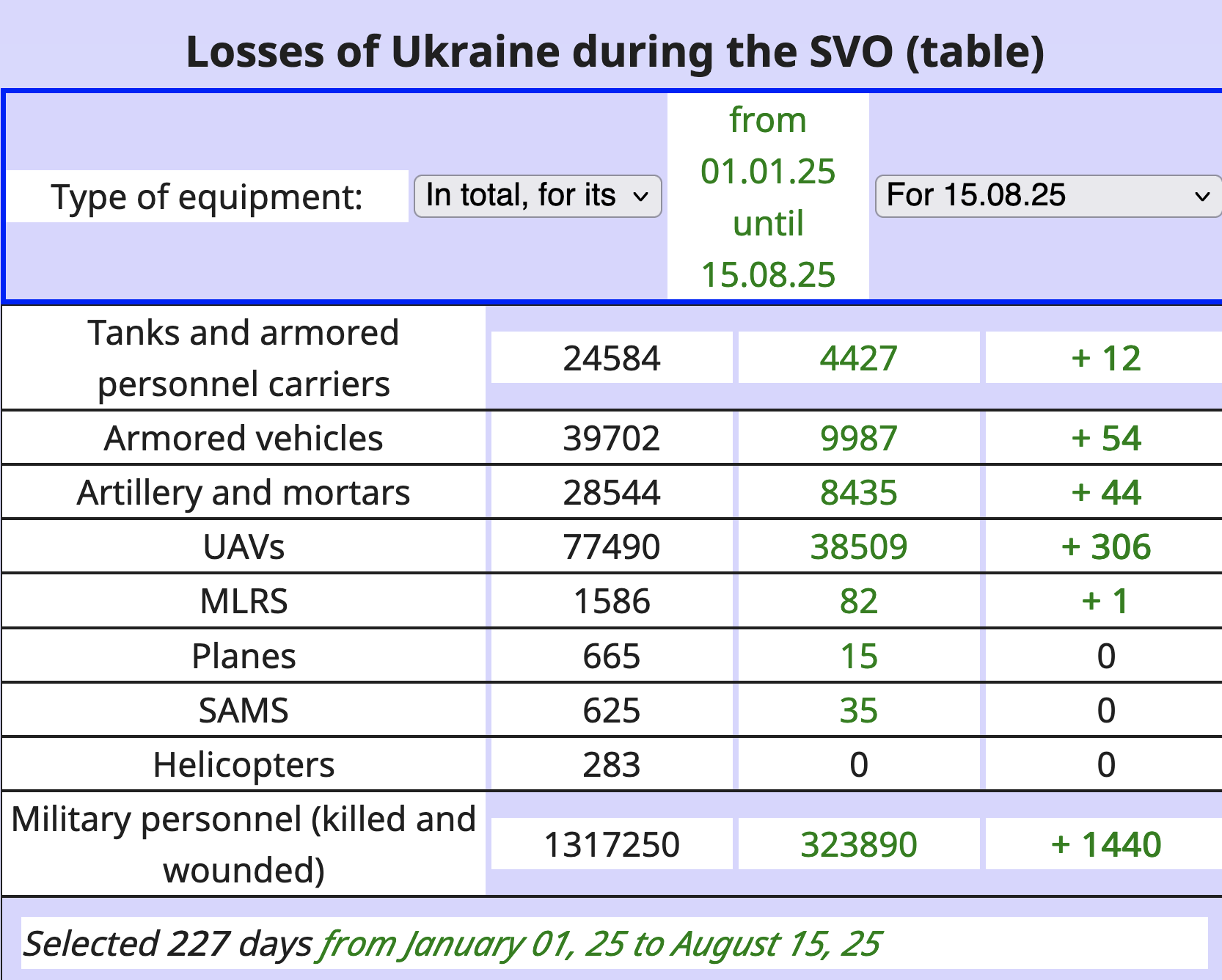
Meanwhile in Ukraine the losses keep mounting.

In the capital of Russia, sworn enemy of kikery and degeneracy, known Jewish pedophile Woody Allen headlines film festival.
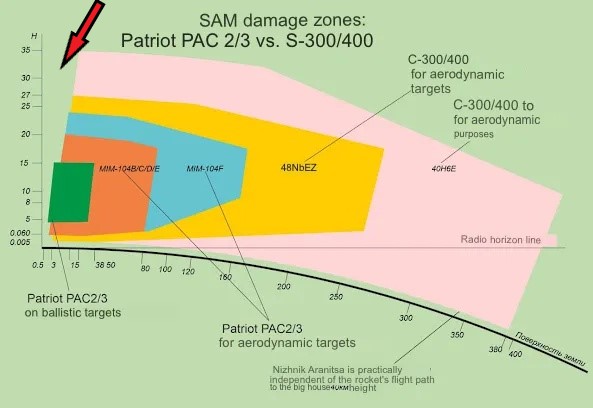
Patriot vs S300/400 air defense ranges.
>>396660
russia also refuged that bulshido martial artist fake actor steven seagul , he also was a tax fraud as well.
russia also refuged that bulshido martial artist fake actor steven seagul , he also was a tax fraud as well.
https://www.theguardian.com/world/2025/sep/10/ukraine-war-briefing-russian-drone-alert-in-poland-before-belarus-border-closure
russia and belarus decided to assault poland
https://www.bbc.com/news/live/c2enwk1l9e1t
russia and belarus decided to assault poland
https://www.bbc.com/news/live/c2enwk1l9e1t

>>397270
It kinda gives me false flag vibes…
Can any russian here explain what russia's possible reason for doing this would be, if we assume it was actually them?
It kinda gives me false flag vibes…
Can any russian here explain what russia's possible reason for doing this would be, if we assume it was actually them?

>>397318
similar to west but ''etele'at online'''s article seems a bit DICK SUCKERY
--
i guess they are happy russia did that.
similar to west but ''etele'at online'''s article seems a bit DICK SUCKERY
--
i guess they are happy russia did that.
>>397318
No, I haven't really seen any specific article.
In general, the ukraine-russia war doesn't get much attention in Iran, and very few people actually follow it.
Yeah, big news like this one, or for example ukraine's drone strike on russian bombers, usually just shows up as a headline with some follow up discussion, and maybe a few experts give a short personal analysis. But overall, the topic isn't really popular, some people even think the war is already over!
No, I haven't really seen any specific article.
In general, the ukraine-russia war doesn't get much attention in Iran, and very few people actually follow it.
Yeah, big news like this one, or for example ukraine's drone strike on russian bombers, usually just shows up as a headline with some follow up discussion, and maybe a few experts give a short personal analysis. But overall, the topic isn't really popular, some people even think the war is already over!
>>397326
wait down of the red one is said ''world in shock! world war 3 has started!"
--
anyway i am download bunch of games and some porn , cause if war happen first internet goes to hell.
would not matter cause either they will draft me or they also they might will get rid off electricity as well
wait down of the red one is said ''world in shock! world war 3 has started!"
--
anyway i am download bunch of games and some porn , cause if war happen first internet goes to hell.
would not matter cause either they will draft me or they also they might will get rid off electricity as well

>>397326
Overall, Iran doesn't really mind if one of its drone buyers starts more wars, the more drones they buy, the more NATO gets humiliated.
At the start, a bunch of idiots were actually supporting this war, saying: "since russia is our strategic ally, this war will be good for us."
Funny thing is, just a few days before it all kicked off, I had read an article about oil producers and realized ukraine and russia are among the main suppliers of oilseeds. Then one of those same idiots in telegram groups was repeating the same propaganda. I just told him he would better stock up on cooking oil before it got expensive. I didn't expect that a few months later we would be facing a global grain and oilseed crisis.
All in all, I think this attack could be a false flag, but even if it's not, poland can't really do much. NATO will probably leave poland hanging, just like it did with ukraine.
At the end of the day, supporting either side just throws more fuel on the fire, doesn't matter which side it is, it only makes the war worse.
Overall, Iran doesn't really mind if one of its drone buyers starts more wars, the more drones they buy, the more NATO gets humiliated.
At the start, a bunch of idiots were actually supporting this war, saying: "since russia is our strategic ally, this war will be good for us."
Funny thing is, just a few days before it all kicked off, I had read an article about oil producers and realized ukraine and russia are among the main suppliers of oilseeds. Then one of those same idiots in telegram groups was repeating the same propaganda. I just told him he would better stock up on cooking oil before it got expensive. I didn't expect that a few months later we would be facing a global grain and oilseed crisis.
All in all, I think this attack could be a false flag, but even if it's not, poland can't really do much. NATO will probably leave poland hanging, just like it did with ukraine.
At the end of the day, supporting either side just throws more fuel on the fire, doesn't matter which side it is, it only makes the war worse.

>>397335
>cute depressed fluttershy
>"since russia is our strategic ally, this war will be good for us."
russia never was our ally , sleeping naked in front of your enemy even might be a better idea that being a friend with russia.
they leached from us alot.
i am 100% sure that iran gave russia some free oil during this war.
> NATO will probably leave poland hanging, just like it did with ukraine.
i am sure they don't want to escalate things , and rightfully so. a ww3 scenario with both side armed with atomic power is a very bad idea.
--
but i wonder , if all of them use massive EMP Bombs on russia maybe cause russia to not be able to use atomic missiles...idk i am not a military or advanced weaponry expert.
>victor reznov meme
add netanyahu too
>cute depressed fluttershy
>"since russia is our strategic ally, this war will be good for us."
russia never was our ally , sleeping naked in front of your enemy even might be a better idea that being a friend with russia.
they leached from us alot.
i am 100% sure that iran gave russia some free oil during this war.
> NATO will probably leave poland hanging, just like it did with ukraine.
i am sure they don't want to escalate things , and rightfully so. a ww3 scenario with both side armed with atomic power is a very bad idea.
--
but i wonder , if all of them use massive EMP Bombs on russia maybe cause russia to not be able to use atomic missiles...idk i am not a military or advanced weaponry expert.
>victor reznov meme
add netanyahu too

This is the last batch of foreign fighters eliminated by Russia in Ukraine.

>Russia & Ukraine Attacking Energy Nettworks /Lt Col Daniel Davis & Andrei Martyanov
https://www.youtube.com/watch?v=6WIrzDjh9yk
This is a naked analysis of the weakness of NATO, which Putin called it 2 days ago "a paper tiger", and the ongoing demise of the West. I highly recommend it as the best interview of the year.
By the way... we are fucked.
https://www.youtube.com/watch?v=6WIrzDjh9yk
This is a naked analysis of the weakness of NATO, which Putin called it 2 days ago "a paper tiger", and the ongoing demise of the West. I highly recommend it as the best interview of the year.
By the way... we are fucked.


I was reminded of something I think I only alluded to once. I was woken up in the night once by something that felt child size rubbing its knuckle right on my hip bone. I remember waking my mom up once as a kid like that, I needed her up and didn’t want to be loud or take too long, some weird math in my brain figured the best way was to just rub that sensitive bone real quick. When I woke up I jumped and stared at the black void and saw nothing, but it made me think of my mom jumping awake and staring at me. I saw one of my friends’ kids do that like a decade ago as well. It’s not something adults near ever think of, rubbing that bone to wake someone up, because it also angers the person greatly and a quickly-awakened person is half asleep and likely not capable of whatever task needed as well.
I was looking through Gustave Dore prints today and when I saw the angel waking Peter, I realized maybe God wanted me to feel some of that. I beg my unbelief not get in the way.
I was looking through Gustave Dore prints today and when I saw the angel waking Peter, I realized maybe God wanted me to feel some of that. I beg my unbelief not get in the way.

>when the contractors shilling for Ukraine are DEI hires
DPA's Ukraine War Mapping: defensepoliticsasia.com/ukraine/
ADVANCE BY RUSSIA
TOTAL: ??? sqkm
(Previous Day: 19.16 sqkm)
Kharkiv 0.71
Siversk 18.77
Kostyantynivka 3.38
Pokrovsk 2.63
--
ADVANCE BY UKRAINE
TOTAL: 20.22 sqkm
(Previous Day: 0 sqkm)
Pokrovsk 20.22
--------
Day 1341 of war
I am super skeptical about both news from Ru and Ukr because it is deluded with massive propaganda from both sides , it is really hard to get any authentic news.
russians claiming that 10,000 ukrainian soldiers have been captured and at the same time ukraine says the same thing that they had total victory against russian soldiers.
with a bit of research you simply realize they are both lying.
Russia's advance is as fucking slow as a snail , even due to that this was nothing but war of attrition.
for now it seems like potrovsk is the most crucial city for the war right now , Ukraine should defend it by all cost.
Russia recently tested a new long-range nuclear missile named "Chernobyl".what a disaster of a name. i know it happened in ukraine and that is why they name it that way but still what a stupid joke.
side note:
nothing makes me more pissed off that my country is selling drones to a fucking oppressive country. a country that it itself was a victim of same faith by iraq-iran war.
ADVANCE BY RUSSIA
TOTAL: ??? sqkm
(Previous Day: 19.16 sqkm)
Kharkiv 0.71
Siversk 18.77
Kostyantynivka 3.38
Pokrovsk 2.63
--
ADVANCE BY UKRAINE
TOTAL: 20.22 sqkm
(Previous Day: 0 sqkm)
Pokrovsk 20.22
--------
Day 1341 of war
I am super skeptical about both news from Ru and Ukr because it is deluded with massive propaganda from both sides , it is really hard to get any authentic news.
russians claiming that 10,000 ukrainian soldiers have been captured and at the same time ukraine says the same thing that they had total victory against russian soldiers.
with a bit of research you simply realize they are both lying.
Russia's advance is as fucking slow as a snail , even due to that this was nothing but war of attrition.
for now it seems like potrovsk is the most crucial city for the war right now , Ukraine should defend it by all cost.
Russia recently tested a new long-range nuclear missile named "Chernobyl".what a disaster of a name. i know it happened in ukraine and that is why they name it that way but still what a stupid joke.
side note:
nothing makes me more pissed off that my country is selling drones to a fucking oppressive country. a country that it itself was a victim of same faith by iraq-iran war.
>>400188
>Russia's advance is as fucking slow as a snail
Yup, and it is worse now because the drones don't allow to use tanks like before. Anything and anybody moving in the open is immediately targeted, even in the rear up to 15 miles.
>Russia's advance is as fucking slow as a snail
Yup, and it is worse now because the drones don't allow to use tanks like before. Anything and anybody moving in the open is immediately targeted, even in the rear up to 15 miles.
>>400188
The only true thing out of all of this is that both sides are doing a war of attrition and it's not even the two countries actually in conflict that's doing it. Behind ukraine is america and behind russia is china.
The biden admin was genuinely gonna grind america to dust over this, not for any strategic reason, but because they're perverted jews and they find all this extremely hot.
China, despite all their problems, have all of America's cards cuz we foolishly gave it away these past few decades. The chinks can grind for a century and not break a sweat, we can't.
Who really cares what territories get captured where, it's all a distraction. The only people who matter are the big nations financing it all in a glorified dick-measuring contest. This war ends when one side backs down in humiliation, and well, America is doing everything to avoid the humiliation. First is to downgrade our relations with ukraine to a business deal, then make that business deal as uncomfortable as possible for ukraine, then slowly coerce the rest of NATO to fight for their lands for once, thus lifting our own burdens.
The point is this: when either China or America leaves this war, the war loses its purpose and peters out. China is too strong to outgrind, so America it is, and everything since is an attempt to save face, to mixed results.
The only true thing out of all of this is that both sides are doing a war of attrition and it's not even the two countries actually in conflict that's doing it. Behind ukraine is america and behind russia is china.
The biden admin was genuinely gonna grind america to dust over this, not for any strategic reason, but because they're perverted jews and they find all this extremely hot.
China, despite all their problems, have all of America's cards cuz we foolishly gave it away these past few decades. The chinks can grind for a century and not break a sweat, we can't.
Who really cares what territories get captured where, it's all a distraction. The only people who matter are the big nations financing it all in a glorified dick-measuring contest. This war ends when one side backs down in humiliation, and well, America is doing everything to avoid the humiliation. First is to downgrade our relations with ukraine to a business deal, then make that business deal as uncomfortable as possible for ukraine, then slowly coerce the rest of NATO to fight for their lands for once, thus lifting our own burdens.
The point is this: when either China or America leaves this war, the war loses its purpose and peters out. China is too strong to outgrind, so America it is, and everything since is an attempt to save face, to mixed results.
>>400196
>The biden admin was genuinely gonna grind america to dust over this...
trump is not doing anything better either ,
first he bashed zelensky with that 2v1 negotiation, then said ukraine should give up territories, then he rejected giving tomahawk missiles to ukraine.
i do realize he is hardly trying his best to avoid escalation but seriously it seems he sometimes forgets who is the enemy. (i am avoiding to call him putin's pawn)
--
also there are so many assholes that are making money over this war behind the scenes, jew or jew not , a lot of money laundry is happening during this war and a lot of companies are benefiting from it.
>This war ends when one side backs down in humiliation...
russia cannot puss out either , the number of casualties and money loss during this war is too high and it can't ends with gaining nothing.
putin is too far into shit to pull himself out of it.
>China is too strong to outgrind, so America it is, and everything since is an attempt to save face, to mixed results.
i do think both China and US just want to stay in their economical business fight, especially after the covid.
china tries to stay out of it as much they can, recently they also said that they won't try to financially support russia, or at least that is what they claim.
>The biden admin was genuinely gonna grind america to dust over this...
trump is not doing anything better either ,
first he bashed zelensky with that 2v1 negotiation, then said ukraine should give up territories, then he rejected giving tomahawk missiles to ukraine.
i do realize he is hardly trying his best to avoid escalation but seriously it seems he sometimes forgets who is the enemy. (i am avoiding to call him putin's pawn)
--
also there are so many assholes that are making money over this war behind the scenes, jew or jew not , a lot of money laundry is happening during this war and a lot of companies are benefiting from it.
>This war ends when one side backs down in humiliation...
russia cannot puss out either , the number of casualties and money loss during this war is too high and it can't ends with gaining nothing.
putin is too far into shit to pull himself out of it.
>China is too strong to outgrind, so America it is, and everything since is an attempt to save face, to mixed results.
i do think both China and US just want to stay in their economical business fight, especially after the covid.
china tries to stay out of it as much they can, recently they also said that they won't try to financially support russia, or at least that is what they claim.
>>400196
>(((we))) foolishly gave it away
that part of it started with bill clinton. Even that wouldn't matter if the federal reserve didn't exist.
I don't know where you get the idea that China is "too strong". Because China is reeling in more power to its central government, businesses are leaving. Other countries are kicking out china due to laying waste to strip mining whatever they can grab.
The reality, put probably more simply than it actually is: USA is getting bored of the conflict, and China is getting too broke to carry on. I suspect the fighting will just stop one day with all sides claiming they won. The only thing that might change that is if they EU wants to carry the torch for some reason.
>(((we))) foolishly gave it away
that part of it started with bill clinton. Even that wouldn't matter if the federal reserve didn't exist.
I don't know where you get the idea that China is "too strong". Because China is reeling in more power to its central government, businesses are leaving. Other countries are kicking out china due to laying waste to strip mining whatever they can grab.
The reality, put probably more simply than it actually is: USA is getting bored of the conflict, and China is getting too broke to carry on. I suspect the fighting will just stop one day with all sides claiming they won. The only thing that might change that is if they EU wants to carry the torch for some reason.


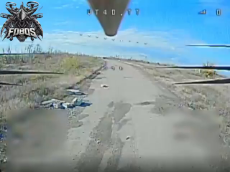
When both sides have too many drones.
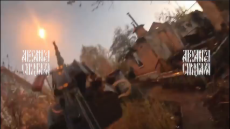
A lucky shot.

1762201778_2.mp4 (2.3 MB, Resolution:360x640 Length:00:00:32, UA Black hawk down.mp4) [play once] [loop]
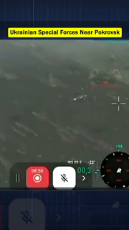
>>400227
https://www.youtube.com/watch?v=miFXns9Af3M&t=17
both Pokrovsk and Kupyansk maps are getting worse and worse everyday for Ukrainians.
so many assault on so many places by russia and Encirclements and breakthroughs everywhere.
https://www.youtube.com/watch?v=Nv4AIkGZxxs
probably everyone heard it by now but
also there was this retarded PR stunt that they did recently which was the most retarded move ever.
they decided to use black hawk helicopter to desperately break through Pokrovsk siege with special forces that "allegedly" these highly trained soldiers, all 11 of them died during this operation.
--
bunch of dumpasses are ruling Ukraine's PR team that sending soldiers straight to the meat grinder, there are so many so many fucking examples of these type of mistakes by them during this war.
https://www.youtube.com/watch?v=miFXns9Af3M&t=17
both Pokrovsk and Kupyansk maps are getting worse and worse everyday for Ukrainians.
so many assault on so many places by russia and Encirclements and breakthroughs everywhere.
https://www.youtube.com/watch?v=Nv4AIkGZxxs
probably everyone heard it by now but
also there was this retarded PR stunt that they did recently which was the most retarded move ever.
they decided to use black hawk helicopter to desperately break through Pokrovsk siege with special forces that "allegedly" these highly trained soldiers, all 11 of them died during this operation.
--
bunch of dumpasses are ruling Ukraine's PR team that sending soldiers straight to the meat grinder, there are so many so many fucking examples of these type of mistakes by them during this war.
>>400305
>they decided to use black hawk helicopter to desperately break through Pokrovsk siege with special forces
According to the Russian internet, 3 helos were involved in 2 attempts of infiltration in 3 days. Two helos were destroyed and the third escaped.
And according to https://sonar21.com/ukraines-suicide-helicopter-missions-why/ the mission was to extract CIA mercenaries trapped in the cauldron.
It makes sense the explanation given that he Russians used drones with thermal cameras to hunt down the intruders, which is a extremely expensive accessory to attach to a cheap anti-personal drone.
>they decided to use black hawk helicopter to desperately break through Pokrovsk siege with special forces
According to the Russian internet, 3 helos were involved in 2 attempts of infiltration in 3 days. Two helos were destroyed and the third escaped.
And according to https://sonar21.com/ukraines-suicide-helicopter-missions-why/ the mission was to extract CIA mercenaries trapped in the cauldron.
It makes sense the explanation given that he Russians used drones with thermal cameras to hunt down the intruders, which is a extremely expensive accessory to attach to a cheap anti-personal drone.
>>400306
thanks for the info
so it happened 3 times and at least 2 of them confirmed as failed. still gives a bad rep to the Ukies.
they really need to reduce these type of mistakes. any success is crucial and necessarily right now.
thanks for the info
so it happened 3 times and at least 2 of them confirmed as failed. still gives a bad rep to the Ukies.
they really need to reduce these type of mistakes. any success is crucial and necessarily right now.
>>400307
>still gives a bad rep to the Ukies.
>they really need to reduce these type of mistakes
If the CIA mercenary story is true, then I guess this botched operation was a desperado move and the ukro generals have no other choice than follow the commands of the guys paying the salaries.
>still gives a bad rep to the Ukies.
>they really need to reduce these type of mistakes
If the CIA mercenary story is true, then I guess this botched operation was a desperado move and the ukro generals have no other choice than follow the commands of the guys paying the salaries.

>>400305
>>400306
Actually, helicopters quite hard to kill. Air currents around rotor throw off FPV-drones, especially fiber-optic type, and with 25 meters altitude copters invisible for radars (since most of radars and army level air defense positions farther than 10 km from frontline). Also, we do not use MANPADS near the frontline, at least in infantry battalions, ukrainian helicopters is extremely rare target and high-speed FPV-drones much more cost-effective against recon drones.
We have opinion that battalion level airland operations in 10-30 km zone after frontline can be effective in case of frontal attack support. The numbers of positions for drone teams is limited, there is no more than 1-2 suitable positions per 10-20 km² zone after frontline. During land attacks with bikes we usually have 20-30 minutes to capture position before serious counteraction. So, Vietnam-style landing just near the positions of drone teams right after airstrike can be effective, but only in masses, like battalion on 30 copters with support of 12-24 strike sorties during day and with reliable communication (like fiber-optic drones with radio repeaters).
Unfortunately, our army do not have much experience of such operations, as well as light infantry brigades with own copters. Army Command do not want to take such risk and spending to form new brigades just to try new tactics.
>>400306
Actually, helicopters quite hard to kill. Air currents around rotor throw off FPV-drones, especially fiber-optic type, and with 25 meters altitude copters invisible for radars (since most of radars and army level air defense positions farther than 10 km from frontline). Also, we do not use MANPADS near the frontline, at least in infantry battalions, ukrainian helicopters is extremely rare target and high-speed FPV-drones much more cost-effective against recon drones.
We have opinion that battalion level airland operations in 10-30 km zone after frontline can be effective in case of frontal attack support. The numbers of positions for drone teams is limited, there is no more than 1-2 suitable positions per 10-20 km² zone after frontline. During land attacks with bikes we usually have 20-30 minutes to capture position before serious counteraction. So, Vietnam-style landing just near the positions of drone teams right after airstrike can be effective, but only in masses, like battalion on 30 copters with support of 12-24 strike sorties during day and with reliable communication (like fiber-optic drones with radio repeaters).
Unfortunately, our army do not have much experience of such operations, as well as light infantry brigades with own copters. Army Command do not want to take such risk and spending to form new brigades just to try new tactics.
>>400346
>During land attacks with bikes we usually have 20-30 minutes to capture position before serious counteraction.
As expected. The surveillance drones will spot the intruders and relay the news to the higher-ups which will command the artillery or drone pilots in the area to pound you hard.
>During land attacks with bikes we usually have 20-30 minutes to capture position before serious counteraction.
As expected. The surveillance drones will spot the intruders and relay the news to the higher-ups which will command the artillery or drone pilots in the area to pound you hard.

>>400347
Yeah, 20-30 minutes before counteraction of enemy drone battalion and brigade artillery. Frontline drone teams and mortars can react in 5-10 minutes (just when bike assault teams reached their target), but their number of prepared drones is limited and usually exhausted before attack.
>>384684
I want to share current tactics of bike assaults for Iranian friends. Infantry battalion can support company of 8 assault units (4 soldiers with bikes per unit), 2 reserve bike units, 2 evacuation units, 2 land drone teams, 2 sniper units. Brigade level support is necessary (they provide recon, isolation and artillery pressure to exhaust enemy), but battalion command can prepare more successful plan for assault operation, they know the surroundings and enemy better.
Attack cycle consists of six steps: isolation, exhaustion, assemblage, distraction, charge, fortify.
1. Isolation means fire control over supply lines. If enemy forced to use drones to supply infantry, their drone-team positions easy to spot before operation. For isolation we use fiber-optic drones to make ambushes on the roads and heavy multi-copters to place mines. One drone battalion can isolate 5×10 km zone with one major road to prevent battalion level support.
2. Exhaustion means frequent artillery/drone barrage to prevent sleep, replacement and evacuation. Chance of wound for each soldier on frontline is 1-3% per day. Currently ordinary FPV-drones almost similar to shells in terms of efficiency against fortified infantry. Usually needs 7-14 days and 150 drones/shells per kilometer of frontline to break morale and make around 30% losses (means 3/10 injured soldiers in targeted square kilometer). Then just before attack we use glide bombs against spotted drone teams in 5×10 km zone (mostly recon teams with Mavics).
3. Assemblage of assault company in frontline dugouts can be finished in 2-6 days. This is most dangerous stage of operation, but there is always enough supply units with bikes to hide their movements. During this phase drone teams prepared pathways through minefields (they use explosives with cables) and looking for possible hideouts. Commanders of assault units use video-stream of drone teams to study battlefield and make decision for attack. Land drones and electrobikes can reach 16 km with full accumulators, but considering hard terrain and maneuvers expected distance about 6 km.
4. Distraction is task for 6/8 of assault units and for land drone teams. They imitate massive attack in various directions to force enemy FPV-teams to use most of their prepared drones. Bikers can retreat and hide before enemy drones reach them. Then land drones can infiltrate into enemy positions before actual assault and check the path through minefields. Air drone units use smoke and gas grenades to harass and mark spotted enemy. All assault units must be ready to charge, but most of directions is not suitable to reach enemy in 10 minutes.
5. Charge is task for 2/8 of assault units. Bikers follow the path of successful land drone. Snipers with 12.7 mm rifles useful for fire support, they can use prepared hidden positions and react faster than automatic grenade launchers or mortars, they can suppress enemy positions right and left from charge direction, but most of fire support provide fiber-optic FPV-drones, which can follow the bikers and fully control enemy position during charge. Charge stage must be finished in 5-10 minutes and assault stage in 20 minutes. 4-8 assaulters can overcome 2-3 defenders. If time is run out, stormtroopers should drop their bikes and use previously marked hideouts near enemy position.
6. Fortify stage following assault when 30 minutes is over. Assault units must hide in enemy dugouts, they have nets to replace damaged ones. 1 soldiers in assault unit has EW equipment, 1 soldier shotgun, others 2 few anti-drone magazines for automatic rifles. Each soldier have 15 magazines (450 ammo) and 10+ grenades, 2-3 liters of water and few energy bars. Light weapon like machine gun or RPG is not necessary, since any fire support can be replaced by FPV-drones. Wounded soldiers can be evacuated in following day (when assault company imitate/execute another attack). Supplies delivered mostly with drones.
Bike company can achieve 45-70 km/hour speed of charge, but can assault only weak positions with 2-4 soldiers, if enemy is more numerous armor assault is better decision. Usually there is no more than 5-15 of soldiers per square kilometer of frontline (2-4 per dugout). So, 8 soldiers of 2 assault units is enough to capture one of their positions and force others to retreat. Firefight during assault is rare thing. 3/4 of enemy units just run away under heavy pressure, or their positions already abandoned. If enemy ready to defend position, better to take one of nearly trenches and just force enemy to spend ammo in following night. Or just use glide bomb / kamikaze land drone / heavy multi-copter / shaheed-like drone. If enemy is spotted and suppressed during assault they are finished. Assault units is mostly spotters, not fighters.
Success rate of bike assault actually quite low, about 1/3, but losses lower than during armor assault or infantry infiltration. Bikers have enough time to try and retreat with injured comrades is something went wrong. And they are much more controllable than infantry, they can just follow the drones.
Yeah, 20-30 minutes before counteraction of enemy drone battalion and brigade artillery. Frontline drone teams and mortars can react in 5-10 minutes (just when bike assault teams reached their target), but their number of prepared drones is limited and usually exhausted before attack.
>>384684
I want to share current tactics of bike assaults for Iranian friends. Infantry battalion can support company of 8 assault units (4 soldiers with bikes per unit), 2 reserve bike units, 2 evacuation units, 2 land drone teams, 2 sniper units. Brigade level support is necessary (they provide recon, isolation and artillery pressure to exhaust enemy), but battalion command can prepare more successful plan for assault operation, they know the surroundings and enemy better.
Attack cycle consists of six steps: isolation, exhaustion, assemblage, distraction, charge, fortify.
1. Isolation means fire control over supply lines. If enemy forced to use drones to supply infantry, their drone-team positions easy to spot before operation. For isolation we use fiber-optic drones to make ambushes on the roads and heavy multi-copters to place mines. One drone battalion can isolate 5×10 km zone with one major road to prevent battalion level support.
2. Exhaustion means frequent artillery/drone barrage to prevent sleep, replacement and evacuation. Chance of wound for each soldier on frontline is 1-3% per day. Currently ordinary FPV-drones almost similar to shells in terms of efficiency against fortified infantry. Usually needs 7-14 days and 150 drones/shells per kilometer of frontline to break morale and make around 30% losses (means 3/10 injured soldiers in targeted square kilometer). Then just before attack we use glide bombs against spotted drone teams in 5×10 km zone (mostly recon teams with Mavics).
3. Assemblage of assault company in frontline dugouts can be finished in 2-6 days. This is most dangerous stage of operation, but there is always enough supply units with bikes to hide their movements. During this phase drone teams prepared pathways through minefields (they use explosives with cables) and looking for possible hideouts. Commanders of assault units use video-stream of drone teams to study battlefield and make decision for attack. Land drones and electrobikes can reach 16 km with full accumulators, but considering hard terrain and maneuvers expected distance about 6 km.
4. Distraction is task for 6/8 of assault units and for land drone teams. They imitate massive attack in various directions to force enemy FPV-teams to use most of their prepared drones. Bikers can retreat and hide before enemy drones reach them. Then land drones can infiltrate into enemy positions before actual assault and check the path through minefields. Air drone units use smoke and gas grenades to harass and mark spotted enemy. All assault units must be ready to charge, but most of directions is not suitable to reach enemy in 10 minutes.
5. Charge is task for 2/8 of assault units. Bikers follow the path of successful land drone. Snipers with 12.7 mm rifles useful for fire support, they can use prepared hidden positions and react faster than automatic grenade launchers or mortars, they can suppress enemy positions right and left from charge direction, but most of fire support provide fiber-optic FPV-drones, which can follow the bikers and fully control enemy position during charge. Charge stage must be finished in 5-10 minutes and assault stage in 20 minutes. 4-8 assaulters can overcome 2-3 defenders. If time is run out, stormtroopers should drop their bikes and use previously marked hideouts near enemy position.
6. Fortify stage following assault when 30 minutes is over. Assault units must hide in enemy dugouts, they have nets to replace damaged ones. 1 soldiers in assault unit has EW equipment, 1 soldier shotgun, others 2 few anti-drone magazines for automatic rifles. Each soldier have 15 magazines (450 ammo) and 10+ grenades, 2-3 liters of water and few energy bars. Light weapon like machine gun or RPG is not necessary, since any fire support can be replaced by FPV-drones. Wounded soldiers can be evacuated in following day (when assault company imitate/execute another attack). Supplies delivered mostly with drones.
Bike company can achieve 45-70 km/hour speed of charge, but can assault only weak positions with 2-4 soldiers, if enemy is more numerous armor assault is better decision. Usually there is no more than 5-15 of soldiers per square kilometer of frontline (2-4 per dugout). So, 8 soldiers of 2 assault units is enough to capture one of their positions and force others to retreat. Firefight during assault is rare thing. 3/4 of enemy units just run away under heavy pressure, or their positions already abandoned. If enemy ready to defend position, better to take one of nearly trenches and just force enemy to spend ammo in following night. Or just use glide bomb / kamikaze land drone / heavy multi-copter / shaheed-like drone. If enemy is spotted and suppressed during assault they are finished. Assault units is mostly spotters, not fighters.
Success rate of bike assault actually quite low, about 1/3, but losses lower than during armor assault or infantry infiltration. Bikers have enough time to try and retreat with injured comrades is something went wrong. And they are much more controllable than infantry, they can just follow the drones.
>>400350
>For isolation we use fiber-optic drones to make ambushes on the roads
A few months ago I saw pictures of a Kursk town's street with hundreds, yes hundreds, of fiber-optic threads hanging from houses and electricity poles; a huge battle took place there.
>For isolation we use fiber-optic drones to make ambushes on the roads
A few months ago I saw pictures of a Kursk town's street with hundreds, yes hundreds, of fiber-optic threads hanging from houses and electricity poles; a huge battle took place there.

>>400350
Thanks for the explanations, it's a fascinating tactic, but from my point of view, it comes with some clear limitations, at least when thinking about Iran's ground fronts.
Iran's land borders are mostly mountainous, desert, plains, coastal, or forested.
This approach would probably work well in plains or forested areas with good vegetation cover, but in the bulk of the terrain, which is mountainous or desert, I doubt it would be very effective.
Mountainous regions are pretty straightforward, they're rugged, so you basically can't pull off a fast attack with motorcycles, and it would definitely run into massive challenges and tactical shifts during the operation phases (especially in the fortification stage).
Deserts, on the other hand, just don't seem viable for this tactic at all, for a few reasons. For starters, this kind of assault is geared toward short advances of a few hundred meters, and given the unique environment in eastern ukraine's fronts, you can pretty much dig in and hold position after any push. That doesn't hold up in deserts, where checkpoints or key points are spaced out over several kilometers, and this method wouldn't cut it. Plus, in those multi-kilometer stretches, you're dealing with a real gap(an open zone under constant watch from both sides) that makes it easy for drones to spot and target the bikes, since camouflage or a sneaky quick strike just isn't feasible. That would definitely trip things up badly in the assault phase. In deserts, you'd either need to fall back on armored battalions or stick to hit-and-run stealth ops at night, which don't mesh with this tactic. Mountainous areas can be taken through gradual attrition too, but that's a whole different flavor from the wearing down style in this approach. Basically, drones are way too overpowered in deserts, and anyone crossing into that gap becomes an easy mark. Maybe that's part of why Iran has poured resources into missiles and drones, they're just more practical and efficient in comparison. That said, your tactic is intriguing and would no doubt shine in specific spots (like plains), though it does look pretty high risk and likely leads to heavy attritional losses. It's a good fit for vegetated, plain-like fronts like the ones you're describing, but I don't see it translating well to Iran's borders or the middle east as a whole.
Thanks for the explanations, it's a fascinating tactic, but from my point of view, it comes with some clear limitations, at least when thinking about Iran's ground fronts.
Iran's land borders are mostly mountainous, desert, plains, coastal, or forested.
This approach would probably work well in plains or forested areas with good vegetation cover, but in the bulk of the terrain, which is mountainous or desert, I doubt it would be very effective.
Mountainous regions are pretty straightforward, they're rugged, so you basically can't pull off a fast attack with motorcycles, and it would definitely run into massive challenges and tactical shifts during the operation phases (especially in the fortification stage).
Deserts, on the other hand, just don't seem viable for this tactic at all, for a few reasons. For starters, this kind of assault is geared toward short advances of a few hundred meters, and given the unique environment in eastern ukraine's fronts, you can pretty much dig in and hold position after any push. That doesn't hold up in deserts, where checkpoints or key points are spaced out over several kilometers, and this method wouldn't cut it. Plus, in those multi-kilometer stretches, you're dealing with a real gap(an open zone under constant watch from both sides) that makes it easy for drones to spot and target the bikes, since camouflage or a sneaky quick strike just isn't feasible. That would definitely trip things up badly in the assault phase. In deserts, you'd either need to fall back on armored battalions or stick to hit-and-run stealth ops at night, which don't mesh with this tactic. Mountainous areas can be taken through gradual attrition too, but that's a whole different flavor from the wearing down style in this approach. Basically, drones are way too overpowered in deserts, and anyone crossing into that gap becomes an easy mark. Maybe that's part of why Iran has poured resources into missiles and drones, they're just more practical and efficient in comparison. That said, your tactic is intriguing and would no doubt shine in specific spots (like plains), though it does look pretty high risk and likely leads to heavy attritional losses. It's a good fit for vegetated, plain-like fronts like the ones you're describing, but I don't see it translating well to Iran's borders or the middle east as a whole.

>>400350
Related:
>The Fifth Generation of Modern War: Drones, Attrition, and the Collapse of the Logistics Sanctuary
https://aicentral.substack.com/p/five-generations-of-modern-war
Related:
>The Fifth Generation of Modern War: Drones, Attrition, and the Collapse of the Logistics Sanctuary
https://aicentral.substack.com/p/five-generations-of-modern-war
1762874326.mp4 (10.3 MB, Resolution:960x1280 Length:00:00:28, assault-company-near-pokrovsk.mp4) [play once] [loop]
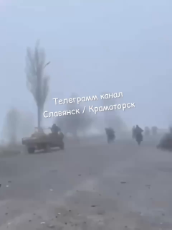
>>400359
>This approach would probably work well in plains or forested areas with good vegetation cover, but in the bulk of the terrain, which is mountainous or desert, I doubt it would be very effective.
We used bikes during Chechen and Georgian wars, where mostly forests and rough terrain, for reconnaissance units. Quite effective, but mostly as experiment. Considering scale of these wars, helicopters works much better.
Major problem of Ukrainian war is not drones, but endless mine fields. I think, the final solution for this stalemate is air-mobile infantry. We utterly need small and fast unmanned helicopters, capable to fly with 200 km/h speed in 100 km range and carry 500 kg load (two soldiers with land drone). Heavy agricultural copters too slow and do not have capacity to throw off FPV-drones by rotors. We tried to use civil helicopters, but they are too expensive for ordinary infantry battalions and extremely hard to find pilots, who are ready for such risk.
Also, video related. Perfect example of assault company near Pokrovsk. You can see 6 assault units of two soldiers each, evacuation/supply units and land drone team with cars, and even sniper unit with anti-material rifles.
>This approach would probably work well in plains or forested areas with good vegetation cover, but in the bulk of the terrain, which is mountainous or desert, I doubt it would be very effective.
We used bikes during Chechen and Georgian wars, where mostly forests and rough terrain, for reconnaissance units. Quite effective, but mostly as experiment. Considering scale of these wars, helicopters works much better.
Major problem of Ukrainian war is not drones, but endless mine fields. I think, the final solution for this stalemate is air-mobile infantry. We utterly need small and fast unmanned helicopters, capable to fly with 200 km/h speed in 100 km range and carry 500 kg load (two soldiers with land drone). Heavy agricultural copters too slow and do not have capacity to throw off FPV-drones by rotors. We tried to use civil helicopters, but they are too expensive for ordinary infantry battalions and extremely hard to find pilots, who are ready for such risk.
Also, video related. Perfect example of assault company near Pokrovsk. You can see 6 assault units of two soldiers each, evacuation/supply units and land drone team with cars, and even sniper unit with anti-material rifles.
>>400524
>air-mobile infantry
Mmmmmmmmmh. Too risky because is ideal target for manpads and machineguns, plus the soldiers would be on their own because they are too far from the logistic line.
>air-mobile infantry
Mmmmmmmmmh. Too risky because is ideal target for manpads and machineguns, plus the soldiers would be on their own because they are too far from the logistic line.
1762889638.mp4 (5.8 MB, Resolution:720x720 Length:00:01:15, infantry-infiltration-failed.mp4) [play once] [loop]
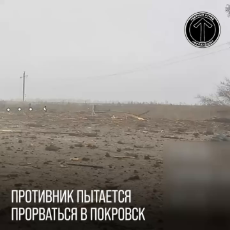
>>400526
Troops are too dispersed to use manpads and machineguns effectively, 5-15 soldiers per square kilometer. They have line of air defense between 10-20 km after frontline, but their air defence mostly consists of FPV-drone teams. If they concentrated more forces, there are increasing losses (mostly because of glide bombs) and supply problem. Currently typical infantry battalion located in 5×15 km zone, where 5 km is frontline and 15 km is rear zone with dugouts and supply pathways along treelines.
There is hard to breach frontline deep enough with one attack, because of this we forced to use infantry infiltration tactic before assault. On foggy morning small infantry units of 2-4 soldiers one by one just walk through frontline without serious risk of firefight. They follow the guide of air drone, sapper teams used drones to breach fortifications on their way. This infantry units should occupy abandoned dugouts in 5 km zone after frontline and wait before assault, then support the stormtroopers. Before this they supplied by drones, sometimes for week or two. If enemy detect them, they are finished. But chance of detection is low, since recon drones operators observed 400×400 meters picture without zoom, surveillance cameras is rare thing after frontline and seismic sensors usually followed by mines. And new anti-thermal camouflage very effective.
The infantry infiltration tactic too dangerous for serious operations, there is no chance to evacuate wounded. There is no retreat if frontal assault was failed. For this kind of operations we need air-mobile infantry, or at least heavy drones, capable to carry wounded soldiers with enough speed to overtake FPV-drones.
There is example of failed attempt of Ukrainian infiltration into Pokrovsk. Two units was detected by fiber-optic drones, which can wait on position for days (the fiber-optic type during landing spends much less energy than radio-transmitter). Looks like infantry infiltration tactic already outdated.
Troops are too dispersed to use manpads and machineguns effectively, 5-15 soldiers per square kilometer. They have line of air defense between 10-20 km after frontline, but their air defence mostly consists of FPV-drone teams. If they concentrated more forces, there are increasing losses (mostly because of glide bombs) and supply problem. Currently typical infantry battalion located in 5×15 km zone, where 5 km is frontline and 15 km is rear zone with dugouts and supply pathways along treelines.
There is hard to breach frontline deep enough with one attack, because of this we forced to use infantry infiltration tactic before assault. On foggy morning small infantry units of 2-4 soldiers one by one just walk through frontline without serious risk of firefight. They follow the guide of air drone, sapper teams used drones to breach fortifications on their way. This infantry units should occupy abandoned dugouts in 5 km zone after frontline and wait before assault, then support the stormtroopers. Before this they supplied by drones, sometimes for week or two. If enemy detect them, they are finished. But chance of detection is low, since recon drones operators observed 400×400 meters picture without zoom, surveillance cameras is rare thing after frontline and seismic sensors usually followed by mines. And new anti-thermal camouflage very effective.
The infantry infiltration tactic too dangerous for serious operations, there is no chance to evacuate wounded. There is no retreat if frontal assault was failed. For this kind of operations we need air-mobile infantry, or at least heavy drones, capable to carry wounded soldiers with enough speed to overtake FPV-drones.
There is example of failed attempt of Ukrainian infiltration into Pokrovsk. Two units was detected by fiber-optic drones, which can wait on position for days (the fiber-optic type during landing spends much less energy than radio-transmitter). Looks like infantry infiltration tactic already outdated.

Some of you just don't know how bad Ukrainian propaganda was in 2022.

Drone's kill.


>>400712
>Some of you just don't know how bad Ukrainian propaganda was in 2022.
still is.
i still haven't forgotten the ghost of kiev and hypersonic shovels.
but things are changing, Ukr is fucking up a lot recently. so many people are opening their eyes.
even i don't condemn ill on ukraine and ukrainians and i feel guilty for my country helping russia but good God their propaganda makes them insufferable.
--
"When you lose a line, well you just snort another line"
-Zelen Tzu , The Art Of Defeat
also these are become a meme.
>Some of you just don't know how bad Ukrainian propaganda was in 2022.
still is.
i still haven't forgotten the ghost of kiev and hypersonic shovels.
but things are changing, Ukr is fucking up a lot recently. so many people are opening their eyes.
even i don't condemn ill on ukraine and ukrainians and i feel guilty for my country helping russia but good God their propaganda makes them insufferable.
--
"When you lose a line, well you just snort another line"
-Zelen Tzu , The Art Of Defeat
also these are become a meme.

1763205293_1.mp4 (4.6 MB, Resolution:576x1024 Length:00:00:17, early-war-04-03-2022.mp4) [play once] [loop]
1763205293_2.mp4 (4.7 MB, Resolution:852x478 Length:00:00:26, kharkov-monte-cristo-11-03-2022.mp4) [play once] [loop]

>>400712
2022 vibes. Totally different time, totally different war. Like eons has passed.
>>400715
Do you heard a story about The Count of Kharkov Monte-Cristo? Some unknown militant from ukrainian army, we found him chained to concrete post near road to Kharkov with RPG in arms and two empty tubes around. No visible wounds, maybe frozen to death. Next day the press make a story about this. Next two days some vtubber, then another. The snow has passed, the snow has melted, but this poor soul still chained there. I want to checks this place, when army group North finally throw back enemy from Kharkov outskirts.
>>400716
>That looks like fighters from the Mad Max movie.
And we have this video right on national TV. Just imagine, how press wriggled to explained this Gypsy Band to general public. Fucking hilarious.
2022 vibes. Totally different time, totally different war. Like eons has passed.
>>400715
Do you heard a story about The Count of Kharkov Monte-Cristo? Some unknown militant from ukrainian army, we found him chained to concrete post near road to Kharkov with RPG in arms and two empty tubes around. No visible wounds, maybe frozen to death. Next day the press make a story about this. Next two days some vtubber, then another. The snow has passed, the snow has melted, but this poor soul still chained there. I want to checks this place, when army group North finally throw back enemy from Kharkov outskirts.
>>400716
>That looks like fighters from the Mad Max movie.
And we have this video right on national TV. Just imagine, how press wriggled to explained this Gypsy Band to general public. Fucking hilarious.


https://globalnews.ca/news/8756970/ukrainian-marines-surrender-in-mariupol-russia-claims/
https://voennoedelo.com/en/posts/id4727-mass-surrenders-reported-among-ukraine-s-57th-brigade
https://www.youtube.com/watch?v=JgwyTJIuD9A
new reports shows a massive surrender of Ukrainian soldiers at pokrovsk.
(allegedly) An entire platoon of Ukraine's 38th Marine Brigade surrendered south of Myrnohrad. They were completely isolated and abandoned by their commanders.
--
At the same time some ukrainian news outlets claim that the videos related to the mass surrenders are all fake or AI generated
https://tsn.ua/en/ato/withdrawal-of-ukrainian-forces-from-pokrovsk-and-mass-surrender-russia-spreads-fake-videos-2955443.html
https://voennoedelo.com/en/posts/id4727-mass-surrenders-reported-among-ukraine-s-57th-brigade
https://www.youtube.com/watch?v=JgwyTJIuD9A
new reports shows a massive surrender of Ukrainian soldiers at pokrovsk.
(allegedly) An entire platoon of Ukraine's 38th Marine Brigade surrendered south of Myrnohrad. They were completely isolated and abandoned by their commanders.
--
At the same time some ukrainian news outlets claim that the videos related to the mass surrenders are all fake or AI generated
https://tsn.ua/en/ato/withdrawal-of-ukrainian-forces-from-pokrovsk-and-mass-surrender-russia-spreads-fake-videos-2955443.html
>>384684
>fuckboi mutt immigrant named WhoreCo Rube.io claims Jewnited Estates needs to send more weapons & ammunition to jewkraine
>Rube.io also claims that JewS must back jewkraine or else """you're a nazi"""
>fails to mention a kike in 1923 creates the term 'nazi' to mean: "a person whom knowingly, unknowingly, willing, AND/OR unwillingly supports (NA)tional (ZI)onism"
>claims Jewkraine needs moar petro-shekels to (((fight against nazis)))
>Rube.io screeches to AIPAC & ADL after his wife's real husband gets outed for being a methhead muttoid jew
>Rube.io tries to kvetch but gets told off by ADL that he's "not stirring the salad bowl hard enough"
>declines to answer ANY questions regarding anti-Constitutional activities by Louisiana state Sooper Troopers, Keystone Kopps, or Meal Team Six Gravy Squeals committing felonies on camera
>supports his wife's boyfriend's claims that pissrahell dindunuffinwrong
Fix'd all of that for you.
>fuckboi mutt immigrant named WhoreCo Rube.io claims Jewnited Estates needs to send more weapons & ammunition to jewkraine
>Rube.io also claims that JewS must back jewkraine or else """you're a nazi"""
>fails to mention a kike in 1923 creates the term 'nazi' to mean: "a person whom knowingly, unknowingly, willing, AND/OR unwillingly supports (NA)tional (ZI)onism"
>claims Jewkraine needs moar petro-shekels to (((fight against nazis)))
>Rube.io screeches to AIPAC & ADL after his wife's real husband gets outed for being a methhead muttoid jew
>Rube.io tries to kvetch but gets told off by ADL that he's "not stirring the salad bowl hard enough"
>declines to answer ANY questions regarding anti-Constitutional activities by Louisiana state Sooper Troopers, Keystone Kopps, or Meal Team Six Gravy Squeals committing felonies on camera
>supports his wife's boyfriend's claims that pissrahell dindunuffinwrong
Fix'd all of that for you.

https://www.nytimes.com/2025/11/18/world/europe/zelensky-russia-ukraine-talks-turkey.html
Zelensky Will Try to Revive Peace Talks With Russia During turkey visit.
https://news.az/news/us-holding-secret-peace-talks-with-moscow-to-end-russias-war-in-ukraine
U.S. holding secret peace talks with Moscow to end Russia’s war in Ukraine (not confirmed)
https://eadaily.com/en/news/2025/11/19/economist-witkoff-and-ermaks-talks-in-turkey-canceled
Economist: Witkoff and Ermak's talks in Turkey canceled (not confirmed)
Russian sites claim that due to corruption scandals in ukraine the meeting between them has been cancelled.
https://prm.ua/en/witkoff-and-yermaks-meeting-in-turkey-canceled-due-to-corruption-scandal-journalist/
Contradictory information is coming from all corners, but it seems that there are some sparkles of the peace that is about to be seen in future days.
Zelensky Will Try to Revive Peace Talks With Russia During turkey visit.
https://news.az/news/us-holding-secret-peace-talks-with-moscow-to-end-russias-war-in-ukraine
U.S. holding secret peace talks with Moscow to end Russia’s war in Ukraine (not confirmed)
https://eadaily.com/en/news/2025/11/19/economist-witkoff-and-ermaks-talks-in-turkey-canceled
Economist: Witkoff and Ermak's talks in Turkey canceled (not confirmed)
Russian sites claim that due to corruption scandals in ukraine the meeting between them has been cancelled.
https://prm.ua/en/witkoff-and-yermaks-meeting-in-turkey-canceled-due-to-corruption-scandal-journalist/
Contradictory information is coming from all corners, but it seems that there are some sparkles of the peace that is about to be seen in future days.
>>400863
>Contradictory information is coming from all corners
Because is globohomo bullshit.
The parameters of any negotiation were established many years ago and the Russians named them Root Causes.
1) Ukraine will not be part of the EU or NATO.
2) Ukraine will commit to neutrality.
3) Ukraine will disarm and disband the army
4) A new government friendly to Moscow will take over.
5) America will remove the missile bases in Poland and Romania.
6) NATO will retreat to the German border.
>Contradictory information is coming from all corners
Because is globohomo bullshit.
The parameters of any negotiation were established many years ago and the Russians named them Root Causes.
1) Ukraine will not be part of the EU or NATO.
2) Ukraine will commit to neutrality.
3) Ukraine will disarm and disband the army
4) A new government friendly to Moscow will take over.
5) America will remove the missile bases in Poland and Romania.
6) NATO will retreat to the German border.
>>400866
7) Giving the russian populated states back to russia
i know honestly i really hope this war to end.
soldiers are trapped in pokrovsk surrounded by death, and zelen tzu is doing nothing but live to his name to make it even worse.
i know that the whole war was because of retardation of Nato to push Ukraine ,a supposed neutral land that seperated Russia and Nato like a third wheel to join them, and despite constant warnings from putin, they didn't listen. fuck this planet and its elites honestly
7) Giving the russian populated states back to russia
i know honestly i really hope this war to end.
soldiers are trapped in pokrovsk surrounded by death, and zelen tzu is doing nothing but live to his name to make it even worse.
i know that the whole war was because of retardation of Nato to push Ukraine ,a supposed neutral land that seperated Russia and Nato like a third wheel to join them, and despite constant warnings from putin, they didn't listen. fuck this planet and its elites honestly
>>400868
There is a conspiracy still more sinister that may explain why Putin is not taking Odessa and deny to what is left of Ukraine access to the sea.
Take a look >>358136 →
There is a conspiracy still more sinister that may explain why Putin is not taking Odessa and deny to what is left of Ukraine access to the sea.
Take a look >>358136 →
>>400869
so it comes back to (((Chosen ones))) again.
i am reading the comments on the video, so some of the Russians believe that the coup in Ukraine was under the influence of many hydra heads of the Jews to do a racial cleansing, so they started a war between slavs so they can create another khazarian region. does not help that the fact that zelen tzu is a jew, not sure how zio but nonetheless it is weird that he has to become the president of ukraine, a comedian actor.
interesting conspiracy,
i am not sure how to feel about it, on a hand i agree that the jews definitely have something to do with it on some extent., on the other hand i don't really want to believe jews are this much of strong villains that are powerfully will do whatever the fuck they want without any prevention.
but if it's true, this just adds another demonic bitumen ink to the long list of sins of rotten in hell jews. need another level of inferno worthy of their crimes.
so it comes back to (((Chosen ones))) again.
i am reading the comments on the video, so some of the Russians believe that the coup in Ukraine was under the influence of many hydra heads of the Jews to do a racial cleansing, so they started a war between slavs so they can create another khazarian region. does not help that the fact that zelen tzu is a jew, not sure how zio but nonetheless it is weird that he has to become the president of ukraine, a comedian actor.
interesting conspiracy,
i am not sure how to feel about it, on a hand i agree that the jews definitely have something to do with it on some extent., on the other hand i don't really want to believe jews are this much of strong villains that are powerfully will do whatever the fuck they want without any prevention.
but if it's true, this just adds another demonic bitumen ink to the long list of sins of rotten in hell jews. need another level of inferno worthy of their crimes.
>>400870
>Russians believe that the coup in Ukraine was under the influence of many hydra heads of the Jews to do a racial cleansing, so they started a war between slavs so they can create another khazarian region
>racial cleansing
Pretty much this. And if the Israel project fails and the jews need to evacuate, what better place than Ukraine that needs to be repopulated.
>Russians believe that the coup in Ukraine was under the influence of many hydra heads of the Jews to do a racial cleansing, so they started a war between slavs so they can create another khazarian region
>racial cleansing
Pretty much this. And if the Israel project fails and the jews need to evacuate, what better place than Ukraine that needs to be repopulated.

>>400863
>Contradictory information is coming from all corners
Well the explanation is out. The Russian government denies any negotiation and rumors point at a Russian official having talks with the Americans on his own, without any capacity or authorization; and it would look like this guy was chatting with the Americans on behalf of the (((Russian oligarchs))) to resume business as usual and therefore he leaked the American proposal to the media to press the issue in Russia. As expected, this Russian freelancer envoy was shunned by Putin on the spot.
>Contradictory information is coming from all corners
Well the explanation is out. The Russian government denies any negotiation and rumors point at a Russian official having talks with the Americans on his own, without any capacity or authorization; and it would look like this guy was chatting with the Americans on behalf of the (((Russian oligarchs))) to resume business as usual and therefore he leaked the American proposal to the media to press the issue in Russia. As expected, this Russian freelancer envoy was shunned by Putin on the spot.
>>400906
>video
that faggot nima is an iranian anti-US propagandist, do not listen to their shitty potcasts,i know it gives different view but it still is full of misinformation.
there are many of this low subscribed english channels made by my government.
>video
that faggot nima is an iranian anti-US propagandist, do not listen to their shitty potcasts,i know it gives different view but it still is full of misinformation.
there are many of this low subscribed english channels made by my government.
>>400909
>that faggot nima is an iranian
I didn't know that, but I do know that he and most of his guests are anti-White.
>that faggot nima is an iranian
I didn't know that, but I do know that he and most of his guests are anti-White.
>>400913
i would say anti-west, our propagandas are mostly ragional than being racial.
also avoid prof.marandi, danny haiphong, kim iversen, open minded reporter as well.
there are few indian news channels (wion ,timexp,indian times) as well that are for some reason very pro-iranian, pajeets usually shouldn't be like that ,so i suspect those are secretly funded by my gov.
i would say anti-west, our propagandas are mostly ragional than being racial.
also avoid prof.marandi, danny haiphong, kim iversen, open minded reporter as well.
there are few indian news channels (wion ,timexp,indian times) as well that are for some reason very pro-iranian, pajeets usually shouldn't be like that ,so i suspect those are secretly funded by my gov.
>>400916
>i would say anti-west
I was referring to their views on White People refusing to integrate non-Whites or consider them as equals. The guests like to cry out raaaaaaaaaacism, like we give a damn about it.
>i would say anti-west
I was referring to their views on White People refusing to integrate non-Whites or consider them as equals. The guests like to cry out raaaaaaaaaacism, like we give a damn about it.
>>400917
okay, just don't forget who is your enemy, i think that is a huge problem with many americans, they forget that russia,china and iran are still against everything they stand for and they will do their best harm you guys if they had a chance.
also remember, don't become soften just because me as an iranian act kindly and respectfuly , there are still a lots of jihadi-tards here that are blood thirsty toward western people (not just their government alone).
be careful.
okay, just don't forget who is your enemy, i think that is a huge problem with many americans, they forget that russia,china and iran are still against everything they stand for and they will do their best harm you guys if they had a chance.
also remember, don't become soften just because me as an iranian act kindly and respectfuly , there are still a lots of jihadi-tards here that are blood thirsty toward western people (not just their government alone).
be careful.
>>400918
>they will do their best harm you guys if they had a chance.
I know, they don't like us a bit and fantasize on a vendetta.
>they will do their best harm you guys if they had a chance.
I know, they don't like us a bit and fantasize on a vendetta.
>>400715
most of ukrainian/russian inner propaganda is in Telegram, not yt. yt mostly for boomers and foreigner boomers
most of ukrainian/russian inner propaganda is in Telegram, not yt. yt mostly for boomers and foreigner boomers
>>400996
>Telegram
That's a no-no. You need a phone hard linked to a flesh and blood faggot and it is not possible to embed its videos in this board.
>Telegram
That's a no-no. You need a phone hard linked to a flesh and blood faggot and it is not possible to embed its videos in this board.
1764089365.jpg (158.2 KB, 1280x720, e24141744e5541ef3b8fcf91f8cdee47.jpeg)

>>400996
using telegram for propaganda is useless cause 90 percent of the European won't use nor americans , unless you wanna shove it in russian's eyes.
--
https://www.usatoday.com/story/news/politics/2025/11/25/ukraine-peace-plan-us-russia/87461645007/
Ukraine agrees to the US peace plan
i am not sure if it is a EU modified version or not but seems like they're waiting if russia will agree to it as well. chances are chaotic but we'll see.
there is might be chance that finally this bloody war will be over.
using telegram for propaganda is useless cause 90 percent of the European won't use nor americans , unless you wanna shove it in russian's eyes.
--
https://www.usatoday.com/story/news/politics/2025/11/25/ukraine-peace-plan-us-russia/87461645007/
Ukraine agrees to the US peace plan
i am not sure if it is a EU modified version or not but seems like they're waiting if russia will agree to it as well. chances are chaotic but we'll see.
there is might be chance that finally this bloody war will be over.
>>384684
>Russia are now over 3 years into their 3 day special military operation with still no end in sight.
and all that's been accomplished is you kike fucks have murdered 100s of thousands or even millions of whites.
>Russia are now over 3 years into their 3 day special military operation with still no end in sight.
and all that's been accomplished is you kike fucks have murdered 100s of thousands or even millions of whites.
>>400906
>geopolitical analyst
where do you apply for this position? what are the prereq's? and what's the pay range?
>geopolitical analyst
where do you apply for this position? what are the prereq's? and what's the pay range?

>>401018
MSM has a lot of them and are portraited as "experts", I guess the position depends of who has the bag to pay the talking mouths.
MSM has a lot of them and are portraited as "experts", I guess the position depends of who has the bag to pay the talking mouths.

>>384684
>>401019
I want to share my little investigation about this war from munition perspective.
In Russian military science we used term standard shell (SS) (Расчётный Боеприпас, РБ), which means most common 152-mm HE shell:
- 10 SS = 1 wounded (infantry in open terrain)
- 50 SS = 1 wounded (fortified infantry)
- 100 SS = 1 destroyed IFV/Tank (open terrain)
- 200 SS = 1 destroyed IFV/Tank (fortified)
This estimations from southern front in 2024. Most of targets, more than 90% are fortified infantry, fireteams of 2-4 soldiers. In USSR's artillery guides stated 150 SS/wounded for this type of targets. During World War 1 on the western front there is 32-43 SS/wounded for fortified infantry. Pretty similar situation, but only because of reconnaissance drones. This numbers are stable, because as soon as loses from some weapon leave 'comfortable' zone, the army react with various countermeasures. The homeostasis of war.
We have tables of various weapons, compared to standard shell:
- Ballistic missile (Iskander / ATACMS) = 300-600 SS
- Guided missile (Tornado / GMLRS) = 30-120 SS (×0.8 >15 km, ×0.4 >20 km)
- Sortie of Su-34 with 4 glide bombs = 300-600 SS (×0.6 >15 km, ×0.2 >20 km)
- Sortie of Ka-52 with LMUR missiles = 300 SS
- 152-mm guided shell (Krasnopol / Excalibur) = 20-50 SS (×0.6 >15 km)
- 152-mm cluster shell = 3 SS
- 152-mm HE shell = 1 SS
- 122-mm HE missile (Grad) = 0.7 SS
- 120-mm HE mortar shell = 0.6 SS
Electric warfare coefficient added for GMLRS and glide bombs, since both sides have strong EW-coverage after 15 and 20 km after frontline. Actually, there is a lot of coefficients (weather, interferences, recon, time, errors, etc), but if weapon less effective than mentioned range, then weapon will not be used in most of situations. The homeostasis, as I said.
Drones compared to standard shells:
- FPV-drone, fiber-optic = 9 SS (30 SS × 30% reached target)
- FPV-drone (2025) = 1.5 SS (30 SS × 5% reached target)
- FPV-drone (2024) = 2.5 SS (20-30 SS × 10% reached target)
- FPV-drone (2023) = 6 SS (10-30 SS × 30% reached target)
- Light multicopter (2024) = 2-4 SS (2-5 sorties lifespan)
- Heavy multicopter (2024) = 10-40 SS (5-7 sorties lifespan)
- Shahed / Geran = 50-100 shells (a little worse than glide bombs)
Currently reusable multicopters rarely used because of 5-10 km distance between sides, light ones can't reach target and return, heavy ones too slow and perfectly visible through thermal cameras of air defense drones. But multicopters are insane effective mine-layers, in 2022-2023 we had 30% losses from mines and most of them lied by multicopters.
Economy, prime cost of:
- 152-mm HE shell -- $500 dollars
- FPV-drone, basic -- 400-600 dollars
- FPV-drone, thermal -- 1000 dollars
- FPV-drone, fiber-optic -- 800 dollars
- FPV-drone, AI seeker -- 10k dollars
- Shahed / Geran, basic -- 5-10k dollars
- Shahed / Geran, GPS Comet -- 20k dollars
We have pretty good AI-seekers, but they used mostly with ordinary fiber-optic ambushes on the roads and for air defense drones. No one want to send swarm of expensive drones behind enemy lines, if you can't confirm hit.
All weapon have different capacities. Like 10 HE shells to destroy nets around hideout, then 6 fiber-optic drones to make sure that 2 of them reached target and second one check the result. Or 10 cluster shells to wound 2-3 of soldiers during rotation in the open terrain and then barrage of FPV-drones to kill slowed ones. Conversion to standard shells mostly used for operative planning, considering limitations of time and supply.
>>401019
I want to share my little investigation about this war from munition perspective.
In Russian military science we used term standard shell (SS) (Расчётный Боеприпас, РБ), which means most common 152-mm HE shell:
- 10 SS = 1 wounded (infantry in open terrain)
- 50 SS = 1 wounded (fortified infantry)
- 100 SS = 1 destroyed IFV/Tank (open terrain)
- 200 SS = 1 destroyed IFV/Tank (fortified)
This estimations from southern front in 2024. Most of targets, more than 90% are fortified infantry, fireteams of 2-4 soldiers. In USSR's artillery guides stated 150 SS/wounded for this type of targets. During World War 1 on the western front there is 32-43 SS/wounded for fortified infantry. Pretty similar situation, but only because of reconnaissance drones. This numbers are stable, because as soon as loses from some weapon leave 'comfortable' zone, the army react with various countermeasures. The homeostasis of war.
We have tables of various weapons, compared to standard shell:
- Ballistic missile (Iskander / ATACMS) = 300-600 SS
- Guided missile (Tornado / GMLRS) = 30-120 SS (×0.8 >15 km, ×0.4 >20 km)
- Sortie of Su-34 with 4 glide bombs = 300-600 SS (×0.6 >15 km, ×0.2 >20 km)
- Sortie of Ka-52 with LMUR missiles = 300 SS
- 152-mm guided shell (Krasnopol / Excalibur) = 20-50 SS (×0.6 >15 km)
- 152-mm cluster shell = 3 SS
- 152-mm HE shell = 1 SS
- 122-mm HE missile (Grad) = 0.7 SS
- 120-mm HE mortar shell = 0.6 SS
Electric warfare coefficient added for GMLRS and glide bombs, since both sides have strong EW-coverage after 15 and 20 km after frontline. Actually, there is a lot of coefficients (weather, interferences, recon, time, errors, etc), but if weapon less effective than mentioned range, then weapon will not be used in most of situations. The homeostasis, as I said.
Drones compared to standard shells:
- FPV-drone, fiber-optic = 9 SS (30 SS × 30% reached target)
- FPV-drone (2025) = 1.5 SS (30 SS × 5% reached target)
- FPV-drone (2024) = 2.5 SS (20-30 SS × 10% reached target)
- FPV-drone (2023) = 6 SS (10-30 SS × 30% reached target)
- Light multicopter (2024) = 2-4 SS (2-5 sorties lifespan)
- Heavy multicopter (2024) = 10-40 SS (5-7 sorties lifespan)
- Shahed / Geran = 50-100 shells (a little worse than glide bombs)
Currently reusable multicopters rarely used because of 5-10 km distance between sides, light ones can't reach target and return, heavy ones too slow and perfectly visible through thermal cameras of air defense drones. But multicopters are insane effective mine-layers, in 2022-2023 we had 30% losses from mines and most of them lied by multicopters.
Economy, prime cost of:
- 152-mm HE shell -- $500 dollars
- FPV-drone, basic -- 400-600 dollars
- FPV-drone, thermal -- 1000 dollars
- FPV-drone, fiber-optic -- 800 dollars
- FPV-drone, AI seeker -- 10k dollars
- Shahed / Geran, basic -- 5-10k dollars
- Shahed / Geran, GPS Comet -- 20k dollars
We have pretty good AI-seekers, but they used mostly with ordinary fiber-optic ambushes on the roads and for air defense drones. No one want to send swarm of expensive drones behind enemy lines, if you can't confirm hit.
All weapon have different capacities. Like 10 HE shells to destroy nets around hideout, then 6 fiber-optic drones to make sure that 2 of them reached target and second one check the result. Or 10 cluster shells to wound 2-3 of soldiers during rotation in the open terrain and then barrage of FPV-drones to kill slowed ones. Conversion to standard shells mostly used for operative planning, considering limitations of time and supply.

>>384684
>>401019
After collapse of Soviet Union about 40-60M artillery shells (50-80M abstract standard shells) with expiration 2017-2040 went to Russia, about 20M SS of them were stored in the depots before the war. In 2022 this war planned as artillery campaign with 3-6 months expectation and 12M SS allocated, which was spent in a 10 months from March 2022 to January 2023 (1.2M SS/month, 40k SS/day).
Standard shell expenses:
- Russia (2025) -- 36M SS (20% artillery, 50% aviation and shaheds, 40% FPV)
- Russia (2024) -- 23M SS (40% artillery, 40% aviation, 20% FPV and multicopters)
- Russia (2023) -- 18M SS (60% artillery, 30% aviation, 10% FPV and multicopters)
- Russia (2022) -- 17M SS (70% artillery, 30% aviation)
- Ukraine (2025) -- 12M SS (80% FPV, 10% multicopters, 10% artillery)
- Ukraine (2024) -- 7M SS (60% FPV, 20% multicopters, 20% artillery)
- Ukraine (2023) -- 10M SS (20% FPV, 30% multicopters, 50% artillery 1/6 GMLRS)
- Ukraine (2022) -- 4M (40% multicopters and infantry, 60% artillery 1/8 GMLRS)
This number quite tricky to estimate, I expected ±25% distortion, despite numerous sources. Major problem is drone conversion to standard shells. We know that Ukraine allocated 300k FPV-drones in 2023, 1.6M in 2024 and about 4.5M in 2025. Russia about 6M in 2025 with 10% fiber-optic type. Practically, FPV-drones is the new standard of measure. Also, in 2025 shaheds have share about 6M SS (34% of air strikes), they rapidly displace aviation for both long range and frontline strikes.
Artillery shell flows:
Russia (2025) -- 7M allocated, 6M produced, 1M from NK = 5-10M reserve.
Russia (2024) -- 9M allocated, 4.5M produced, 2-4M from NK, 0.3M Iran = 0-5M reserve.
Russia (2023) -- 11M allocated, 2.7-3.5M produced, 2-3M from NK = 3-5M reserve.
Russia (2022) -- 12M allocated, 1-2M produced = 9-10M reserve.
Russia (2021) -- 0.3M produced, 20M reserve.
Russia (1991) -- 2M produced, 50-80M reserve.
Ukraine (2024) -- 1M allocated, 2M USA and EU = 1-2M reserve.
Ukraine (2023) -- 3M allocated, 2M USA, 1M EU, 0.2 Pakistan = 0-1M reserve.
Ukraine (2022) -- 2M allocated, 1M USA (plus 6-12k GMLRS, 2-3k Excalibur) = 1M reserve.
Ukraine (2021) -- 3M reserve.
Ukraine (1991) -- 30M reserve.
To be exact, this is data from public sources, most of them not specify types of shells and even calibre. Hard to estimate number of correct standard shells, but ×1.3 multiplier can be used for 2023, since both sides started to use cluster shells and reserves of guided munition during counteroffensive.
About prewar US arsenals. In the 1994 USA had reserve of 23 million unguided artillery shells (105-mm M1 HE -- 9.7M; 155-mm M107 HE -- 3.8M; 155-mm M483A1 DPICM -- 5.4M) which similar to 27M SS in our classification. But modern US doctrine absolutely prefer aviation over artillery, the 2021 production of SCAAP degraded to 0.1M when ammo plant was designed for 2.4M shells yearly and barely recovered to 0.8M in 2025. So, stocks can be exhausted to 5-10M SS before the war. Guided weapon stock consist of 30-50k GMLRS, 10-24k Excalibur 5-16k Copperhead, 1600 ATACMS, which similar to 3-5M standard shells. I think most of stocked GMLRS was sent to this war, we started to notice 2023 production in early 2024.
>>401019
After collapse of Soviet Union about 40-60M artillery shells (50-80M abstract standard shells) with expiration 2017-2040 went to Russia, about 20M SS of them were stored in the depots before the war. In 2022 this war planned as artillery campaign with 3-6 months expectation and 12M SS allocated, which was spent in a 10 months from March 2022 to January 2023 (1.2M SS/month, 40k SS/day).
Standard shell expenses:
- Russia (2025) -- 36M SS (20% artillery, 50% aviation and shaheds, 40% FPV)
- Russia (2024) -- 23M SS (40% artillery, 40% aviation, 20% FPV and multicopters)
- Russia (2023) -- 18M SS (60% artillery, 30% aviation, 10% FPV and multicopters)
- Russia (2022) -- 17M SS (70% artillery, 30% aviation)
- Ukraine (2025) -- 12M SS (80% FPV, 10% multicopters, 10% artillery)
- Ukraine (2024) -- 7M SS (60% FPV, 20% multicopters, 20% artillery)
- Ukraine (2023) -- 10M SS (20% FPV, 30% multicopters, 50% artillery 1/6 GMLRS)
- Ukraine (2022) -- 4M (40% multicopters and infantry, 60% artillery 1/8 GMLRS)
This number quite tricky to estimate, I expected ±25% distortion, despite numerous sources. Major problem is drone conversion to standard shells. We know that Ukraine allocated 300k FPV-drones in 2023, 1.6M in 2024 and about 4.5M in 2025. Russia about 6M in 2025 with 10% fiber-optic type. Practically, FPV-drones is the new standard of measure. Also, in 2025 shaheds have share about 6M SS (34% of air strikes), they rapidly displace aviation for both long range and frontline strikes.
Artillery shell flows:
Russia (2025) -- 7M allocated, 6M produced, 1M from NK = 5-10M reserve.
Russia (2024) -- 9M allocated, 4.5M produced, 2-4M from NK, 0.3M Iran = 0-5M reserve.
Russia (2023) -- 11M allocated, 2.7-3.5M produced, 2-3M from NK = 3-5M reserve.
Russia (2022) -- 12M allocated, 1-2M produced = 9-10M reserve.
Russia (2021) -- 0.3M produced, 20M reserve.
Russia (1991) -- 2M produced, 50-80M reserve.
Ukraine (2024) -- 1M allocated, 2M USA and EU = 1-2M reserve.
Ukraine (2023) -- 3M allocated, 2M USA, 1M EU, 0.2 Pakistan = 0-1M reserve.
Ukraine (2022) -- 2M allocated, 1M USA (plus 6-12k GMLRS, 2-3k Excalibur) = 1M reserve.
Ukraine (2021) -- 3M reserve.
Ukraine (1991) -- 30M reserve.
To be exact, this is data from public sources, most of them not specify types of shells and even calibre. Hard to estimate number of correct standard shells, but ×1.3 multiplier can be used for 2023, since both sides started to use cluster shells and reserves of guided munition during counteroffensive.
About prewar US arsenals. In the 1994 USA had reserve of 23 million unguided artillery shells (105-mm M1 HE -- 9.7M; 155-mm M107 HE -- 3.8M; 155-mm M483A1 DPICM -- 5.4M) which similar to 27M SS in our classification. But modern US doctrine absolutely prefer aviation over artillery, the 2021 production of SCAAP degraded to 0.1M when ammo plant was designed for 2.4M shells yearly and barely recovered to 0.8M in 2025. So, stocks can be exhausted to 5-10M SS before the war. Guided weapon stock consist of 30-50k GMLRS, 10-24k Excalibur 5-16k Copperhead, 1600 ATACMS, which similar to 3-5M standard shells. I think most of stocked GMLRS was sent to this war, we started to notice 2023 production in early 2024.

>>384684
>>401019
Ukraine population about 33 million in 2021, pretty similar to 41.6 million France in 1914:
- 1914 France mobilized 2/12 million man 15-60 years (16.7%)
- 1917 France mobilized 7.9/9.5 million man (83%)
- 2022 Ukraine mobilized 0.7/12 million man 15-60 years (5.8%)
- 2025 Ukraine mobilized 1.9/7 million man 15-60 years (27%)
By 2025 Ukraine lost 7M refugees. Currently they have 9M workforce (both man and woman) and 0.5M of them still possible to mobilize.
Russian army in Ukraine:
- February 2022 -- 150k (+120k contractors during summer, +230k reservists at the end of year)
- January 2023 -- 300-370k (+540k contractors, mostly from reservists, during year)
- January 2024 -- 520-700k (+490k contractors and volunteers during year)
- January 2025 -- 600-650k (+??? contractors)
Total 625/1530k, 41% of mentioned numbers, 1.5/38 million man 15-60 years (4%).
Expected losses:
- Ukraine (2022-2025) -- 2.5M wounded (352k killed, 504k crippled)
- Ukraine (2025) -- 860k wounded (120k killed, 172k crippled)
- Ukraine (2024) -- 660k wounded (92k killed, 132k crippled)
- Ukraine (2023) -- 510k wounded (71k killed, 102k crippled)
- Ukraine (2022) -- 490k wounded (69k killed, 98k crippled)
- Russia (2022-2025) -- 940k wounded (134k killed, 188k crippled)
- Russia (2025) -- 340k wounded (50k killed, 68k crippled)
- Russia (2024) -- 200k wounded (28k killed, 40k crippled)
- Russia (2023) -- 290k wounded (41k killed, 58k crippled)
- Russia (2022) -- 110k wounded (15k killed, 22k crippled)
I do not have data for each year and used best available from 2024 for both sides. Currently we have more killed per wounded, because of heavy fiber-optic drones compared to 2024, but statistics for 2025 still not available.
Both sides have about 1 killed per 7 losses (2 times less compared to World War 2 mostly because of body armor), 40% of wounds are heavy and 50% of heavy wounds means amputation. The TOOORNERS are insane. Not all amputations means leg or hand, of course, but the tourniquets are some kind of Nurgle-level demonic mind-virus (even Jews currently suffer from it!) The hemostatics is second mind-virus, ×5 times more complicated wounds, acid-like burns, even embolia, when soldiers too lazy for tamponade. Also, both sides suffer with delayed medical evacuation, but not like in late 2024. Land drones replaced medical evacuation teams. If wound can be stabilized for 48 hours, then wounded will be saved for sure, but sometimes by the cost of risky false attack to distract enemy from medevac.
Now some stats from psychological perspective. Ukraine have minor desertion problem, 24k in 2023 and 90k in 2024. Russian army suffer from desertion much worse, 41/150k in 2022, 27% of initial forces. But we have different kind of desertion: "Fuck all of this" after month or two of frontline, but then "Nope, we haven't finished yet" after few months of civil life. Some soldiers already make a third way through this hopeless cycle. The ukrainians withe their propaganda helps a lot, their call centers are insane. The 1 billion of phone calls in 2023, hundreds of thousands victims, mostly grandparents. This is engine of rage. And quite suspicious method. Do they really need it? This is really their national entertainment, or influence of third force, who used simple-minded and desperate population, ready to work in call center to prolong their refugee status.
I know who is responsible for this phone calls and leaks from government databases. We all know. They will be next.
>>401019
Ukraine population about 33 million in 2021, pretty similar to 41.6 million France in 1914:
- 1914 France mobilized 2/12 million man 15-60 years (16.7%)
- 1917 France mobilized 7.9/9.5 million man (83%)
- 2022 Ukraine mobilized 0.7/12 million man 15-60 years (5.8%)
- 2025 Ukraine mobilized 1.9/7 million man 15-60 years (27%)
By 2025 Ukraine lost 7M refugees. Currently they have 9M workforce (both man and woman) and 0.5M of them still possible to mobilize.
Russian army in Ukraine:
- February 2022 -- 150k (+120k contractors during summer, +230k reservists at the end of year)
- January 2023 -- 300-370k (+540k contractors, mostly from reservists, during year)
- January 2024 -- 520-700k (+490k contractors and volunteers during year)
- January 2025 -- 600-650k (+??? contractors)
Total 625/1530k, 41% of mentioned numbers, 1.5/38 million man 15-60 years (4%).
Expected losses:
- Ukraine (2022-2025) -- 2.5M wounded (352k killed, 504k crippled)
- Ukraine (2025) -- 860k wounded (120k killed, 172k crippled)
- Ukraine (2024) -- 660k wounded (92k killed, 132k crippled)
- Ukraine (2023) -- 510k wounded (71k killed, 102k crippled)
- Ukraine (2022) -- 490k wounded (69k killed, 98k crippled)
- Russia (2022-2025) -- 940k wounded (134k killed, 188k crippled)
- Russia (2025) -- 340k wounded (50k killed, 68k crippled)
- Russia (2024) -- 200k wounded (28k killed, 40k crippled)
- Russia (2023) -- 290k wounded (41k killed, 58k crippled)
- Russia (2022) -- 110k wounded (15k killed, 22k crippled)
I do not have data for each year and used best available from 2024 for both sides. Currently we have more killed per wounded, because of heavy fiber-optic drones compared to 2024, but statistics for 2025 still not available.
Both sides have about 1 killed per 7 losses (2 times less compared to World War 2 mostly because of body armor), 40% of wounds are heavy and 50% of heavy wounds means amputation. The TOOORNERS are insane. Not all amputations means leg or hand, of course, but the tourniquets are some kind of Nurgle-level demonic mind-virus (even Jews currently suffer from it!) The hemostatics is second mind-virus, ×5 times more complicated wounds, acid-like burns, even embolia, when soldiers too lazy for tamponade. Also, both sides suffer with delayed medical evacuation, but not like in late 2024. Land drones replaced medical evacuation teams. If wound can be stabilized for 48 hours, then wounded will be saved for sure, but sometimes by the cost of risky false attack to distract enemy from medevac.
Now some stats from psychological perspective. Ukraine have minor desertion problem, 24k in 2023 and 90k in 2024. Russian army suffer from desertion much worse, 41/150k in 2022, 27% of initial forces. But we have different kind of desertion: "Fuck all of this" after month or two of frontline, but then "Nope, we haven't finished yet" after few months of civil life. Some soldiers already make a third way through this hopeless cycle. The ukrainians withe their propaganda helps a lot, their call centers are insane. The 1 billion of phone calls in 2023, hundreds of thousands victims, mostly grandparents. This is engine of rage. And quite suspicious method. Do they really need it? This is really their national entertainment, or influence of third force, who used simple-minded and desperate population, ready to work in call center to prolong their refugee status.
I know who is responsible for this phone calls and leaks from government databases. We all know. They will be next.
Singing no khokhol (ukrop) in sigh.

>>384684
>>401026
Also, territorial component:
- 5 km after frontline is "grey zone". Since most of FPV drones have fight radius of 10 km and speed of 1-2 km/minute, there is nothing: no soldiers, no vehicle, no activity. Except zones of operations like Pokrovsk.
- 5-10 km is zone of attrition. About 5-15 soldiers per square kilometer, 70% of all drone and artillery strikes against them. Soldiers have rotation after 7-14 days and in this time they dig the dugouts like moles.
- 10-15 km is artillery zone. Howitzers have fire range of 15-20 km, most of them have positions in this zone, as well as tanks and infantry reserves. About 20% of all strikes against this zone.
- 15-20 km is supply zone. Numerous hideouts with ammunition, battalion command center, bikes on the roads. Still dangerous zone, 10% of all strikes, but this strikes much less effective because of EW and air defense coverage.
In 2025 we used about 36M SS per year, 100k SS per day, 65 standard shells per kilometer of frontline. This means 1 wounded infantry soldier (1/100 of company) per day in 5-10 km zone and 30% chance of wound for drivers and artillery crews in following zones. May be ×3 times more during active operations like Pokrovsk or much less in calm places like most of positions on southern and northern fronts, where we have 5-10 km of empty fields and mined treelines between sides.
We have about 150 soldiers in infantry battalions per kilometer of frontline, 225k line infantry. Also about 50k stormtroopers in deeper zone. The other 2/3 of army are supply, engineering, long range artillery and drone, air defense, electric warfare, intelligence, military police. Then reserves to replace 1% of infantry every day, since rare maniacs willing to play this roulette after 1-2 wounds. Infantry suffer 80% of strikes, which means inevitable wound for most of them. Chance of death for line infantry is 15% for 2025 year and 1.2% for other units. Ukraine suffer ×3 pressure, their remarkable steadfast infantry already degraded to shadow of former self, but their drone units can compensate this weakness at least in defense.
Quite sad, that in entire internet we do not have a single piece of operative level military expertise. At least in numerical form. The sources are scarce, combinatorics forgotten, and looks like most of officers too lazy to be curious about entire situation, expect their small part of frontline. Sometimes I make data dumps of military-related blogs and forums to extract posts with numbers and terms. But there is nothing scientific, nothing at all.
If you are military (I know, you scan the internet for terms and numbers just like me) you can be a little more unwary with your professional knowledge. This war will be finished, but military history will remain. War is not art. War is not squad company tactics. War is not about maps. War is the science about logistic, pressure and time.
>>401026
Also, territorial component:
- 5 km after frontline is "grey zone". Since most of FPV drones have fight radius of 10 km and speed of 1-2 km/minute, there is nothing: no soldiers, no vehicle, no activity. Except zones of operations like Pokrovsk.
- 5-10 km is zone of attrition. About 5-15 soldiers per square kilometer, 70% of all drone and artillery strikes against them. Soldiers have rotation after 7-14 days and in this time they dig the dugouts like moles.
- 10-15 km is artillery zone. Howitzers have fire range of 15-20 km, most of them have positions in this zone, as well as tanks and infantry reserves. About 20% of all strikes against this zone.
- 15-20 km is supply zone. Numerous hideouts with ammunition, battalion command center, bikes on the roads. Still dangerous zone, 10% of all strikes, but this strikes much less effective because of EW and air defense coverage.
In 2025 we used about 36M SS per year, 100k SS per day, 65 standard shells per kilometer of frontline. This means 1 wounded infantry soldier (1/100 of company) per day in 5-10 km zone and 30% chance of wound for drivers and artillery crews in following zones. May be ×3 times more during active operations like Pokrovsk or much less in calm places like most of positions on southern and northern fronts, where we have 5-10 km of empty fields and mined treelines between sides.
We have about 150 soldiers in infantry battalions per kilometer of frontline, 225k line infantry. Also about 50k stormtroopers in deeper zone. The other 2/3 of army are supply, engineering, long range artillery and drone, air defense, electric warfare, intelligence, military police. Then reserves to replace 1% of infantry every day, since rare maniacs willing to play this roulette after 1-2 wounds. Infantry suffer 80% of strikes, which means inevitable wound for most of them. Chance of death for line infantry is 15% for 2025 year and 1.2% for other units. Ukraine suffer ×3 pressure, their remarkable steadfast infantry already degraded to shadow of former self, but their drone units can compensate this weakness at least in defense.
Quite sad, that in entire internet we do not have a single piece of operative level military expertise. At least in numerical form. The sources are scarce, combinatorics forgotten, and looks like most of officers too lazy to be curious about entire situation, expect their small part of frontline. Sometimes I make data dumps of military-related blogs and forums to extract posts with numbers and terms. But there is nothing scientific, nothing at all.
If you are military (I know, you scan the internet for terms and numbers just like me) you can be a little more unwary with your professional knowledge. This war will be finished, but military history will remain. War is not art. War is not squad company tactics. War is not about maps. War is the science about logistic, pressure and time.

https://www.reuters.com/world/russias-putin-told-frontline-liberation-pokrovsk-vovchansk-kremlin-says-2025-12-01/
Pokrovsk has fallen.
Kremlin claims the capture of Pokrovsk and Vovchansk
Pokrovsk has fallen.
Kremlin claims the capture of Pokrovsk and Vovchansk

Behold manmade horrors beyond our comprehension. The new Gerbera, shahed-like drone with 25 kg weight, 5 kg payload, 500 km range and AI-seeker, capable to react to incoming gunfire. Prime cost about 5-10k dollars.

>>401122
what iran army was thinking when they came up with those shahed drones.
joke aside these are very deadly and useful while being hella cheap.
what iran army was thinking when they came up with those shahed drones.
joke aside these are very deadly and useful while being hella cheap.

>>401123
Iranian engineering school are cool, especially in hardest military art to make things cheap. With assemblage cost about 50 man-hours and full production cost between 250-500 man-hours there is just no competitors. I heard that jews spends 1000 man-hours for similar type of drones.
Original shaheds surprisingly steady against air defense because of sponge-like fuel tanks, where air pressure of wind during flight used to inject fuel into engine. Their speed and form imitate low clouds on the radar, when shaheds fly about 100 meters above cloud layer they not so easy to aim for air defense, especially black ones, with radar-absorbent coating. This is why ukrainians used acoustic detectors and jets with gunfire in dangerously short range instead of quite numerous air-to-air missiles. And to make things totally unfair we started to attach old R-60 missiles on some remote-controlled shaheds against light airplanes and use AI-seeker for swarm coordination and evasive maneuvers. The AI sees stripes on the wings and use this patterns for coordination. If one of drones was destroyed the whole group immediately change course and altitude.
Both sides copy advanced tactics and engineering ideas from each other every single day. I think, daily drone barrage will become normal part of life in following years. Actually, this is either diplomatic agreement, or some Kremlin black magic, that ukrainian drones still failed to attack Moscow.
Also, interesting, how cata-eaters from Yemen chuckles when sees our warbands of wasteland bikers. Literally the most modern infantry for most advanced war.
Iranian engineering school are cool, especially in hardest military art to make things cheap. With assemblage cost about 50 man-hours and full production cost between 250-500 man-hours there is just no competitors. I heard that jews spends 1000 man-hours for similar type of drones.
Original shaheds surprisingly steady against air defense because of sponge-like fuel tanks, where air pressure of wind during flight used to inject fuel into engine. Their speed and form imitate low clouds on the radar, when shaheds fly about 100 meters above cloud layer they not so easy to aim for air defense, especially black ones, with radar-absorbent coating. This is why ukrainians used acoustic detectors and jets with gunfire in dangerously short range instead of quite numerous air-to-air missiles. And to make things totally unfair we started to attach old R-60 missiles on some remote-controlled shaheds against light airplanes and use AI-seeker for swarm coordination and evasive maneuvers. The AI sees stripes on the wings and use this patterns for coordination. If one of drones was destroyed the whole group immediately change course and altitude.
Both sides copy advanced tactics and engineering ideas from each other every single day. I think, daily drone barrage will become normal part of life in following years. Actually, this is either diplomatic agreement, or some Kremlin black magic, that ukrainian drones still failed to attack Moscow.
Also, interesting, how cata-eaters from Yemen chuckles when sees our warbands of wasteland bikers. Literally the most modern infantry for most advanced war.
>>401125
>And to make things totally unfair we started to attach old R-60 missiles on some remote-controlled shaheds against light airplanes
This is confirmed by the Moskal internet.
>And to make things totally unfair we started to attach old R-60 missiles on some remote-controlled shaheds against light airplanes
This is confirmed by the Moskal internet.
1766507992.mp4 (1.7 MB, Resolution:854x480 Length:00:00:25, Russian cavalry forces begin taking first hits.mp4) [play once] [loop]
HOERS UNDER ATTACK.

Ukrainians LURE military recruiter from his Nikolaev home then SHOOT HIM.
>>401676
As we approach year five of the seventy-two-hour "special military operation," I would like to take this opportunity to observe that everybody wants to recreate the Soviet Empire until it's time to do Soviet things. СУКА БЛЯТ!
As we approach year five of the seventy-two-hour "special military operation," I would like to take this opportunity to observe that everybody wants to recreate the Soviet Empire until it's time to do Soviet things. СУКА БЛЯТ!
>>401711
I heard that there is discontent inside Russia as the rich kids don't enroll in the army and in every town there are less men available to work, be for fighting in Ukraine or for being already dead. All which creates the need to import foreign workers to fill positions. Then the creeping discontent.
I heard that there is discontent inside Russia as the rich kids don't enroll in the army and in every town there are less men available to work, be for fighting in Ukraine or for being already dead. All which creates the need to import foreign workers to fill positions. Then the creeping discontent.

Otaku meme warfare just got real among ruskie soldiers.

News about some eliminated NATO fighters.
>>402288
>"eliminated NATO fighters"
>no photos or names for confirmation
>...
>.ru news domain
that checks out
>"eliminated NATO fighters"
>no photos or names for confirmation
>...
>.ru news domain
that checks out
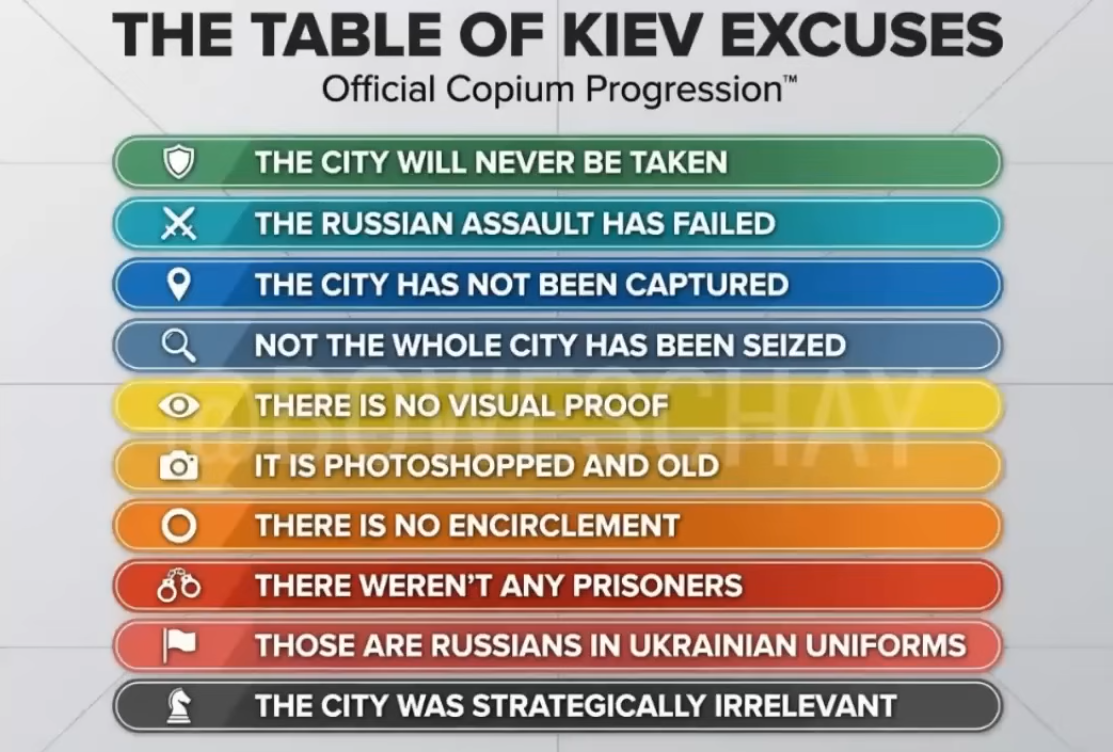
Kiev's copium.

Watching the Russia-Ukraine war is like watching two bums kick the shit out of each other over a bottle of cheap vodka. Basically two burnt-out alcoholic train wrecks are fighting to the death over something that most people would consider completely stupid and not worth fighting about, but each bum is convinced that he has a moral right to that bottle of McCormick's and neither one of them will back down. Meanwhile a crowd is gathering all around them, mostly because watching two bums fight to the death is a spectacle you don't get to see every day. The bums now believe that just because they have an audience, it means their conflict has some kind of macro significance to the world at large. So in addition to kicking the shit out of each other, they each try to make a moral case for why they, and not the other bum, deserve to be the sole owner of this half-empty 750 ml bottle of hobo-mouthwash. People start getting into the fun of it, taking sides and placing bets and having arguments with each other over whether the vodka rightfully belongs to Bum #1 or Bum #2. Sooner or later one of the bums will do the other one in. Either that, or both bums will keel over from exhaustion. It is entirely possible that both of them will die and neither one will get the bottle of vodka. However it ends, once it does, for a very brief moment, we will all feel a little bad about ourselves. Then the world will move on.
>>406134
>Basically two burnt-out alcoholic train wrecks are fighting to the death over something that most people would consider completely stupid and not worth fighting about
Ew, no.
Your statement is utter ignorant about the "root causes": NATO expansion toward the Russian border.
>Basically two burnt-out alcoholic train wrecks are fighting to the death over something that most people would consider completely stupid and not worth fighting about
Ew, no.
Your statement is utter ignorant about the "root causes": NATO expansion toward the Russian border.
99 replies and 59 files omitted.
[View All] [Last 50 Posts] [Last 200 Posts]Post pagination: [Prev] [1-100] [101-199] [Next]
199 replies | 119 files | 99 UUIDs | Page 3